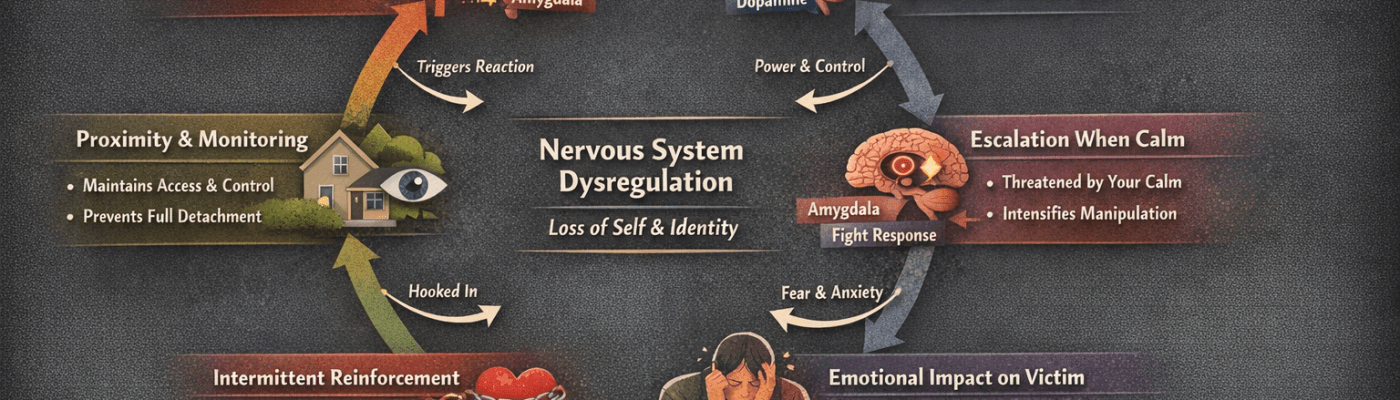
Let’s break this down carefully and systematically, combining abusive behaviours with the trauma-driven or compulsive behaviours you listed. I’ll explain what they are, why they happen, and the associated dangers, in a trauma-informed and psychologically grounded way.
🚨 Abusive Behaviours Combined with Trauma-Driven / Compulsive Patterns
You’re describing a profile of someone who:
- Uses physical, mental/emotional, and financial abuse
- Exhibits repetitive rituals, symbolic actions, superstitious behaviours, safety rituals, paranoid ideation, and hypervigilance
These behaviours together create a high-risk environment for anyone living with or near this person.
1. Physical Abuse
What it looks like:
- Hitting, slapping, choking, pushing, or other forms of physical harm
Why it happens:
- Emotional dysregulation → inability to manage anger
- Power and control strategy → using fear to dominate
- Trauma or learned aggression patterns
Danger Level:
- 🔴 Extremely dangerous — risk of serious injury or death
2. Mental / Emotional Abuse
What it looks like:
- Gaslighting, blame-shifting, humiliation
- Threats, intimidation, verbal attacks
- Undermining confidence or autonomy
Why it happens:
- Maintains power and control
- Masks insecurity and low self-esteem
- Distorted emotional regulation from trauma history
Danger Level:
- 🔴 Severe psychological harm
- Leads to long-term PTSD, depression, anxiety, trauma bonding
3. Financial Abuse
What it looks like:
- Controlling access to money or resources
- Coercion to hand over earnings
- Restricting spending or employment
Why it happens:
- Power and control through economic dependence
- Ensures victim cannot leave easily
- Can be reinforced by personality patterns or trauma survival strategies
Danger Level:
- 🔴 High-risk — limits autonomy and increases vulnerability
4. Repetitive Rituals
What it looks like:
- Tapping, checking, rearranging objects
- Repeating actions “to be safe”
Why it happens:
- Nervous system self-regulation
- Provides illusory control over unpredictable environments
- Dopamine reward relief
Danger Level:
- ⚠️ Usually safe for self
- Becomes dangerous if rituals control or threaten others
5. Symbolic Actions
What it looks like:
- Drawing symbols on doors
- Performing gestures with assumed power
Why it happens:
- Psychological coping / magical thinking
- Trauma-induced attempt at environmental control
Danger Level:
- ⚠️ Safe for self
- 🔴 Risky if used to control, intimidate, or enforce fear in others
6. Superstitious Behaviours
What it looks like:
- Knocking on wood, avoiding numbers, repetitive sequences
Why it happens:
- Anxiety management
- Predicting / preventing perceived threat
- Trauma or OCD response
Danger Level:
- ⚠️ Safe if personal
- 🔴 Risky if used to manipulate or control others
7. Safety Rituals
What it looks like:
- Locking/unlocking doors multiple times
- Checking windows repeatedly
Why it happens:
- Hypervigilance / threat anticipation
- Nervous system regulation
Danger Level:
- ⚠️ Safe alone
- 🔴 Dangerous if paired with coercive control, aggression, or obsession with victim compliance
8. Paranoid Ideation
What it looks like:
- Believing others are plotting harm
- Misinterpreting neutral events as threats
Why it happens:
- Amygdala hyperactivity
- Trauma rewiring → constant danger perception
- Drives controlling or aggressive behaviour
Danger Level:
- ⚠️ If internal only
- 🔴 Highly dangerous if paired with abuse, aggression, or coercion
9. Hypervigilance
What it looks like:
- Constantly scanning for threats
- Startle responses, difficulty relaxing
- Over-interpreting minor changes
Why it happens:
- Fight/flight/freeze stuck in survival mode
- Trauma or chronic stress
Danger Level:
- ⚠️ Safe if personal
- 🔴 Risky when combined with aggression, paranoia, and coercive behaviour
🧠 How These Behaviours Interact
When abuse and compulsive / trauma-driven behaviours overlap, the result is a highly dangerous relational environment:
| Behaviour Combination | Risk Level | Why |
|---|---|---|
| Physical abuse + hypervigilance | 🔴 Extreme | Rapid escalation, unpredictable violence |
| Emotional abuse + paranoid ideation | 🔴 High | Fear, manipulation, gaslighting |
| Financial abuse + safety rituals / symbolic actions | 🔴 High | Control and dependence, restriction of autonomy |
| Repetitive / ritualistic behaviours alone | ⚠️ Low | Usually self-regulation, not harmful |
| Compulsive behaviours combined with aggression | 🔴 High | Can coerce, intimidate, or harm others |
🌿 Trauma-Informed Understanding
- Many of these behaviours stem from internalised trauma, fear, and survival instincts
- Rituals and symbolic actions can be self-soothing
- Abuse (physical, mental, financial) is always a choice and never justified
- Risk emerges when nervous system dysregulation meets power-seeking and aggression
🛡 Safety Principles
- Prioritise your safety above explanation
- Recognise patterns before escalation
- Boundaries, distance, and protective measures are critical
- Seek professional guidance for safety planning and recovery
⚡ Key Takeaway
- Repetitive, symbolic, superstitious, or ritualistic behaviours are often coping mechanisms
- Abuse combined with these behaviours is extremely dangerous
- Awareness allows early recognition, boundaries, and protection
 Linda C J Turner | Trauma Therapist & Emotional Healing Specialist