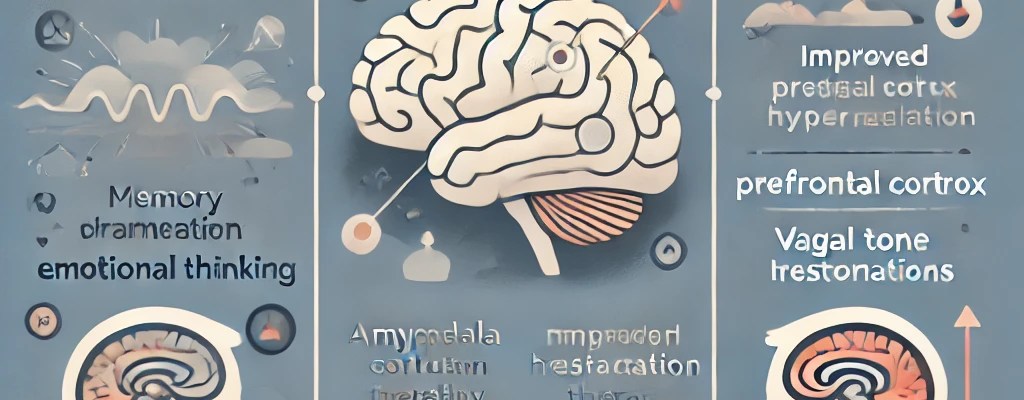
Abuse Behaviours → Neurological Effects → Legal & Safeguarding Relevance**
| Abusive Behaviour | Documented Neurological Effect | Impact on Survivor Behaviour | Legal & Safeguarding Relevance |
|---|---|---|---|
| Stonewalling / Silent Treatment | ↑ Amygdala activation; ↓ mPFC regulation | Hypervigilance, cognitive freeze, anxiety, difficulty thinking clearly | Explains confusion, non-linear recall, emotional instability during interviews |
| Refusal to Answer Questions (“You’re guessing, you’ll never know”) | Hippocampal suppression due to chronic stress | Memory fragmentation; learned self-doubt; impaired contextual recall | Memory gaps are neurological symptoms, not deception |
| Isolation Within the Home | Reduced vagal tone; increased stress hormones | Shutdown, dissociation, impaired decision-making | Survivor appears passive or emotionally flat—not unreliability |
| Unpredictable Withdrawal of Communication | Disrupted threat appraisal system | Survivor may appear clingy, confused, or excessively seeking clarity | Not fixation—trauma-induced need for safety cues |
| Emotional Withholding / Conditional Affection | Limbic overactivation; cortisol cycling | Heightened dependency; difficulty leaving the abuser | Supports evidence of coercive control and trauma bonding |
| Financial Control | Chronic anxiety—long-term cortisol exposure | Decision paralysis; impaired planning; risk avoidance | Explains apparent “helplessness” or delayed escape |
| Intermittent Reinforcement (Punishment → Reward) | Addiction-like dopamine loop conditioning | Difficulty breaking free; oscillating emotions | Predictable trauma-bond cycle recognised in coercive control cases |
| Gaslighting / Reality Distortion | Disrupted hippocampal encoding | Confusion, distorted timelines, self-blame | Memory inconsistencies reflect cognitive injury |
| Threat-Based Intimidation (direct or implied) | Hyperactive amygdala | Startle response; panic; avoidance behaviours | Behavioural changes interpreted as fear responses, not exaggeration |
| Chronic Arguments Ending in Withdrawal | Hippocampal atrophy (in severe long-term cases) | Long-term cognitive fog; memory fragmentation | MRI evidence strengthens abuse claims |
| Emotional Deprivation Over Years | Reduced neurogenesis; mPFC suppression | Difficulty accessing emotions; flattened affect | Survivor’s “lack of emotion” is neurological—not indifference |
| Hostile Ambiguity (“You’ll never know”) | Reinforced stress pathways | Chronic uncertainty; obsessive checking; doubt | Supports findings of coercive control and psychological destabilisation |
Key Professional Interpretations
1. Memory fragmentation is neurological, not behavioural.
Courts must not misinterpret inconsistent timelines as dishonesty.
2. Flat affect or emotional numbness is a trauma adaptation.
Not a sign of emotional instability.
3. Delayed departure from the abuser reflects neurobiological conditioning.
Not consent, weakness, or complicity.
4. MRI findings (where present) provide objective corroboration.
Particularly in cases involving long-term coercive control.
5. Trauma-influenced responses must be accommodated in interviews.
Survivors require regulated questioning and additional processing time.
 Linda C J Turner | Trauma Therapist & Emotional Healing Specialist