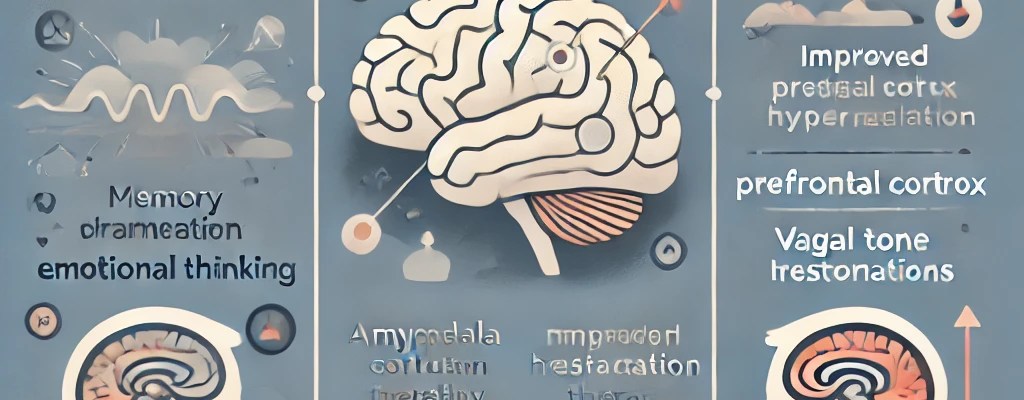
Professional Summary for Therapists, Advocates, and Educators
Long-term interpersonal trauma—particularly coercive control, emotional deprivation, chronic unpredictability, and relational threat—produces well-documented neurobiological changes. These changes are not metaphorical. They are structural, functional, and measurable.
One of the most clinically significant is hippocampal shrinkage.
1. Neurobiological Impact: What the Evidence Shows
Hippocampal Atrophy
Research spanning two decades (Bremner, Teicher, McEwen, Herman, van der Kolk) consistently demonstrates:
- Reduced hippocampal volume in survivors of long-term emotional or physical abuse
- Impairments in declarative memory
- Contextual memory fragmentation
- Increased susceptibility to self-doubt and confusion
- Dysregulated threat appraisal
The hippocampus does not simply store memory; it integrates narrative, contextual meaning, and emotional coherence. When chronically inhibited by cortisol, it becomes structurally smaller and functionally less efficient.
For many survivors, this explains:
- nonlinear recall
- “gaps” in memory
- difficulty sequencing events
- distorted timelines
- confusion around cause-and-effect
- chronic self-questioning
Clinicians should understand these as neurological symptoms, not characterological ones.
2. Stonewalling, Deprivation, and Their Neurological Effects
Chronic exposure to:
- silent treatment
- stonewalling
- withheld communication
- relational isolation
- inconsistent reinforcement
- intimidation through unpredictability
activates the amygdala repeatedly while suppressing hippocampal and medial prefrontal cortex (mPFC) functioning.
In survivors, this often presents as:
- hypervigilance
- difficulty consolidating memory
- emotional looping
- persistent confusion
- self-blame
- cognitive fatigue
- sense of “lost years”
These are not psychological weaknesses.
They are expected neurophysiological outcomes.
3. The Clinical Significance of MRI Evidence
Some survivors, like the one whose narrative informs this article, have MRI-confirmed hippocampal volume loss. This can be profoundly validating:
- It offers objective evidence of chronic trauma impact.
- It substantiates the survivor’s cognitive and emotional symptoms.
- It challenges family-internal minimisation and denial.
- It reframes “inconsistencies” or “memory issues” as neurological injury, not personal failure.
For clinicians, MRI data should not be used diagnostically in isolation, but it can corroborate a trauma trajectoryand enhance treatment planning.
4. Symptoms Many Professionals Misinterpret
Survivors with hippocampal suppression may be misread as:
- evasive
- inconsistent
- indecisive
- overly emotional
- unreliable narrators
In reality, they are often exhibiting classic trauma-related symptoms:
- disrupted episodic memory
- impaired temporal sequencing
- cortisol-induced cognitive fog
- dissociative micro-freezes
- exhaustion from chronic allostatic load
Accurate interpretation prevents misdiagnosis and protects survivors from further institutional invalidation.
5. Neuroplasticity and Recovery: What Works
The hippocampus is capable of measurable regrowth under the right conditions.
Research supports improvements through:
• Trauma-focused therapy
EMDR, somatic therapies, IFS, SE, trauma-informed CBT
→ improves memory reconsolidation, emotional integration
• Safe relational environments
Predictability, attunement, non-threatening interpersonal contexts
→ reduce amygdala hyperactivity and cortisol load
• Reduction of environmental threat
Leaving the abusive environment or reducing exposure
→ allows the stress-response cycle to reset
• Vagal toning & somatic regulation
Breathwork, grounding, movement therapies
→ strengthens parasympathetic recovery pathways
• Psychoeducation
Understanding neurobiology decreases shame and increases compliance with treatment
• Medication (when clinically indicated)
SSRIs and other stabilizing pharmacological supports
→ can assist hippocampal neurogenesis and decrease limbic overactivation
Neuroplastic change is slow, nonlinear, and highly dependent on environmental safety.
6. Key Takeaways for Professionals
- Chronic emotional and coercive abuse can cause measurable neurological injury.
- Hippocampal atrophy explains many behaviours often misinterpreted in clinical and legal contexts.
- Stonewalling, isolation, and relational unpredictability are neurobiological assaults, not mere “communication issues.”
- Memory inconsistency is a symptom of trauma, not dishonesty.
- Recovery is possible through targeted therapy, somatic regulation, environmental safety, and consistent relational attunement.
- Validation accelerates healing. Minimisation prolongs harm.
 Linda C J Turner | Trauma Therapist & Emotional Healing Specialist