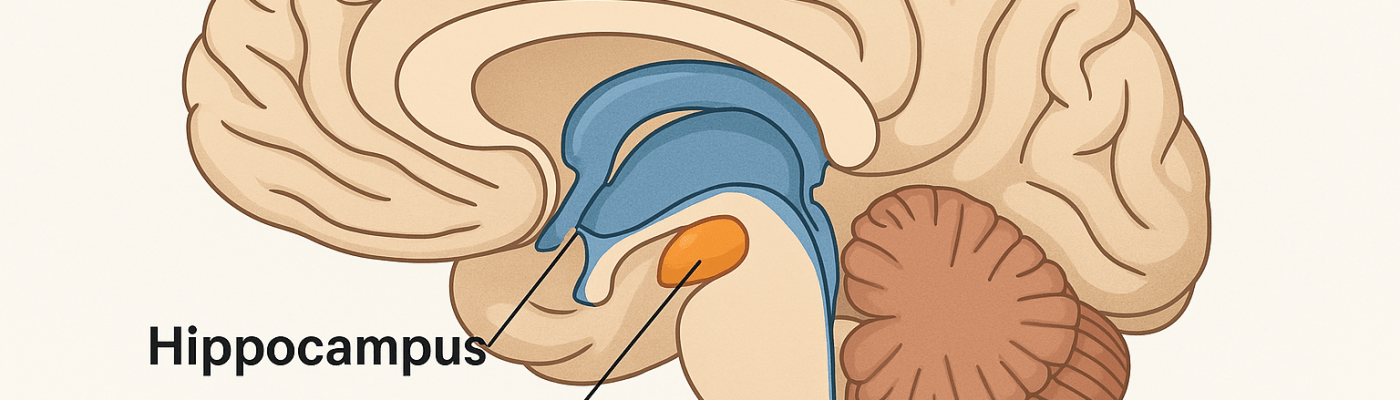
Hippocampus
The hippocampus is a curved, seahorse-shaped structure located in the medial temporal lobe of the brain, within the limbic system. It plays a critical role in memory formation, learning, and spatial navigation. The hippocampus is essential for converting short-term memories into long-term ones, allowing us to retain past experiences. It also helps us recognize environments and navigate through space. Damage to the hippocampus can lead to memory loss, as seen in conditions like Alzheimer’s disease. Additionally, it interacts with the amygdala to link emotions with memories, influencing how we remember emotional events. It is vital for learning and cognition.
Amygdala
The amygdala is a small, almond-shaped cluster of nuclei located deep in the medial temporal lobe, near the hippocampus. It is best known for processing emotions, especially fear, aggression, and pleasure. The amygdala helps detect threats and initiates the fight-or-flight response, activating physiological changes like increased heart rate. It also plays a role in forming emotional memories, strengthening recall of fearful or traumatic events. Additionally, it influences social behavior, decision-making, and emotional regulation. Dysfunction in the amygdala is linked to anxiety disorders, PTSD, and emotional dysregulation, making it a key structure in understanding mental health and emotional responses.
Hypothalamus
The hypothalamus is a small but crucial structure located at the base of the brain, just below the thalamus, near the pituitary gland. It acts as the body’s control center for homeostasis, regulating essential functions like body temperature, hunger, thirst, sleep, and hormone production. By communicating with the autonomic nervous system, the hypothalamus helps regulate stress responses, arousal, and circadian rhythms. It also controls the endocrine system by signaling the pituitary gland to release hormones that influence metabolism, growth, and reproduction. Malfunction of the hypothalamus can lead to hormonal imbalances, sleep disorders, or issues with appetite and body regulation.
 Linda C J Turner | Trauma Therapist & Emotional Healing Specialist