Inventing Stories to Break Up a Relationship

The Psychology & Neuroscience Behind This Behavior When someone creates false narratives, distortions, or invented stories to damage or end a relationship, this behavior is rarely about truth. It is about control, fear, insecurity, and psychological survival strategies. This pattern is deeply rooted in attachment wounds, emotional immaturity, and threat-based brain responses. The Core Psychological Drivers 1. Fear… Read More Inventing Stories to Break Up a Relationship

What Forgiveness Does When You Are Healing From Trauma

Neuroscience & Psychology Explained Forgiveness is often misunderstood. Many people believe forgiveness means: From a neuroscience and psychology perspective, true forgiveness is none of these. Forgiveness is not about the other person.It is about freeing your nervous system from survival mode. Trauma Lives in the Nervous System, Not Just the Memory Trauma does not stay in the… Read More What Forgiveness Does When You Are Healing From Trauma

Being Sorry

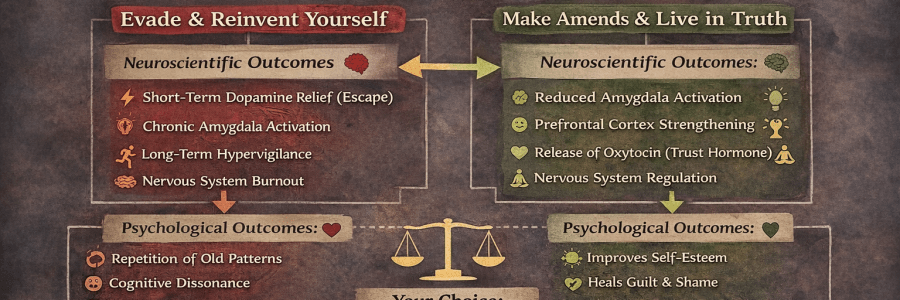
The Science of Apology, Healing & Emotional Repair True apology is not about blame.It is about understanding, responsibility, and emotional repair. Being sorry is one of the most powerful healing acts in human connection — when it comes from self-awareness, empathy, and sincerity. Why Apology Is So Difficult From a neuroscience perspective, the human brain is wired… Read More Being Sorry

Forgiveness, Misunderstandings, Communication & Language Barriers

A Neuroscience and Psychology Perspective Many of the deepest emotional wounds in human relationships are not caused by cruelty or malice — but by misunderstanding, miscommunication, and the limitations of language itself. Neuroscience and psychology show us that the human brain is designed first for survival, not connection. This means that in moments of emotional uncertainty, fear,… Read More Forgiveness, Misunderstandings, Communication & Language Barriers

The Most Common Red Flags Survivors Overlook

1. Early intensity & fast attachment “I’ve never felt this way before.”“You’re my soulmate.”“We’re so connected.” Feels romantic.Is actually emotional rushing + bonding pressure. Why survivors miss it:Because emotional starvation makes intensity feel like love. 2. Inconsistency Warm → cold → warm → distant → affectionate again. Creates emotional addiction. Why survivors miss it:Intermittent affection triggers dopamine… Read More The Most Common Red Flags Survivors Overlook

Safe vs Unsafe Attraction — How to Tell the Difference

🔴 UNSAFE ATTRACTION (Feels intense, magnetic, urgent — but dysregulating) Unsafe attraction often feels strong, but it activates stress, not safety. You may notice: In the body: This is often trauma bonding, not love. It’s your nervous system mistaking familiar danger for connection because that pattern was learned early. 🟢 SAFE ATTRACTION (Feels calm, steady, warm, grounding) Safe attraction often… Read More Safe vs Unsafe Attraction — How to Tell the Difference

Your nervous system can relearn love.

When you’re not sure how love really feels, it’s often because your experiences of “love” were mixed with fear, stress, control, neglect, or pain. That can blur the meaning of love until it feels confusing, distant, or even unsafe. Here’s something gentle and true: Real love feels safe. Not intense.Not dramatic.Not chaotic.Not like walking on eggshells.… Read More Your nervous system can relearn love.

Why Healed Trauma Survivors Trigger Narcissistic Collapse or Rage

(Simply by not reacting anymore) 1. Narcissistic Systems Depend on Emotional Supply At the core of narcissistic and controlling personalities is narcissistic supply — the emotional fuel they need to regulate their fragile self-worth. This supply comes from: When you react, their nervous system stabilizes. When you don’t react, their nervous system destabilizes. No reaction = no regulation source.… Read More Why Healed Trauma Survivors Trigger Narcissistic Collapse or Rage

Why Healed Trauma Survivors Intimidate Insecure or Controlling People

(Without saying a single word) 1. Your Nervous System Is Calm — and That Is Disarming Controlling and insecure people feed off emotional reactivity. They regulate themselves through: When they meet someone whose nervous system is: Their system can’t “hook” into yours. This creates instant internal discomfort. Your calm says: You have no power here. 2. You… Read More Why Healed Trauma Survivors Intimidate Insecure or Controlling People