Cruelty often appears to be about power.

What looks like power in the momentcan quietly become limitation in the brain.Cruelty doesn’t just affect others —it reshapes the person who repeats it. Cruelty often appears to be about power.Control. Superiority.A momentary advantage over another person. But beneath that surface, neuroscience suggests something deeper is happening. The brain systems that allow us to feel… Read More Cruelty often appears to be about power.

Why an abusive person can seem calm right after harming you

1. Their stress system just discharged Before the outburst, their brain is often in a high-alert state: When they lash out (verbally, emotionally, or physically), it can act like a release valve. So their body goes from:high stress → discharge → relief That relief can look like: 2. Your distress regulates their nervous system This is one of… Read More Why an abusive person can seem calm right after harming you

Why People Align With Others They Don’t Even Like — The Neuroscience Behind It

At first glance, it can seem confusing — even contradictory — when someone aligns themselves with people they clearly don’t like, simply because there is something to gain. But neuroscience helps explain this behaviour. 1. Reward Overrides Authenticity The brain is wired to seek reward. When there is a perceived benefit — money, status, access,… Read More Why People Align With Others They Don’t Even Like — The Neuroscience Behind It

Abusive or high-conflict personalities.

Low impulse control becomes much more significant — and more harmful — when it shows up in abusive or high-conflict personalities. Here’s how it typically plays out: 1. Fast Emotional Reactions Turn Into Harmful Behaviour In these personalities, emotions (especially anger, frustration, or feeling “disrespected”) rise very quickly — and there’s little pause before acting. So… Read More Abusive or high-conflict personalities.

A Quiet Realisation: Why Staying Matters More Than Leaving

Sometimes clarity doesn’t come from big decisions or dramatic moments. It comes quietly — in the middle of a good weekend, surrounded by the right people, in a place that simply feels… right. And suddenly you realise: This is why I need to stay. The Power of Familiarity There is something deeply stabilising about familiarity.… Read More A Quiet Realisation: Why Staying Matters More Than Leaving

When Life Feels Light Again: The Power of a Perfect Weekend

Every now and then, life gives you a moment that reminds you how it’s meant to feel. A perfect weekend isn’t about luxury or perfection — it’s about energy. The kind that feels easy, natural, and real. The kind that doesn’t need effort. It’s good friends.It’s music in the background.It’s sunshine on your face.It’s laughter that comes… Read More When Life Feels Light Again: The Power of a Perfect Weekend

Why Abuse Doesn’t Stop After Separation: What Neuroscience and Psychology Really Tell Us

A common belief is that separation from an abusive partner should naturally lead to a reduction in abusive behaviour. In reality, many people experience the opposite: control, intimidation, manipulation, or emotional aggression continues — and sometimes intensifies. Neuroscience and psychology help explain why this happens. 1. The Brain Does Not Automatically “Improve” With Age There… Read More Why Abuse Doesn’t Stop After Separation: What Neuroscience and Psychology Really Tell Us

From Survival to Softness: How Life Feels Completely Different Now — Safe, Loved, and Free

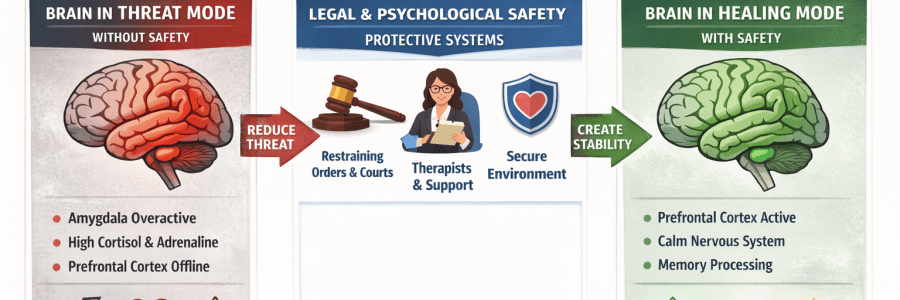
There are moments in life when everything changes so deeply that it almost feels like stepping into a different world. Not just a new situation — but a completely different emotional landscape. What once felt heavy, tense, or uncertain is no longer the centre of everything. And in its place, something quieter begins to grow.… Read More From Survival to Softness: How Life Feels Completely Different Now — Safe, Loved, and Free