Neuroscience: Why Abusers Isolate Their Victims

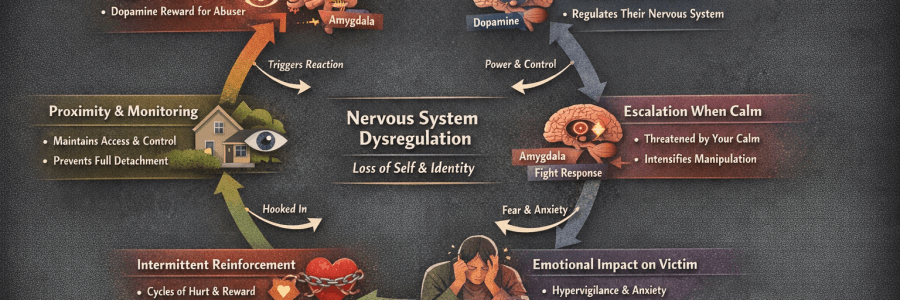
Isolation isn’t an accident.It’s a neurological strategy. Abusers instinctively or deliberately use isolation because it alters the victim’s brain in predictable, exploitable ways. Here’s what neuroscience shows: 1. Human brains need connection to stay regulated. We are wired for co-regulation — calming, grounding, and checking reality through other people. When you’re cut off from friends, family, colleagues, and… Read More Neuroscience: Why Abusers Isolate Their Victims

Control – not Privacy

Below is a clear, grounded explanation of what is really happening when someone says: 🔥 What’s Actually Happening — Neuroscience of Coercive Control From a brain-science perspective, these commands are designed to isolate you, weaken your internal reference points, and create a dependency loop. Here’s how: 🧠 1. They’re trying to cut off your “reality checks.” The human brain… Read More Control – not Privacy

Part 3 — When You Tell the Truth That Sounds Unreal

When the time comes for me to reveal who my father was — and the world he moved in — I already know what will happen. People will raise eyebrows.Some will whisper “she’s exaggerating.”Others will say I’m making it up, attention-seeking, dramatising, scare-mongering. But here’s the thing:The people who matter have already seen the evidence.The… Read More Part 3 — When You Tell the Truth That Sounds Unreal

“Eye Contact & Chemistry: What Attraction Really Looks Like”

🔵 PUPILS 🟣 GAZE BEHAVIOUR Triangular gaze:👁 → 💋 → 👁Meaning: desire + emotional pull. Returning magnet gaze:Eyes drift → return to your face → repeatMeaning: they can’t stop checking on you. Soft gaze:Relaxed eyes, slow blinkingMeaning: emotional connection, affection. Hunger gaze:Intense focus, stillness, tensionMeaning: sexual desire. 🟢 NON-VERBAL SIGNALS 🔴 MICRO EXPRESSIONS 🟡 SILENCE CHEMISTRY… Read More “Eye Contact & Chemistry: What Attraction Really Looks Like”

Friendship ≠ Sex: A Neuroscience Perspective on Why Judging Opposite-Sex Friendships Is Misguided

Social assumptions often collapse every close connection between a man and a woman into something sexual. For people recovering from trauma, these assumptions are not only inaccurate — they are damaging. From a neuroscience and mental-health perspective, here’s why these judgments completely miss the mark. 1. The Brain Separates Bonding From Sexual Intent Neuroscience shows that attachment… Read More Friendship ≠ Sex: A Neuroscience Perspective on Why Judging Opposite-Sex Friendships Is Misguided

Professional Evidence Table:

Abuse Behaviours → Neurological Effects → Legal & Safeguarding Relevance** Abusive Behaviour Documented Neurological Effect Impact on Survivor Behaviour Legal & Safeguarding Relevance Stonewalling / Silent Treatment ↑ Amygdala activation; ↓ mPFC regulation Hypervigilance, cognitive freeze, anxiety, difficulty thinking clearly Explains confusion, non-linear recall, emotional instability during interviews Refusal to Answer Questions (“You’re guessing, you’ll… Read More Professional Evidence Table:

Hippocampal Atrophy and Chronic Coercive Control:

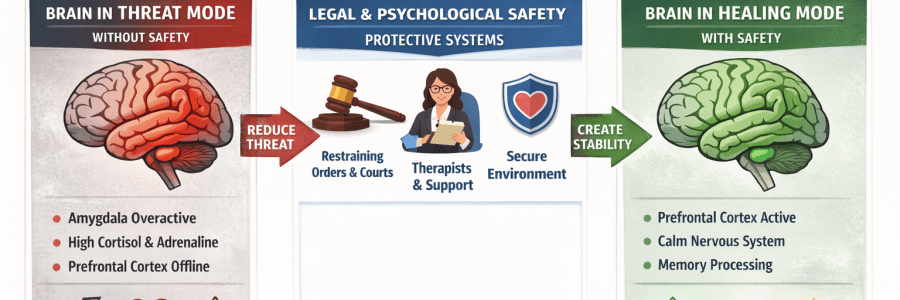
A Legal and Safeguarding Briefing** For Courts, Social Services, Safeguarding Officers, and Legal Representatives Summary:Long-term exposure to coercive control, emotional deprivation, and relational intimidation produces well-documented neurological effects. These are not subjective experiences. They are measurable injuries that impact cognition, memory consistency, and threat appraisal — all of which are directly relevant to legal credibility,… Read More Hippocampal Atrophy and Chronic Coercive Control:

Hippocampal Atrophy in Chronic Domestic Abuse: Clinical Implications and Recovery Pathways

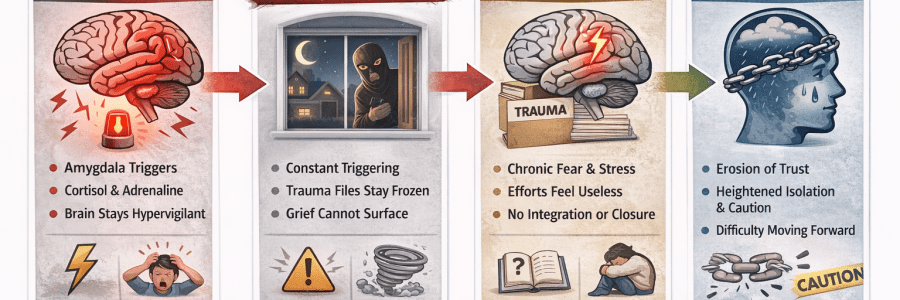
Professional Summary for Therapists, Advocates, and Educators Long-term interpersonal trauma—particularly coercive control, emotional deprivation, chronic unpredictability, and relational threat—produces well-documented neurobiological changes. These changes are not metaphorical. They are structural, functional, and measurable. One of the most clinically significant is hippocampal shrinkage. 1. Neurobiological Impact: What the Evidence Shows Hippocampal Atrophy Research spanning two decades (Bremner,… Read More Hippocampal Atrophy in Chronic Domestic Abuse: Clinical Implications and Recovery Pathways

You Didn’t Leave for Someone Else. You Left for Your Life.

A Neuroscience Perspective on Walking Away From Decades of Abuse** People love simple stories:“She left him for someone else.”It’s tidy. It preserves the family narrative.It avoids the uncomfortable truth that abuse was happening in plain sight — emotional, physical, financial — and no one stopped it. But the brain doesn’t lie.The nervous system doesn’t lie.Your healing doesn’t… Read More You Didn’t Leave for Someone Else. You Left for Your Life.

Why There’s No Quick Fix

Rebuilding yourself after decades of emotional abuse is a marathon, not a sprint. Here’s a neuroscience-informed breakdown of why it’s slow, why support matters, and what actually works: Reclaiming Yourself After Emotional Abuse: Hard Work, Science, and Safety 1. Why There’s No Quick Fix Decades of emotional abuse leave deep neural and somatic imprints: These changes… Read More Why There’s No Quick Fix