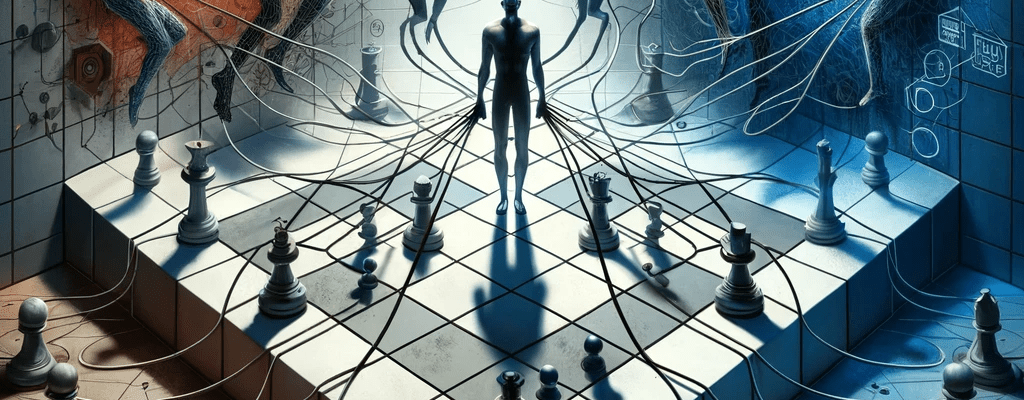
Complex personality in Neuroscience and Psychology usually means a person whose thoughts, emotions, behaviors, and relationships are influenced by many different interacting factors, not just one simple trait.
It can mean several things:
Psychologically
A person may have:
- many layers to their personality (different sides depending on situation)
- contradictory traits (e.g., warm but guarded, confident but insecure)
- strong emotional depth
- complicated relationship patterns
- internal conflicts (wanting closeness but fearing it)
Psychologists might talk about:
Personality Traits like:
- openness
- conscientiousness
- extraversion
- agreeableness
- neuroticism
(the “Big Five” model)
A “complex” person may score strongly in several areas and not fit neatly into one box.
Neuroscience perspective
From Neuroscience, personality involves brain systems such as:
- Prefrontal Cortex — planning, impulse control
- Amygdala — fear, emotional reactivity
- Limbic System — emotional memories
- Neuroplasticity — how life experiences reshape us
So a “complex personality” can develop from:
- genetics
- childhood experiences
- trauma or adversity
- attachment patterns
- learned coping mechanisms
- culture and environment
The brain literally wires itself around experience.
Example
Someone who survived long-term emotional abuse may seem:
- hyper-aware of others’ moods
- highly empathetic
- cautious or mistrustful
- resilient but anxious
- independent but afraid of vulnerability
That’s not “broken” — it’s a complex adaptation.
Related concepts
You might also hear:
- Attachment Theory
- Trauma Response
- Personality Disorder (different—this is a clinical diagnosis, not just “complex personality”)
- Emotional Intelligence
In simple words: a complex personality means a human being with depth, contradictions, and a life story written into their brain and behavior.

