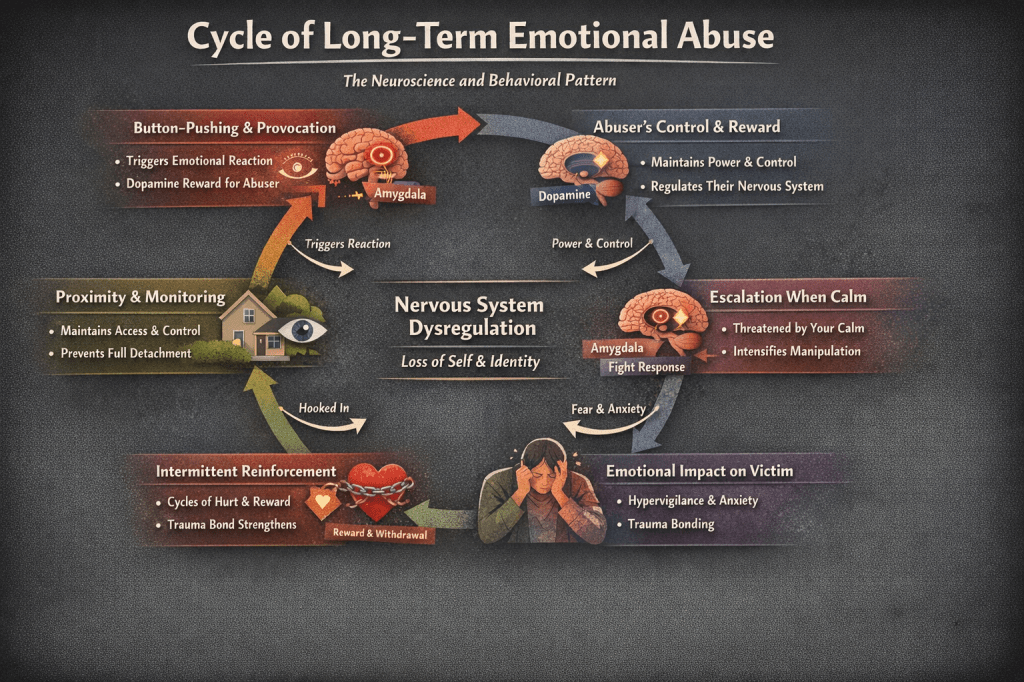
Iin psychology and domestic abuse research, abuse is generally understood as a pattern of chosen behaviours used to gain power, control, intimidation, or dominance over another person.
Abuse is a choice — and that distinction matters
People can have:
- anger
- trauma
- insecurity
- stress
- mental health struggles
without becoming abusive.
What separates abuse from emotional difficulty is that abusive behaviour tends to be:
- selective
- patterned
- purposeful in effect
- repeated despite harm caused
🧠 Why psychologists say it is a choice
Many abusive individuals are capable of:
- controlling behaviour around other people
- adjusting behaviour in public
- stopping escalation when consequences appear
- targeting specific individuals rather than everyone equally
That suggests the behaviour is not simply “loss of control.”
It is often:
control directed at another person.
⚖️ Abuse vs losing emotional control
Someone genuinely overwhelmed by emotion may:
- react badly
- apologise sincerely
- take accountability
- change behaviour consistently
Abuse is different because the pattern continues and often serves a function:
- intimidation
- compliance
- dependency
- fear
- emotional destabilisation
🔄 Why victims become confused
Because abusive dynamics are rarely abusive all the time.
The cycle often includes:
- affection
- apology
- promises
- normality
- then harm again
This creates trauma bonding and psychological confusion.
Victims often focus on:
the loving version
while trying to survive:
the controlling version
❤️ The important balance
Understanding that abuse is a choice does not mean:
- people are “monsters” all the time
- humans cannot change
- every harmful act is identical
But it does mean:
responsibility belongs to the person choosing the behaviour, not the person enduring it.
That distinction is crucial in recovery from coercive control and abuse.