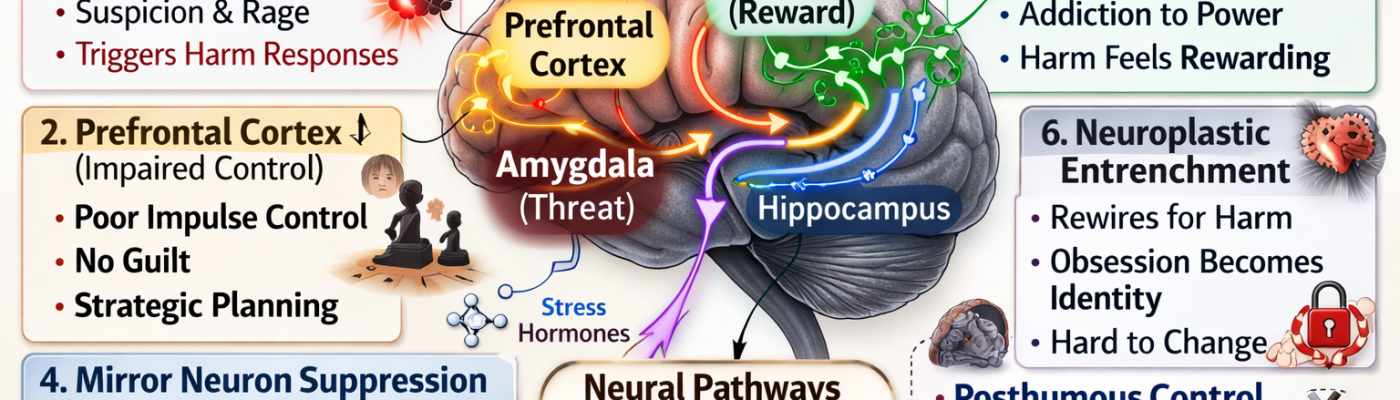
When an abusive or highly controlling long-term marriage ends, the psychological processes in the abusive partner’s brain can look very different from those in the person who experienced the abuse. Research in Psychology and Neuroscience shows several patterns that often occur.
Not every abusive person reacts the same way, but there are some common dynamics.
1. Loss of Control Triggers a Psychological Crisis
For many controlling personalities, the relationship was not only emotional — it was also about power and regulation of their internal world.
In the brain, control reduces anxiety. When they can control another person’s behaviour, it helps them regulate feelings of insecurity or inadequacy.
When the relationship ends, that control disappears.
This can create:
- intense anger
- attempts to regain control (legal battles, financial pressure, harassment)
- obsessive focus on “winning”
From a neurological perspective, the brain’s threat system (amygdala) becomes activated because the person feels their status or identity has been challenged.
2. Narcissistic Injury and Ego Threat
Many abusive partners experience what psychologists call ego injury or narcissistic injury.
The breakup challenges the image they hold of themselves. If their identity is built around being dominant or superior, the loss of the relationship can feel like humiliation or defeat.
Instead of processing grief, the mind may protect itself by:
- blaming the other person entirely
- rewriting history
- portraying themselves as the victim
This psychological defence protects their self-image.
3. The Brain Searches for Someone New to Control
Another pattern observed in relationship psychology is that controlling individuals often move into a new relationship more quickly.
This does not necessarily mean they have emotionally healed.
Often it is because they are seeking:
- validation
- admiration
- someone who restores their sense of control
Their brain is trying to recreate the regulation system the previous relationship provided.
4. Escalation Before Collapse
Sometimes there is a phase where the abusive person intensifies their behaviour after separation.
This might involve:
- prolonged legal conflict
- financial manipulation
- attempts to provoke emotional reactions
Psychologically this is sometimes called extinction behaviour. When control stops working, the brain temporarily increases the behaviour in an attempt to regain the previous outcome.
When it still fails, some individuals eventually lose energy or shift focus elsewhere.
5. Long-Term Consequences for the Abuser
If the underlying personality patterns remain unchanged, research shows some common long-term outcomes:
- repeated relationship breakdowns
- increasing isolation
- unresolved anger or bitterness
- difficulty maintaining deep emotional bonds
This happens because the person never addressed the core insecurity or emotional dysregulation driving the controlling behaviour.
A powerful psychological truth
In abusive dynamics, the two people are often moving in opposite psychological directions after separation.
The survivor is usually working toward:
- healing
- rebuilding identity
- finding emotional safety
The abuser is often focused on:
- restoring control
- protecting ego
- maintaining a narrative of blame
💡 One insight many therapists share:
The greatest loss for a controlling person is not the relationship — it is the loss of control over the other person.
When that control disappears, the entire psychological structure they relied on begins to destabilize.
 Linda C J Turner | Trauma Therapist & Emotional Healing Specialist