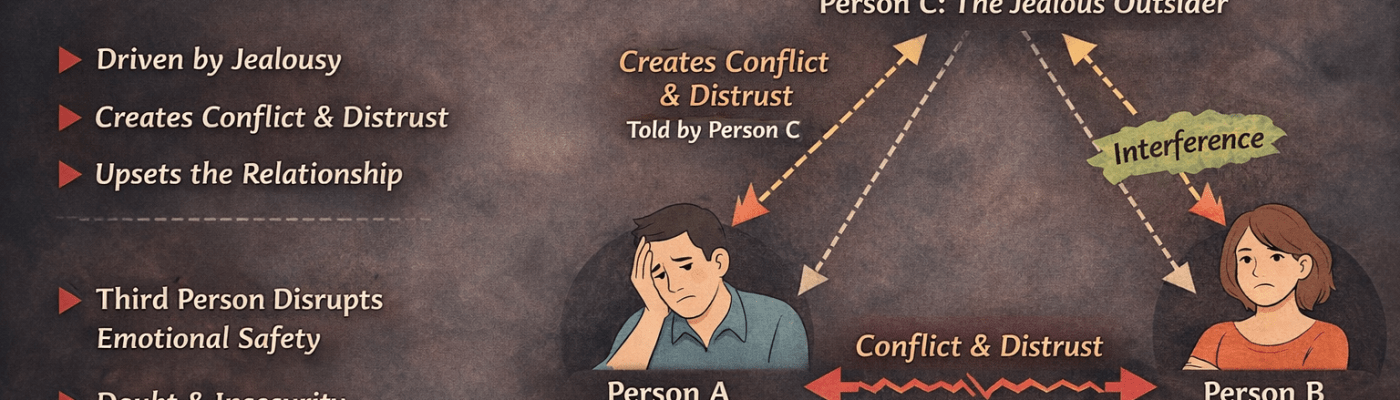
This behavior occurs when a third party actively interferes in a relationship to create conflict, insecurity, or emotional distance. In psychology, this is a form of triangulation.
It is not about love or care — it is about emotional insecurity, fear, and control needs.
Why People Do This
1. Jealousy & Fear of Loss
- They feel threatened by your bond.
- The nervous system perceives your connection as a danger to their emotional safety.
- They attempt to create chaos to reduce perceived loss.
2. Need for Control
- Interfering gives a sense of influence over the relationship.
- They may spread misinformation, exaggerate events, or manipulate perceptions.
3. Insecure Attachment Patterns
- Early experiences of neglect or inconsistency can cause fearful or anxious attachment.
- Emotional closeness in others triggers panic or insecurity, leading to manipulative behavior.
4. Ego Protection & Projection
- Instead of facing their own insecurities, they project blame outward.
- Creating a triangle allows them to feel temporarily powerful and emotionally safe.
The Neuroscience Behind the Behavior
When someone perceives a threat to their social or emotional position, the amygdala (fear center) activates:
- Fight/flight/freeze response triggers
- Reduced prefrontal cortex activity → poor reasoning and empathy
- Emotional urgency overrules logic
Result: The brain creates narratives or spreads gossip to regain a sense of safety and control.
How It Impacts the Original Relationship
- Confusion and doubt
- Emotional tension between partners
- Self-doubt and insecurity
- Erosion of trust
- Anxiety and hypervigilance
Even a small third-party interference can destabilize the couple because the nervous system reacts to perceived threat more than facts.
Signs of Third-Party Triangulation
- Sudden rumors, accusations, or misinformation
- Emotional manipulation through jealousy
- Shifting narratives or inconsistent information
- Pressure to act or respond emotionally
- Secretive communication or “dividing” tactics
How to Protect the Relationship
- Stay grounded in facts — verify information before reacting.
- Communicate openly with your partner — transparency is key.
- Set boundaries with the third party — limit their influence.
- Avoid gossip and speculation — do not engage with manipulative tactics.
- Check your nervous system — calm, regulated responses prevent escalation.
- Strengthen trust between partners — emotional safety is the best defense.
Key Insight
People who insert themselves into relationships out of jealousy are operating from fear and insecurity, not love or truth.
Their behavior reflects their emotional dysregulation, not the value or stability of your relationship.
 Linda C J Turner | Trauma Therapist & Emotional Healing Specialist