Understanding How Control Progresses Into Danger
Coercive control rarely begins with overt violence. It follows predictable psychological and behavioural stages, escalating gradually as dominance increases and resistance threatens the controller’s power.
Early recognition saves lives.
🧠 The Escalation Pattern of Coercive Control
| Stage | Behaviour Pattern | Psychological Function | Risk Level |
|---|---|---|---|
| 1. Idealisation & Charm | Intense attention, love-bombing, rapid attachment, flattery, emotional fusion | Creates emotional dependency, trust bonding, and psychological access | 🟡 Low → Moderate |
| 2. Subtle Control | Guilt-tripping, emotional pressure, micro-rules, jealousy framed as love, dependency building | Establishes dominance while appearing caring | 🟠 Moderate |
| 3. Isolation & Monitoring | Cutting off friends/family, constant messaging, surveillance, location checking | Removes external reality anchors, strengthens psychological captivity | 🔴 High |
| 4. Psychological Manipulation | Gaslighting, blame-shifting, rewriting history, destabilising perception | Breaks self-trust, increases confusion and dependence | 🔴 High |
| 5. Threats & Intimidation | Financial threats, legal threats, emotional punishment, silent treatment, fear-based control | Creates compliance through fear conditioning | 🚨 Very High |
| 6. Escalated Aggression | Explosive rage, intimidation, property destruction, verbal violence | Reinforces dominance, restores control when threatened | 🚨 Extremely High |
| 7. Physical Violence Risk | Physical threats, blocking exits, restraint, physical assault | Direct physical enforcement of power | 🚨 Critical |
| 8. Lethality Risk Zone | Threats of serious harm, stalking, weapon references, strangulation threats | Maximum danger — survival threat level | 🚨🚨 Immediate Danger |
🛑 Key Escalation Triggers
Coercive controllers escalate most when:
- You assert independence
- You challenge their authority
- You question their narrative
- You threaten to leave
- You seek outside support
- You gain financial or emotional autonomy
Escalation = loss of control + fear of exposure
🧠 The Neuroscience of Escalation
As control weakens:
- Amygdala activation increases → threat perception rises
- Prefrontal inhibition drops → impulse control weakens
- Cortisol floods the system → fight-or-flight dominance
- Aggression becomes instrumental → violence used strategically
This creates calculated threat-based behaviour, not emotional reactivity.
🚩 Red Flags That Signal Rapid Escalation
- Sudden rage spikes
- Intensifying jealousy
- Surveillance increase
- Threat language
- “If you leave, I’ll…” statements
- Financial restriction
- Isolation pressure
- Legal intimidation
🛡 Trauma-Informed Safety Rule
If fear increases while control tightens, escalation is already underway.
Safety planning becomes essential.
❤️ Trauma-Informed Reframe
If you experienced escalating coercive control:
This does NOT mean:
- You stayed too long
- You failed
- You were naïve
- You ignored warning signs
It means:
👉 Your nervous system adapted to survive inside threat.
Leaving requires neurological readiness + safety opportunity, not just insight.
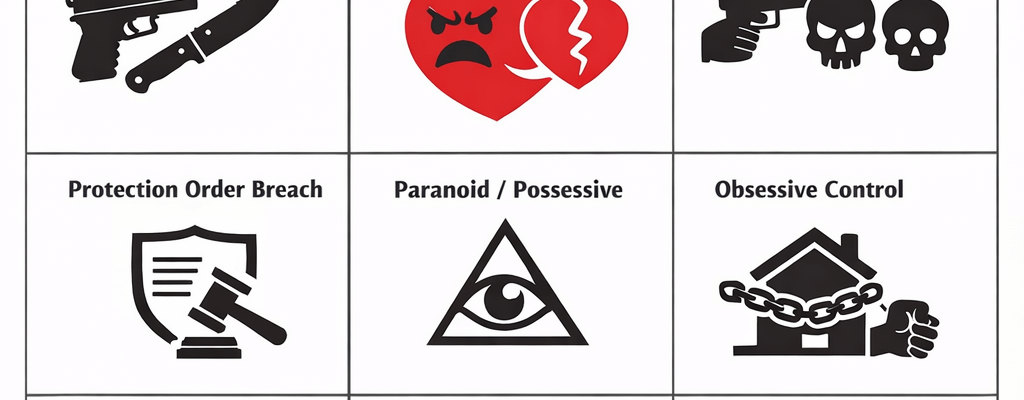
⚠️ Most Dangerous Profile
🚨 Control + Rage + Obsession + Exposure Threat
This combination strongly predicts:
- Severe physical harm
- Stalking
- Retaliation
- Post-separation violence
This profile requires immediate professional safeguarding and legal protection.
✨ Final Message
Coercive control is predictable, detectable, and preventable.
Knowledge creates:
Awareness → Safety → Power → Freedom
Control escalates when fear replaces consent. Safety begins when awareness replaces silence.
 Linda C J Turner | Trauma Therapist & Emotional Healing Specialist