Use this when you’re doubting yourself, being pressured to “calm down,” or told you’re overreacting.
🔍 Step 1: Look at Behaviours, Not Stories
Risk is revealed by patterns, not explanations.
High-risk indicators:
- Strangulation or threats to breathing
- Coercive control (money, housing, decisions)
- Calm, deliberate cruelty rather than explosive anger
- Escalation during illness, separation, or loss of control
- Lying that feels effortless
- Lack of remorse paired with justification
- Pressure for secrecy, speed, or silence
If these exist, risk is real, regardless of apologies or promises.
🧠 Step 2: Check for Denial Signals
Denial often sounds like:
- “He wouldn’t really hurt you”
- “That was just stress / a bad phase”
- “You’re focusing on the worst”
- “It’s not happening now, so it’s fine”
- “Other people have it worse”
Denial focuses on comfort, not safety.
⚠️ Step 3: Ask the Three Non-Negotiable Questions
- Has this person ever shown capacity for serious harm?
- Do they take full responsibility without minimising or blaming?
- Does risk increase when they feel challenged, exposed, or losing control?
If the answer is yes to 1 or 3 — and no to 2 — assume risk, not denial.
🧍 Step 4: Trust the Body Before the Mind
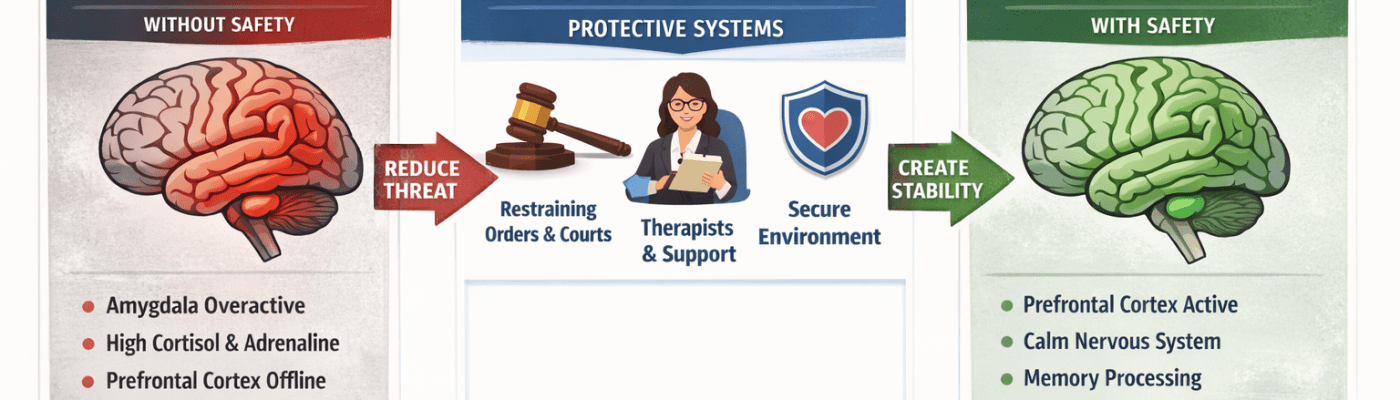
Your nervous system often knows before logic does.
Risk is more likely if:
- Your body tenses around them
- You feel smaller, foggy, or hyper-alert
- You rehearse conversations in your head
- You monitor their moods to stay safe
- Relief only comes when they’re not present
This is not anxiety — it’s threat assessment.
🧩 Step 5: Separate Hope From Evidence
Ask yourself:
- Am I hoping for change that has never been demonstrated?
- Am I using potential as proof?
- Am I waiting for insight instead of accountability?
Hope is human.
But safety decisions must be evidence-based.
🔒 Final Ground Rule
If someone benefits from you minimising risk, slowing disclosure, or doubting yourself — pause.
Denial protects comfort.
Risk assessment protects life.
You are allowed to take danger seriously — even if others won’t.
 Linda C J Turner | Trauma Therapist & Emotional Healing Specialist