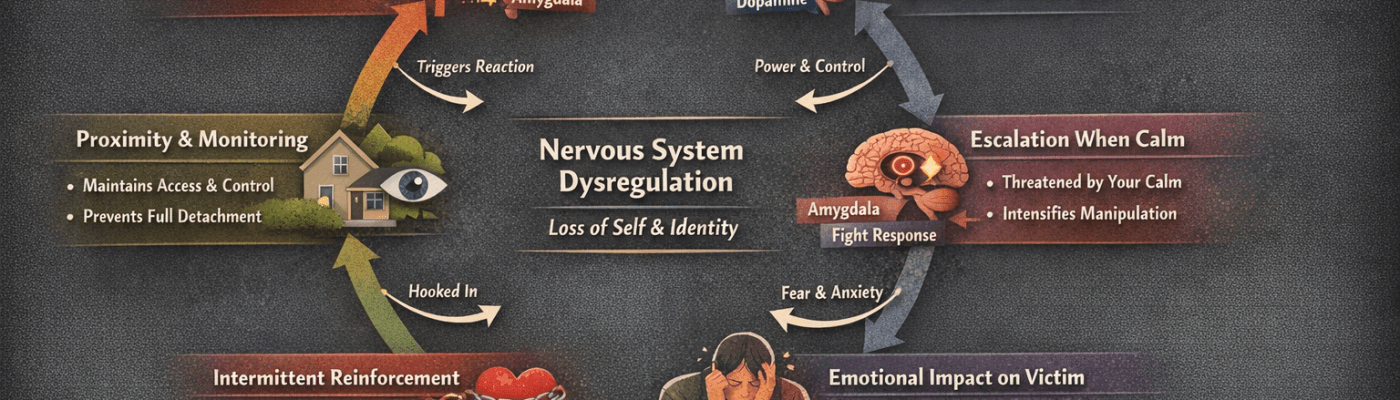
1. Prefrontal cortex maturity (or lack of it)
Perspective-taking, empathy, and reflective thinking live mainly in the prefrontal cortex (PFC) — especially:
- medial PFC (self vs other)
- dorsolateral PFC (reasoning, inhibition)
- anterior cingulate cortex (conflict monitoring)
If someone is emotionally immature, stressed, personality-disordered, or chronically defensive, these areas are functionally offline in conflict.
➡️ They are not choosing not to understand you — their brain cannot access the circuitry required to do so in that moment.
2. Amygdala hijack = zero capacity for perspective
When a person feels threatened (ego, shame, control, status), the amygdala takes over.
- Threat detected → cortisol + adrenaline released
- Blood flow shifts away from the PFC
- Brain switches from understanding to survival
In this state:
- Nuance feels dangerous
- Different perspectives feel like attacks
- Listening feels like losing
Arguing here is like trying to teach philosophy during a fire alarm.
3. Ego protection overrides reality
For immature or dysregulated people, disagreement activates:
- shame circuits
- identity threat
- fear of loss of control
The brain responds by:
- distortion (“That’s not what happened”)
- projection (“You’re the problem”)
- dismissal or mockery
This is not dialogue. It’s defensive neural reflex.
4. Low mentalization capacity
Mental maturity = mentalization:
the ability to hold your own mind and someone else’s mind at the same time.
People lacking this capacity experience:
- only one “truth” (theirs)
- black-and-white thinking
- intolerance of ambiguity
Neuroscience-wise, this reflects weak integration between:
- limbic system (emotion)
- prefrontal cortex (reflection)
Without integration, perspective-taking feels intolerable.
Why arguing with them damages you
Your nervous system pays the price
When you keep trying to reason with someone who can’t:
- your PFC stays engaged
- their amygdala stays activated
- the mismatch creates chronic stress
Your brain starts to associate:
“Being understood” = danger / futility
Over time this:
- erodes self-trust
- increases anxiety
- trains hypervigilance
- delays healing
The deeper truth behind the quote
The quote isn’t about superiority.
It’s about neural capacity.
Some people cannot meet you in dialogue because:
- their nervous system equates disagreement with threat
- their brain prioritizes protection over truth
- their development stalled at emotional survival
No amount of clarity, kindness, or logic can override that biology.
The neuroscientifically healthy response
✔️ Disengage, don’t debate
✔️ Set boundaries, not explanations
✔️ Preserve your cognitive and emotional energy
✔️ Choose conversations where both prefrontal cortices are online
Real communication only happens when both nervous systems feel safe enough to think.
 Linda C J Turner | Trauma Therapist & Emotional Healing Specialist