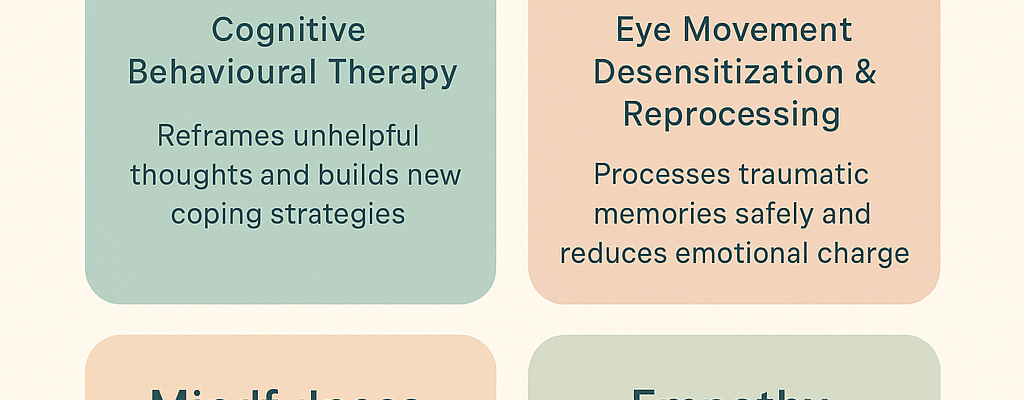
(Trauma → brain → behaviour → stalled recovery)
1️⃣ TRAUMA SHATTERS PREDICTABILITY
Trauma isn’t just what happened — it’s what it did to meaning.
After trauma, the brain learns:
- The world is unsafe
- I didn’t see it coming
- I lost control
This creates an existential threat, not just emotional pain.
2️⃣ CERTAINTY EMERGES AS A NERVOUS-SYSTEM PATCH
To survive that threat, the brain reaches for certainty.
🧠 Neurobiology
- Amygdala remains hypervigilant
- Cortisol stays elevated
- Prefrontal cortex narrows focus
- Ambiguity tolerance collapses
Certainty restores:
- Predictability
- Control
- Identity coherence
“If I know exactly what’s true, nothing can blindside me again.”
3️⃣ HOW CERTAINTY FEELS LIKE HEALING (BUT ISN’T)
Certainty brings short-term relief:
- Anxiety drops
- Confusion ends
- Moral clarity appears
- Pain is organised into a story
This feels like strength, insight, even growth.
But neurologically, it’s containment, not integration.
4️⃣ WHERE HEALING ACTUALLY REQUIRES UNCERTAINTY
True trauma healing requires:
- Revisiting meaning
- Updating beliefs
- Feeling conflicting emotions
- Allowing grief, doubt, complexity
That process requires:
- Prefrontal flexibility
- Amygdala tolerance
- Nervous-system safety
Certainty shuts all of that down.
5️⃣ THE BLOCK IN ACTION (COMMON PATTERNS)
🔒 Pattern A: Rigid narratives
- “I know exactly who they are.”
- “People are always like this.”
- “I’ll never trust again.”
These prevent new data from entering the system.
🔒 Pattern B: Moral absolutism
- Clear villains, clear victims, no nuance
- Anger replaces grief
- Control replaces mourning
Anger stabilises.
Grief heals — but grief requires openness.
🔒 Pattern C: Identity fusion
- Trauma becomes identity
- Certainty protects the self from dissolving
- Letting go feels like betrayal of the past self
Healing threatens the structure that kept you alive.
6️⃣ THE NEUROSCIENCE OF STALLED HEALING
When certainty dominates:
- Prediction error is suppressed
- Memory reconsolidation can’t occur
- Trauma remains “frozen” in the nervous system
- Triggers persist
The brain never updates the file — it just locks it.
7️⃣ THE PARADOX (THIS IS KEY)
Certainty protects you from feeling lost —
but healing requires being lost for a while.
You cannot reorganise meaning without temporarily loosening it.
8️⃣ WHAT SOFTENING CERTAINTY LOOKS LIKE (NOT COLLAPSE)
Softening is not:
- Forgiving prematurely
- Doubting your experience
- Minimising harm
It is:
- Allowing complexity
- Making room for “I don’t know yet”
- Letting the body lead before the story
This reactivates neuroplasticity.
9️⃣ THE BODY-LED EXIT FROM CERTAINTY
Healing resumes when:
- Sensations are tolerated without narrative
- Emotions are felt without conclusions
- The nervous system experiences safety now
That’s why:
- Somatic work
- Slow relational repair
- Gentle curiosity
…succeed where insight alone fails.
🧭 A LINE TO HOLD (IMPORTANT)
Certainty helped you survive.
Uncertainty helps you heal.
One is not better — they’re sequential.
🌱 FINAL INTEGRATION
You don’t need to tear certainty down.
You let it loosen naturally as safety returns.
When the nervous system no longer needs armour,
the mind becomes curious again.
And curiosity is the doorway to healing.
 Linda C J Turner | Trauma Therapist & Emotional Healing Specialist