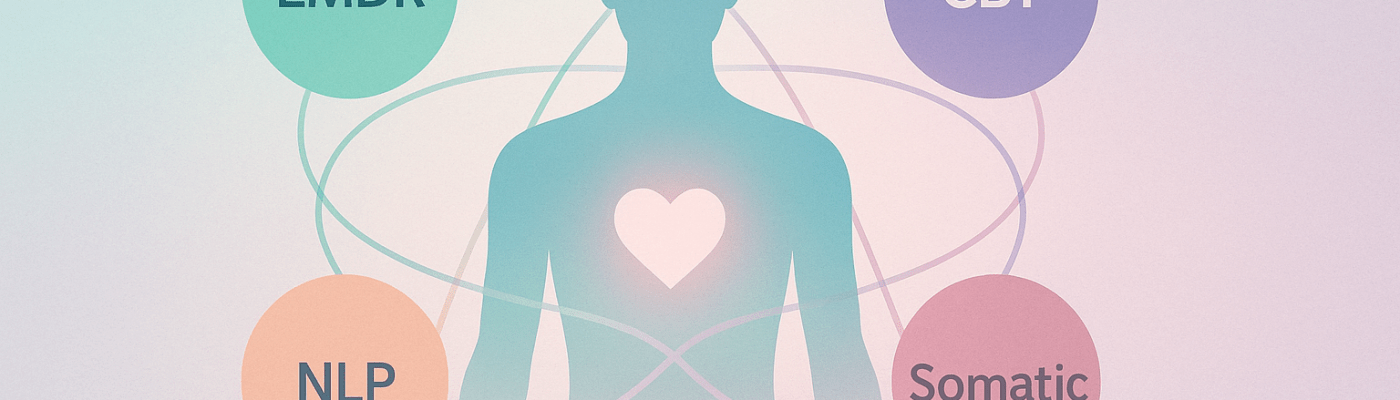
Let’s dive deeper into how to feel trust inside your body, and what neuroscience and psychology reveal about rebuilding self-trust after trauma.
1. Trauma & Self-Trust
Trauma often disrupts your inner guidance system. If you grew up or experienced situations where your feelings were dismissed, boundaries ignored, or safety inconsistent:
- Your amygdala becomes hyper-alert to threat, interpreting uncertainty as danger.
- Your hippocampus may encode emotional experiences with exaggerated fear or shame.
- Your medial prefrontal cortex (mPFC)—the part that integrates self-awareness, values, and decision-making—can be underactive or disconnected.
Result: You might feel uncertain about your own feelings, second-guess your instincts, or default to pleasing others.
2. Rebuilding Self-Trust in the Body
Self-trust isn’t just a cognitive process—it’s felt through your nervous system. Trauma-informed psychology emphasizes embodied trust:
A. Boundary Awareness
- Notice where your body feels tense or relaxed in different situations.
- Signals: tight shoulders, shallow breathing, gut discomfort = potential boundary violation.
- Practice: Label it: “I feel tension here. That’s my body telling me my limit.”
B. Intuition & Gut Signals
- Trauma can suppress the “gut compass” that naturally guides decisions.
- Exercise: Pause, place a hand on your chest or belly, and ask: “Does this feel safe/right?”
- Trust the somatic signal over overthinking; repeated practice strengthens the brain-body connection.
C. Emotional Validation
- Recognize feelings as data, not mistakes.
- When you honor your emotional signals, the insula (brain region for internal body awareness) strengthens, helping you interpret feelings accurately.
- Example: Feeling anxious in a conversation isn’t weakness—it’s information about potential mismatch or boundary risk.
D. Decision-Making Aligned With Values
- Trauma can make fear drive choices instead of values.
- Using small, low-stakes decisions as practice reinforces your mPFC circuits.
- Exercise: Check each choice: “Does this align with my values, not my fear?”
3. The Neuropsychology of Trusting Yourself
- Medial Prefrontal Cortex (mPFC): Integrates emotional signals, memory, and social context to guide decisions. Strengthening it improves self-trust and discernment.
- Amygdala: Less reactive as you build experience of safety with yourself.
- Hippocampus: Rewrites emotional memories with patterns of safety, validation, and boundary respect.
- Vagus nerve & parasympathetic activation: Feeling calm, regulated, and grounded signals your nervous system that your own guidance is reliable.
Key insight: Repeatedly responding to yourself with care and attentiveness literally rewires your brain to trust your own inner compass.
4. Practices to Feel Trust Inside Your Body
- Body Scan: Daily 1–2 min noticing tension, grounding in breath.
- Stop & Ask: “What does my body feel about this?” before acting.
- Self-Boundary Check: Notice reactions to requests or social pressure.
- Journal Emotional Evidence: Note when honoring your intuition led to positive outcomes.
- Somatic Breathing: Slow exhale, hand on chest/abdomen; feel stability in your body.
Result: You shift from “I hope I can trust myself” → “I can feel trust here in my body.”
💡 Bottom Line:
Self-trust is embodied, experiential, and reinforced neurologically. When your body and nervous system feel aligned with your choices and values, external promises matter less—you are the primary arbiter of your safety and worth.
 Linda C J Turner | Trauma Therapist & Emotional Healing Specialist