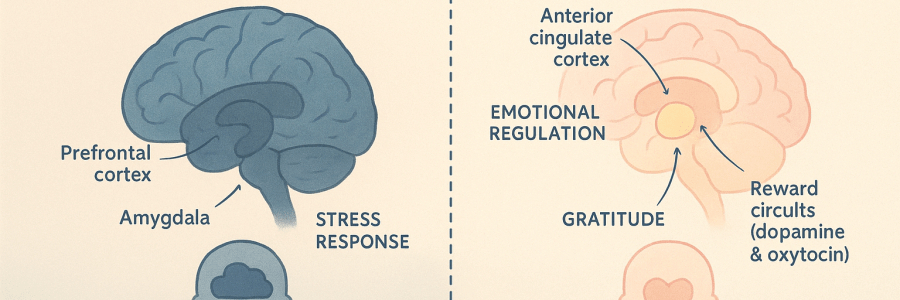
Regulate, Repair, and stay Resilient.

Staying physically and mentally healthy is a cornerstone of trauma recovery. Recovery isn’t just emotional; the body and mind need support to regulate, repair, and stay resilient. Here’s a structured approach for maintaining wellness during recovery: 1. Medical Health Regular check-ups keep you grounded and prevent neglect of your body: Consistency reinforces a sense of control over… Read More Regulate, Repair, and stay Resilient.

The Exact Internal Moment When Strength Reclaims Itself

This is often subtle and gradual, not dramatic. Neuroscience + psychology line up here: Signal What’s Happening Internally Outcome Sudden clarity Prefrontal cortex takes control over amygdala-driven fear loops Realisation: I don’t have to negotiate my worth anymore Shift from hope to self-interest Dopamine cravings from intermittent reinforcement fade Attachment energy is redirected internally Internal boundary… Read More The Exact Internal Moment When Strength Reclaims Itself

Write the ending your brain didn’t get ✍️

Alright — here’s how to consciously close a Zeigarnik loop, step by step, in a way your nervous system can actually accept (not just your logic). This isn’t about “getting over it.”It’s about finishing the story your brain keeps replaying. Step 1: Name the open loop (precisely) Your brain can’t close what’s vague. Instead of: Name it like this:… Read More Write the ending your brain didn’t get ✍️

What is the Zeigarnik effect?

The Zeigarnik effect is a psychological phenomenon where the brain remembers unfinished or interrupted experiences more strongly than completed ones. In simple terms: Your brain hates open loops. If something ends cleanly, the brain files it away.If something ends mid-emotion, mid-story, mid-hope — the brain keeps replaying it. Why it’s brutal in relationships 💔 Romantic situations are perfect Zeigarnik traps because… Read More What is the Zeigarnik effect?

Why Some Abusers Escalate Once More Before Stopping

This is called an extinction burst in neuroscience and behavioural psychology. It happens when a behaviour that used to work suddenly stops working. 1️⃣ The Brain Detects Reward Loss When a survivor enforces boundaries or goes silent, the abuser’s brain experiences: 🧠 The brain registers: “My usual strategy has failed.” But it does not interpret this as “stop.” 2️⃣ The… Read More Why Some Abusers Escalate Once More Before Stopping

Silence Removes the Regulation Source

Abusive dynamics work because the abuser uses another person to: When you go silent: 🧠 ResultThe nervous system loses its external regulator. ➡️ Dysregulation begins internally. 2️⃣ The Brain Encounters Reward Collapse Cruelty and control rely on dopamine prediction: “If I do X, I will get Y (reaction, fear, reassurance, submission).” Silence creates: 🧠 Dopamine drops sharply.This feels… Read More Silence Removes the Regulation Source

How One Enforced Boundary Disrupts the Entire Cruelty Loop

Cruelty depends on access.A single boundary works because it removes fuel, not because it teaches insight. 1️⃣ Boundary Enforcement = Circuit Interruption When a survivor enforces a boundary (not explains it, not negotiates it): 🧠 Neurological effect ➡️ The system experiences error, not satisfaction. 2️⃣ Why Silence Collapses the Reward Circuit Cruelty requires: Silence removes all three. What silence does neurologically… Read More How One Enforced Boundary Disrupts the Entire Cruelty Loop

Free from Threat

Safety is both internal and external, and it can look very different depending on context. Here’s a structured set of examples for survivors of abuse, framed in psychological and nervous-system terms: 1. Physical Safety External environment is secure, predictable, and free from threat. Examples: Nervous-system impact: 2. Emotional Safety You can experience feelings without judgment or manipulation.… Read More Free from Threat

When Freedom Arrives: What Comes Next — and Why It Hurts Before It Heals

Leaving long-term coercive control does not immediately feel like relief.For many people, the most intense psychological experiences come after distance, not during the abuse. This is not a setback.It is the nervous system finally having the safety required to process reality. 1. Why Self-Blame Appears During Clarity When clarity begins to emerge, self-blame often rushes in behind it.… Read More When Freedom Arrives: What Comes Next — and Why It Hurts Before It Heals