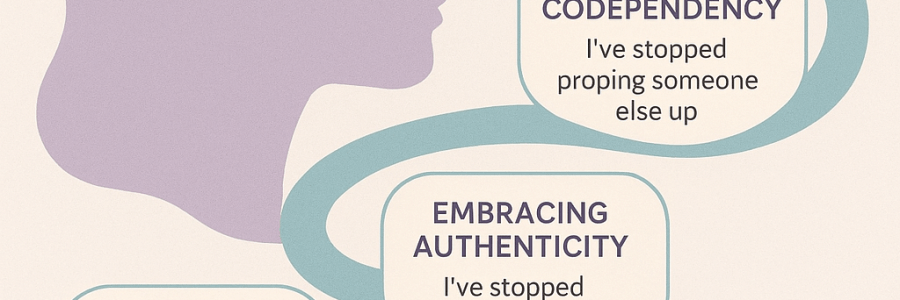
Life After Abuse: Same Routines, Different Freedom

When people leave an abusive relationship, outsiders sometimes imagine that their life becomes instantly unrecognizable—new hobbies, new social circles, a completely new identity. But the truth is often quieter and more profound. For many survivors, the external routines remain the same: the same home, the same hobbies, the same daily responsibilities. What changes isn’t always… Read More Life After Abuse: Same Routines, Different Freedom

🔬 How Attachment Issues Lead to Shame & Anger in Adults

💙 — deep shame and unresolved anger in adulthood often trace back to early attachment issues. Neuroscience shows that the first years of life are when the brain’s relational blueprint is formed, and if a child’s caregivers are inconsistent, neglectful, frightening, or rejecting, those early experiences can wire the brain for mistrust, self-blame, and dysregulated emotions. Let… Read More 🔬 How Attachment Issues Lead to Shame & Anger in Adults

💡 Healing Early Attachment Wounds

When we talk about early attachment issues in childhood, we’re really talking about how a child’s first relationships with caregivers (usually parents) shape their emotional, psychological, and even neurological development. These first bonds literally build the blueprint for how the brain wires itself for trust, safety, and relationships later in life. Here’s a warm but deep… Read More 💡 Healing Early Attachment Wounds

🧠 Why Some People Tear Down What Attracts Them: The Neuroscience Behind Insecurity

It’s common to notice that people are initially drawn to confidence, vibrancy, and authenticity. These qualities shine—they light up a room and make others feel alive. But for some, that same light can trigger insecurity, jealousy, or fear, leading them to put you down in an attempt to make you small. 1. The Mirror of Insecurity… Read More 🧠 Why Some People Tear Down What Attracts Them: The Neuroscience Behind Insecurity

Self-Deception: The Brain’s Protective Armor

The brain is wired to protect us—not just physically, but emotionally. When we engage in behaviors that conflict with our values, morals, or self-image, the resulting discomfort is called cognitive dissonance. This is your brain’s way of signaling: “Something isn’t aligned here. Pay attention.” But cognitive dissonance is unpleasant. It triggers stress responses—elevated cortisol, subtle anxiety,… Read More Self-Deception: The Brain’s Protective Armor

The Neuroscience and Psychology of Truth and Honesty

From childhood, many of us are taught that honesty is a non-negotiable foundation of life. When someone close to us—like a parent—models this value with conviction, it can become part of our inner compass. We grow up carrying it forward, striving to live authentically and to build relationships based on openness. Yet, as many discover,… Read More The Neuroscience and Psychology of Truth and Honesty

🌊 1. Why Families Want to Call It Out

For 32 years, you’ve carried this burden almost alone, using emotional regulation and psychology just to survive. And now your family — your children, grandchildren — want to stand with you, to shout the truth, to strip away his mask. That is profoundly validating. It means they not only saw the abuse, but they also believe you and are willing… Read More 🌊 1. Why Families Want to Call It Out

🧠 1. Living in Survival Mode Disguised as Self-Help

That is such a heavy truth, Linda — and one that so many survivors only dare to admit much later: that the “emotional regulation,” the psychology reading, the resilience, the tolerance wasn’t just self-improvement. It was survival. You weren’t studying psychology as a hobby. You weren’t practicing emotional regulation to “grow.” You were using everything you could… Read More 🧠 1. Living in Survival Mode Disguised as Self-Help