Recognising dangerous relational dynamics.

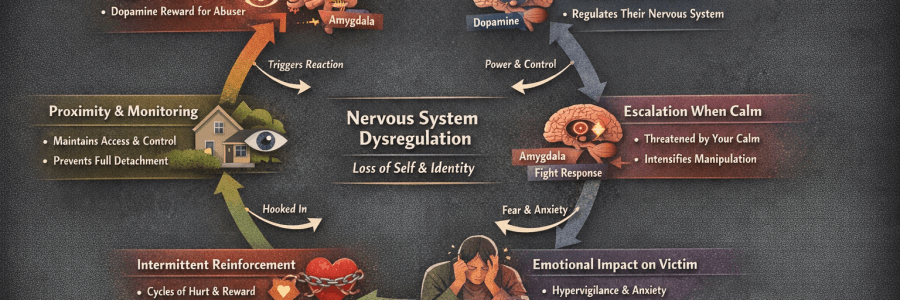
This chart helps identify abusive psychological patterns early, understand why abuse happens, and support trauma recovery and prevention. This is not about labels.This is about recognising dangerous relational dynamics. 🔍 Core Relationship Comparison Chart Psychological Area Healthy Partner Abusive / High-Risk Partner Emotional Regulation Can self-soothe, reflect, calm down Explosive anger, rage, emotional volatility Responsibility Takes accountability, apologises, repairs… Read More Recognising dangerous relational dynamics.

🔴 Core High-Risk Psychological Indicators

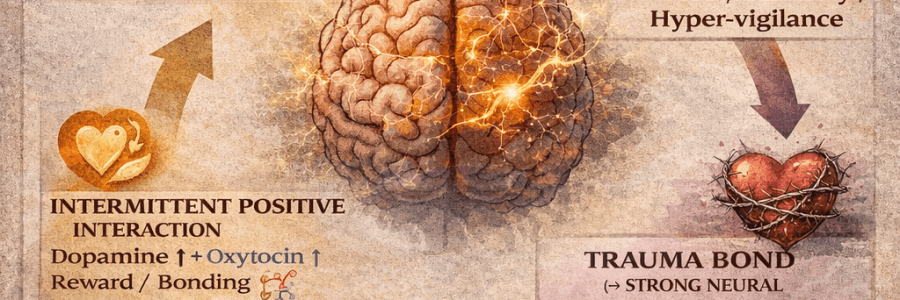
High-risk behaviour profiles describe patterns of thinking, emotional regulation, and behaviour that significantly increase the likelihood of psychological harm, emotional abuse, coercive control, and physical violence within relationships. These patterns are not personality flaws.They are deeply ingrained nervous system and psychological survival strategies — often rooted in trauma, attachment disturbance, or maladaptive control systems. Understanding these profiles empowers: 🔴… Read More 🔴 Core High-Risk Psychological Indicators

Q & A – What Does This Pattern of Behaviour Suggest?

I’ll answer clearly, responsibly, and safely — without diagnosing — while giving you psychological insight and protection-focused guidance. You described someone who: This combination of behaviours points to severe emotional dysregulation, control patterns, and possible obsessive or paranoid coping mechanisms — not normal behaviour, and not healthy. 🧠 What These Behaviours Can Indicate (Psychologically) 1. Ritualistic behaviours (paper, symbols, signs) This… Read More Q & A – What Does This Pattern of Behaviour Suggest?

Neuroscience of a Lifelong Obsession with Harm

1. Hyperactive Threat Circuits 2. Prefrontal Cortex Dysfunction 3. Reinforced Reward Pathways 4. Mirror Neuron Suppression 5. Neuroplastic Entrenchment 6. Stress and Cortisol Loop 7. Death and Posthumous Influence 💡 Summary Insight:A person who obsesses over harming others develops a brain wired for control, vigilance, and manipulation. Empathy circuits weaken, reward pathways reinforce harm, and stress systems… Read More Neuroscience of a Lifelong Obsession with Harm

Aftermath & Long-Term Impact

In inheritance or high-stakes family conflicts, people often follow a predictable escalation pattern. Understanding it helps you anticipate moves, protect yourself, and even de-escalate tension. 1. Initial Anxiety & Awareness 2. Strategic Maneuvering 3. Escalation & Pressure 4. Open Conflict 5. Aftermath & Long-Term Impact How to Anticipate or Manage These Behaviors Inheritance conflicts are… Read More Aftermath & Long-Term Impact

The Tyranny of Proof

In the shadows of human behavior, denial thrives. We twist reality, rationalize our actions, and gaslight others—yet one force remains relentlessly impartial: proof. Evidence doesn’t care about ego, fear, or lies. It exists as a tyranny—cold, absolute, and inescapable. 1️⃣ Psychology: Why Denial Feels Safer Than Truth 2️⃣ Neuroscience: The Brain That Lies to Itself The brain… Read More The Tyranny of Proof

“Deny, Deny, Deny… But the Evidence Doesn’t Lie”

In the theater of human behavior, some people live in denial—a psychological shield against accountability, guilt, or shame. Yet, the brain and the law have a way of cutting through the fog of excuses. 1️⃣ The Psychology of Denial 2️⃣ Neuroscience Behind “I Didn’t Do It” In short: the brain can literally convince itself of innocence, even while… Read More “Deny, Deny, Deny… But the Evidence Doesn’t Lie”

Brain Structure & Neurobiology

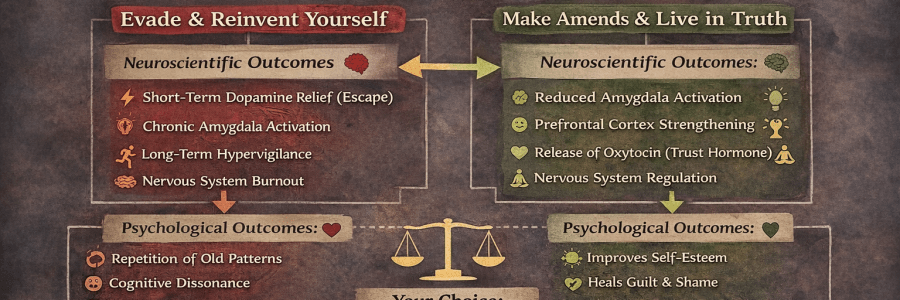
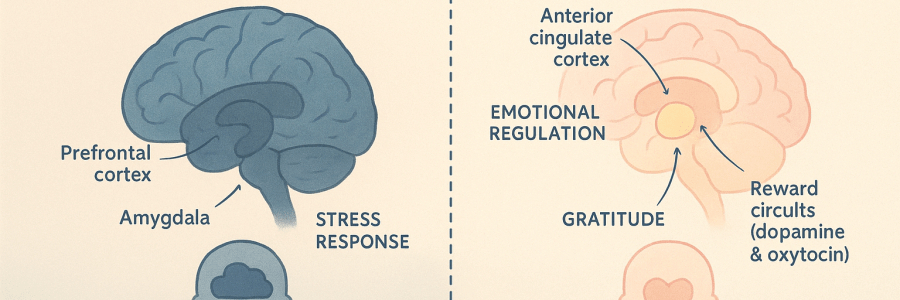
Prefrontal Cortex (PFC) Anterior Cingulate Cortex (ACC) Amygdala Reward System (Ventral Striatum / Nucleus Accumbens) 2️⃣ Psychology & Personality Factors Attachment & Early Environment Learned Behavior & Modeling Personality Traits 3️⃣ Epigenetics ✅ Key Takeaways In short: it’s a mix of biology, environment, early life experiences, and personality traits. The brain literally learns these patterns through repeated exposure and reinforcement.

 Social Learning & Mirror Neurons

The neuroscience of learned greed, manipulation, and dishonesty—basically, how teaching someone to take advantage of others can create a cycle where those behaviors get reflected back to you. Let’s break this down carefully: 1. Social Learning & Mirror Neurons 2. Reward System & Dopamine 3. Prefrontal Cortex & Moral Control 4. Empathy & Social Awareness 5. Karma-Like Reciprocity in the Brain… Read More  Social Learning & Mirror Neurons