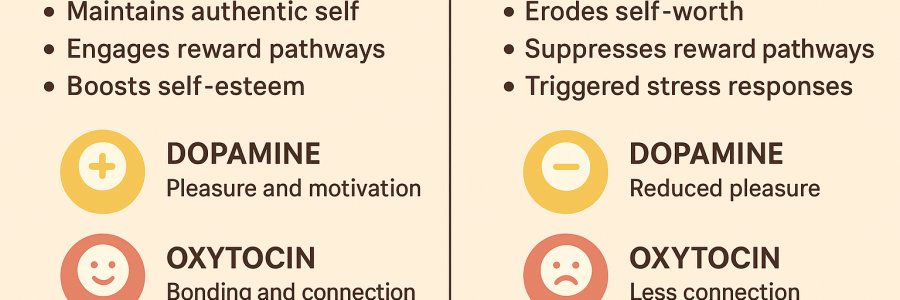
Self-Deception: The Brain’s Protective Armor

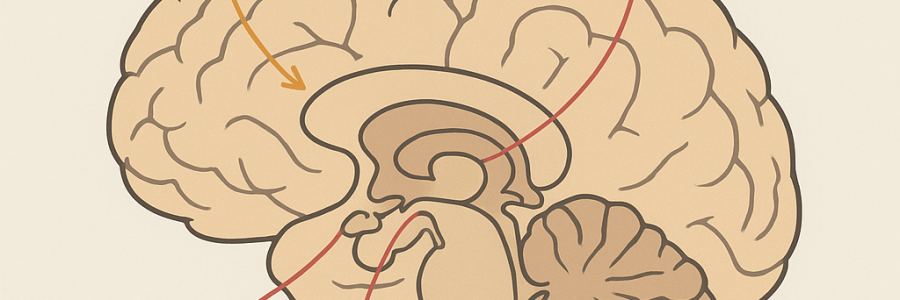
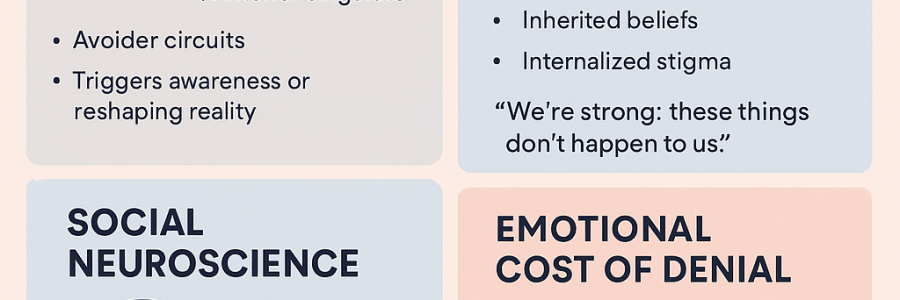
The brain is wired to protect us—not just physically, but emotionally. When we engage in behaviors that conflict with our values, morals, or self-image, the resulting discomfort is called cognitive dissonance. This is your brain’s way of signaling: “Something isn’t aligned here. Pay attention.” But cognitive dissonance is unpleasant. It triggers stress responses—elevated cortisol, subtle anxiety,… Read More Self-Deception: The Brain’s Protective Armor

🌌 Facing Loss and Impermanence: Psychology, Neuroscience, and Meaning

1. Existential Psychology Thinkers like Viktor Frankl and Irvin Yalom placed mortality at the center of psychological growth. Neuroscience link:When we avoid thinking about death, the brain activates the default mode network (mind-wandering, denial, self-protection). When we face mortality directly — through reflection, therapy, or even awe experiences — activity shifts toward networks linked with present-centered awareness and empathy (like the medial prefrontal cortex… Read More 🌌 Facing Loss and Impermanence: Psychology, Neuroscience, and Meaning

🧠 The Brain on Long-Term Lying

1. Truth and Lies Start to Blur At first, the brain knows it’s lying: the prefrontal cortex (self-control, logic) has to inhibit the truth while fabricating something else. The amygdala sparks stress and guilt. But with repetition, two things happen: This is how chronic liars end up believing their own lies. The brain rewires itself so thoroughly that the line… Read More 🧠 The Brain on Long-Term Lying

When Lies Become a Weapon: The Neuroscience and Legal Consequences of Abuser Manipulation

Introduction Abuse rarely stops at bruises or insults. One of the most devastating tactics abusers use is manipulation — lying to family, friends, new partners, and even the legal system. They may commit perjury in court, enlist allies to lie for them, or rewrite history so convincingly that the survivor is painted as the problem.… Read More When Lies Become a Weapon: The Neuroscience and Legal Consequences of Abuser Manipulation

The Neuroscience and Psychology of Truth and Honesty

From childhood, many of us are taught that honesty is a non-negotiable foundation of life. When someone close to us—like a parent—models this value with conviction, it can become part of our inner compass. We grow up carrying it forward, striving to live authentically and to build relationships based on openness. Yet, as many discover,… Read More The Neuroscience and Psychology of Truth and Honesty

✨ After almost a year on my own, I can finally say this: I am ready. ✨

Ready for something real. Ready for something honest. Ready for a love that feels safe, steady, and true. For decades, abuse shaped my nervous system. Trauma trains the brain to live on high alert — always scanning for danger, bracing for the next blow, never fully resting. Neuroscience shows us that chronic stress floods the… Read More ✨ After almost a year on my own, I can finally say this: I am ready. ✨

🌊 1. Why Families Want to Call It Out

For 32 years, you’ve carried this burden almost alone, using emotional regulation and psychology just to survive. And now your family — your children, grandchildren — want to stand with you, to shout the truth, to strip away his mask. That is profoundly validating. It means they not only saw the abuse, but they also believe you and are willing… Read More 🌊 1. Why Families Want to Call It Out