Headline reported-crime numbers (most recent official sources)
Quick comparative point (reported crime vs survey/prevalence) Limitations & what these numbers DO / DO NOT show
Mental health refers to a person’s emotional, psychological, and social well-being, encompassing the ability to handle stress, relate to others, make decisions, and navigate the challenges of life. It influences how individuals think, feel, and act, contributing to the overall balance and quality of their lives. Mental health is essential at every stage of life, from childhood and adolescence through adulthood.
Quick comparative point (reported crime vs survey/prevalence) Limitations & what these numbers DO / DO NOT show
Here are some of the most recent global estimates and statistics on physical, emotional/psychological, and financial abuse, including intimate partner, elder, children-abuse, etc. These are prevalence figures, not always “reported crimes,” because underreporting is a major issue. Key Global Prevalence Figures Population / Type Abuse Type Prevalence / Key Stats Violence against women (intimate partner /… Read More Key Global Prevalence Figures
Recently, I had an enormous clear-out. I went through every wardrobe, every drawer, and every hanger — and removed the clothes I had been wearing for the past 30 years. Clothes my mother had passed down to me, clothes my daughter had given me, and endless second-hand items that I accepted because, for decades, I was restricted… Read More Reclaiming Myself: From Decades of Deprivation to Living Life on My Terms
For three decades, I lived in a marriage defined more by negativity than by love, support, or growth. And yet, anyone who knows me would describe me as a positive and resilient person. That duality — optimism on the inside, toxicity on the outside — was my reality for many years. The “R & R” That Became… Read More Choosing My Own Freedom: How Resourcefulness and Resilience Carried Me to a Life-Changing Decision
The saying “you are what you think” isn’t just motivational—it’s rooted in psychology and neuroscience. The way we interpret the world directly influences how we feel, how we behave, and even how our brain wires itself over time. 1. The Psychology of Thoughts → Emotions → Actions In cognitive psychology, this is often described through the cognitive triangle:… Read More You Are What You Think: How Your Thoughts Shape Your Actions
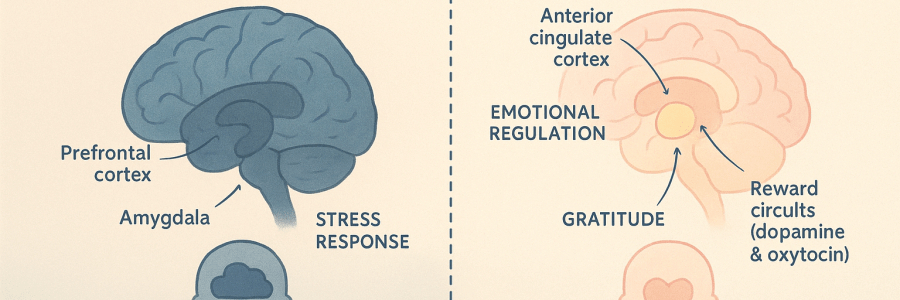
⏱ Total time: ~5 minutes 1. Light + Breath Reset (1 min) 2. Name Three Anchors (1 min) 3. Savor & Feel (1 min) 4. Micro-Connection (1 min) 5. Set a Calm Intention (1 min) ✨ In just 5 minutes: Do this consistently, and your brain literally learns to expect peace and gratitude each morning.
🌞 Sunshine 🐕 Connection with Your Dog ☀️ Peace and Calm 💛 Kindness, Softness, Support, Thoughtfulness 🙂 Presence, Smiles, and Laughter 🧠 The Bigger Picture: Neuroplasticity of Daily Gratitude Every time you notice and savour these things — sunshine, your dog, peace, kindness — your brain’s neural pathways for safety and joy strengthen. This is neuroplasticity… Read More The Psychological & Neuroscientific Effects of Gratitude for Everyday Joys
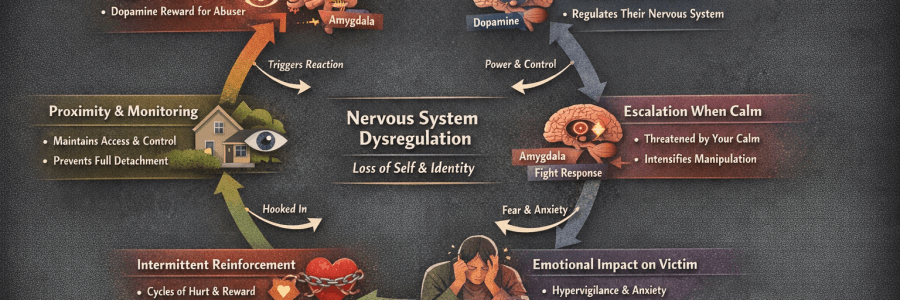
One of the most painful tactics of coercive control is when the abuser pits you against your own family. They exploit natural tensions, twist conversations, and create false narratives until you feel like you’re at war with the very people who should be your support system. This isn’t accidental conflict. It’s a deliberate psychological strategy.… Read More When Abusers Turn Family Into Enemies: The Psychology of Divide-and-Conquer
Recognising Coercive Control Through Social Isolation One of the most devastating signs of coercive control is when every close friend who knows about the abuse eventually drifts away — not by accident, but because the abuser orchestrates it. They bad-mouth, twist facts, and plant seeds of doubt until the friendships crumble. Victims are left not… Read More When Abusers Turn Friends Into Enemies:
1. Frequency & Effort 2. Emotional Sharing 3. Conflict Handling 4. Future Talk 5. Balance of Listening & Talking 6. Consistency vs. Mixed Signals 7. Intimacy & Vulnerability 🔍 How to Use This: