From Inferiority to Control: What Adler Can Teach Us About Harmful Relationship Dynamics

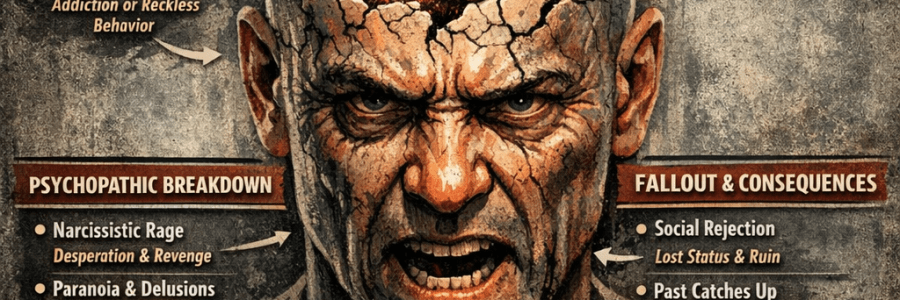
In 1912, Alfred Adler published The Neurotic Constitution, introducing a powerful idea: That many unhealthy behaviours are not random—but rooted in a deep sense of inferiority. Adler believed that when a person feels fundamentally “less than”—not good enough, not important enough, not secure enough—they don’t simply sit with that feeling. Instead, they try to compensate… Read More From Inferiority to Control: What Adler Can Teach Us About Harmful Relationship Dynamics

Kindness Costs Nothing — Yet Some People Still Refuse to Give It

Kindness costs nothing. No money.No status.No special privilege. And yet, for some people, it seems to be the hardest thing in the world to offer. That truth can be difficult to understand—especially if you are someone who gives kindness naturally. If you are someone who considers others, who chooses your words carefully, who would rather… Read More Kindness Costs Nothing — Yet Some People Still Refuse to Give It

When Illness Is Real: A Quiet Reflection on Strength, Perspective, and Compassion

There are days when your thoughts turn, almost instinctively, to the people in your life who are facing genuine illness. Not the kind that can be brushed aside or exaggerated for effect—but the kind that reshapes daily life, demands resilience, and asks more of a person than most of us will ever fully understand. Real… Read More When Illness Is Real: A Quiet Reflection on Strength, Perspective, and Compassion

Ambiguous Deprivation: The Invisible Loss That Shapes Us

Psychologists sometimes refer to a subtle but deeply impactful experience as ambiguous deprivation.It’s not about something dramatic that happened to you.It’s about what didn’t. It’s the quiet absence of what should have been there: And because nothing obvious was “taken,” it can be incredibly hard to name. The Loss You Can’t Point To Unlike clear trauma, ambiguous… Read More Ambiguous Deprivation: The Invisible Loss That Shapes Us

“At some point, this stops being about health—and becomes about accountability.”

Being told you are medically clear and then continuing to present yourself as seriously unwell is not just a personal issue. When it’s used to avoid responsibility, delay obligations, or justify harmful behaviour, it becomes something else entirely. There is a clear line between: And that line matters—especially in legal and community contexts. Because while… Read More “At some point, this stops being about health—and becomes about accountability.”

Why an abusive person can seem calm right after harming you

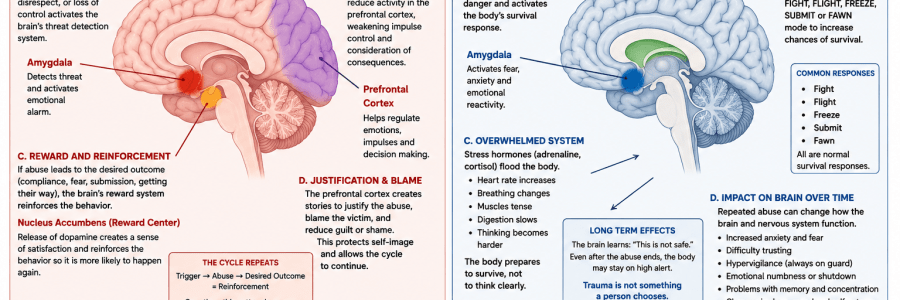
1. Their stress system just discharged Before the outburst, their brain is often in a high-alert state: When they lash out (verbally, emotionally, or physically), it can act like a release valve. So their body goes from:high stress → discharge → relief That relief can look like: 2. Your distress regulates their nervous system This is one of… Read More Why an abusive person can seem calm right after harming you