🧠 Flow Diagram: Pretender’s Brain vs. Your Brain

Pretender’s Brain (Internal Process) Insecurity / Goal → “I need to impress / control / belong.”↓ Prefrontal Cortex → Builds and manages the fake persona (planning, suppressing truth).↓ High in anxious pretenders (fear of being caught). Low in manipulative types (reduced guilt).↓ Reward System (Dopamine) → Every time the lie “works” (admiration, attention, gain), dopamine reinforces the behavior.↓… Read More 🧠 Flow Diagram: Pretender’s Brain vs. Your Brain

When You Meet Someone Pretending to Be Something They’re Not

🔹 1. Psychology Behind the Mask Insecurity & Low Self-EsteemPretending often hides deep feelings of inadequacy. They create a “false self” to gain acceptance. Impression ManagementEveryone manages impressions a little, but chronic pretenders do it excessively — tailoring their identity to fit what they think you want. Social & Survival StrategyIn evolutionary psychology, deception sometimes… Read More When You Meet Someone Pretending to Be Something They’re Not

The Master of Bullshit: Why People Pretend to Be What They’re Not

1. The Psychology of Pretending When you meet someone who presents a fake persona, you are encountering a form of impression management. This is the psychological strategy of controlling how others perceive you. At its mildest, it’s harmless social adaptation (smiling politely, dressing well). But when it becomes exaggerated or manipulative, it’s deception. Insecurity & Low Self-Esteem:… Read More The Master of Bullshit: Why People Pretend to Be What They’re Not

🕒 Course Duration & Structure

Courses at Lucie Clayton College during the 1970s typically spanned from a few days to a full year. The curriculum was designed to prepare young women for societal events like “The Season,” focusing on personal development and practical skills. The Guardian 📚 Subjects Covered The training encompassed a blend of traditional and modern subjects: Deportment and… Read More 🕒 Course Duration & Structure

Finishing School

A finishing school is a private school (often in Europe, historically in Switzerland, France, or the UK) designed to teach young women—usually from wealthy or aristocratic families—social graces, cultural education, and high standards of etiquette. Instead of focusing mainly on academics, finishing schools emphasized: ✨ Core Teachings Etiquette & Manners – how to conduct oneself at formal dinners,… Read More Finishing School

🧠 Neuroscience & Psychology Behind It

The brain creates strong dopamine pathways around what feels familiar and rewarding. If you’ve always had high-quality experiences, that is what gives you natural pleasure. Lowering your standards creates dopamine depletion → things feel bland, unsatisfying, even depressing. Early life experiences hardwire your sense of self. Being surrounded by refinement teaches your subconscious: “I am worthy of excellence.” Accepting less can… Read More 🧠 Neuroscience & Psychology Behind It

🌟 Never Compromise Yourself: The Psychology & Neuroscience of Standards and Lifestyle

🧠 Why Lifestyle Standards Matter If you’ve been raised or accustomed to a certain lifestyle — fine dining, travel, cultural experiences, or financial stability — those aren’t just “luxuries.” They shape your identity, comfort zone, and reward system in the brain. Identity Anchoring: Lifestyle habits become part of your self-schema (your mental model of “who I am”). Compromising too far… Read More 🌟 Never Compromise Yourself: The Psychology & Neuroscience of Standards and Lifestyle

🔥 Why Head Games Kill Sexual Connection

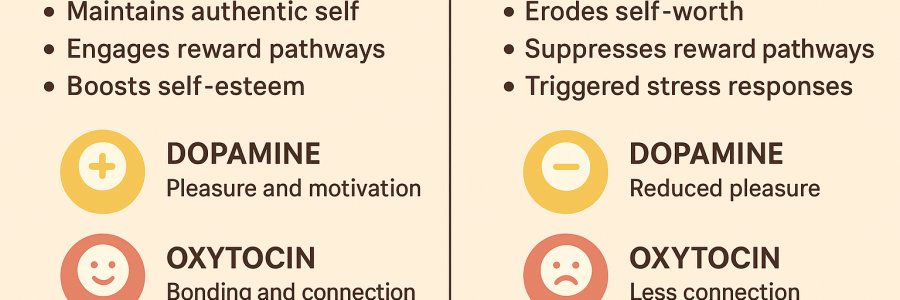
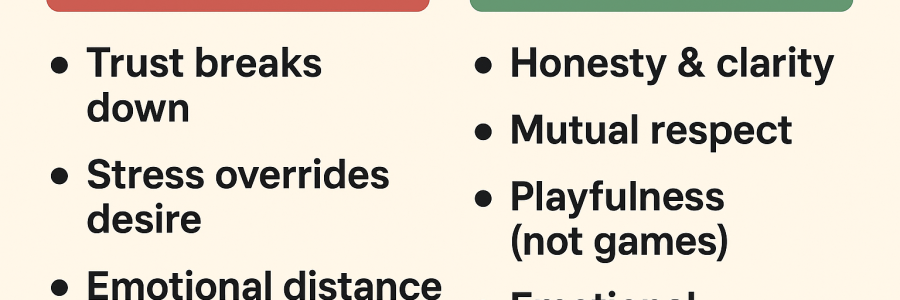
1. Trust Breaks Down Sex thrives on safety and openness. When one partner plays hard to get, manipulates, or withholds affection, it erodes trust. 2. Stress Overrides Desire Cortisol (stress hormone) rises when you’re anxious, confused, or insecure. High cortisol suppresses dopamine (pleasure/reward) and oxytocin (bonding), both essential for sexual arousal. 3. Emotional Distance Head games create power struggles instead of connection. Emotional… Read More 🔥 Why Head Games Kill Sexual Connection