Sometimes No Response Is a Response: What Neuroscience and Psychology Teach Us About Silence
One of the hardest truths in relationships is this: not everyone will give you the closure you deserve.
Some people disappear.
Some delay.
Some avoid difficult conversations.
Some leave your messages unread—or answered only by silence.
And yet, that silence often tells you exactly what you need to know.
Not always what you want to hear.
But what you need.
The Brain Hates Uncertainty
From a neuroscience perspective, ambiguity is deeply uncomfortable.
The brain’s threat system—particularly the amygdala—does not like unanswered questions. It interprets uncertainty as potential danger.
“Why haven’t they replied?”
“Did I say something wrong?”
“Are they busy, or avoiding me?”
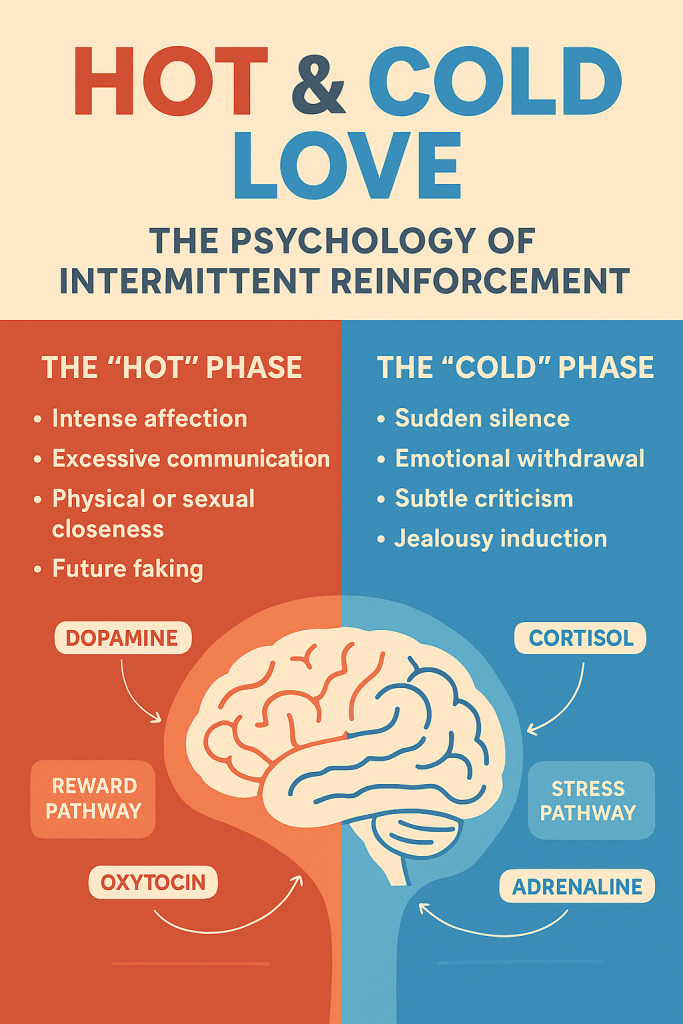
This uncertainty activates stress pathways, increasing cortisol (the stress hormone) and keeping the nervous system in a state of hypervigilance.
This is why silence can feel louder than words.
Your brain starts searching for answers:
- replaying conversations
- analysing every message
- inventing explanations
- clinging to hope
It is trying to reduce uncertainty.
But often, the answer is already there.
No response is data.
Silence Is Communication
In psychology, we often focus on what people say—but behaviour is usually the more honest language.
A delayed response can mean many things.
But consistent non-response often communicates:
- lack of emotional availability
- avoidance of discomfort
- inability to communicate directly
- lack of priority
- lack of respect
- or simply, lack of interest
None of these require a text message to become true.
Silence speaks.
The Trap of Intermittent Reinforcement
One reason people get stuck waiting is something called intermittent reinforcement.
This is the same principle that makes gambling addictive.
A small reward—one text, one affectionate message, one sudden reappearance—keeps you hoping for the next one.
Your brain releases dopamine, not from certainty, but from anticipation.
That creates a painful loop:
silence → anxiety → brief contact → relief → more attachment
It feels like love.
Often, it is addiction to unpredictability.
Mature Decisions Are Often Made in Silence
When someone does not respond, we often think:
“I need more information.”
But sometimes what we actually need is:
acceptance.
No reply may be telling you:
- stop investing here
- stop chasing clarity from someone committed to confusion
- stop negotiating with ambiguity
- stop waiting for someone to become who they have already shown they are not
That is where good decisions are born.
Not in another message.
Not in another explanation.
In acceptance.
Emotional Maturity Means Listening to Behaviour
Words can comfort.
Promises can seduce.
Patterns tell the truth.
If someone repeatedly:
- avoids difficult conversations
- disappears when accountability is needed
- only returns when it suits them
that pattern is the answer.
Silence is not always accidental.
Sometimes it is a decision made by someone unwilling to say it aloud.
Protect Your Nervous System
Choosing not to chase silence is not giving up.
It is nervous system protection.
It is saying:
“I will not let someone else’s avoidance become my emotional labour.”
Peace often begins when you stop demanding closure from people committed to withholding it.
Final Thought
Sometimes no response is rejection.
Sometimes it is avoidance.
Sometimes it is confusion.
But whatever it is—it is information.
And once you accept that, something powerful happens:
you stop waiting.
You stop decoding.
You stop abandoning yourself.
And you begin making decisions based on reality—not hope.
Because sometimes silence doesn’t leave you empty.
It leaves you free.
— Linda C J Turner
Trauma Therapist | Neuroscience & Emotional Intelligence Practitioner | Advocate for Women’s Empowerment
©Linda C J Turner
© 2025 Linda Carol Turner. Content protected by copyright. Reproduction or redistribution in any form requires prior written permission from the author. When quoting or referencing, please cite: Linda Carol Turner, Psychology & Neuroscience Insights.

