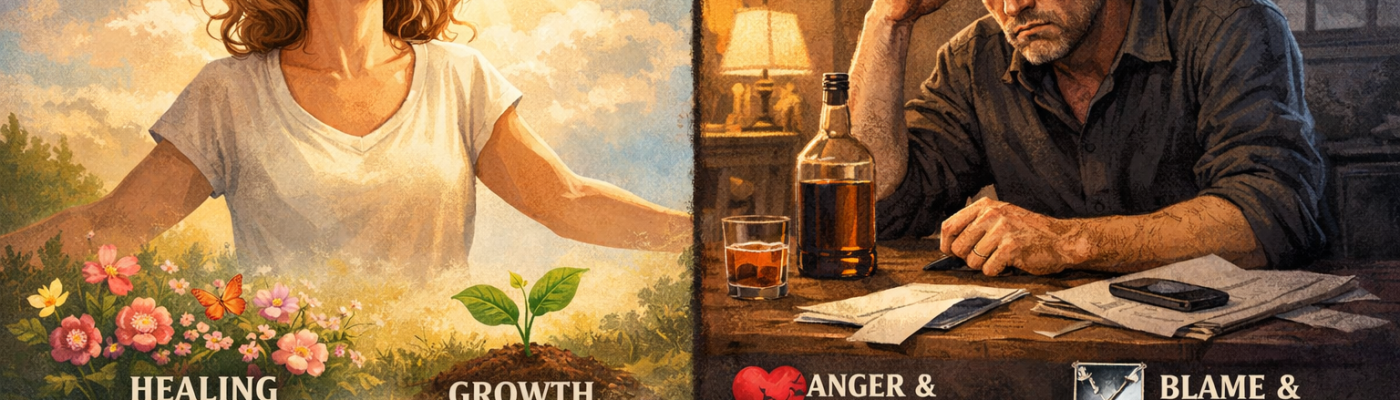
Research in Psychology and Neuroscience shows that some abusive or highly narcissistic personalities often become more rigid, angry, and unhappy as they grow older. This pattern is often associated with traits linked to Narcissistic Personality Disorder, though not every abusive person has the disorder.
The reason has a lot to do with how their identity and emotional regulation are structured.
Why Some Abusive Personalities Deteriorate With Age
1. Their Identity Depends on Power
Many controlling personalities build their self-worth around:
- dominance
- admiration
- being right
- controlling others
When they are younger they may maintain this through:
- status
- physical presence
- financial control
- intimidation
But as life progresses, those sources of control gradually weaken.
Children grow up.
Partners leave.
Careers change.
Health declines.
The brain then experiences a threat to identity, which activates the stress and threat systems.
2. The Brain Becomes More Rigid With Time
The brain naturally becomes less flexible with age.
Healthy personalities adapt by developing:
- empathy
- reflection
- emotional maturity
But individuals who rely on defensiveness and blame often resist reflection.
Instead of adapting, their thinking becomes:
- more black-and-white
- more suspicious
- more resentful
Their brain repeatedly reinforces the same anger pathways.
3. Loss of Narcissistic Supply
In psychology this is sometimes called loss of validation or “narcissistic supply.”
Earlier in life they may receive validation from:
- work status
- social attention
- controlling a partner
- admiration from others
When those sources decline, the brain experiences:
- humiliation
- insecurity
- rage
Instead of processing grief or vulnerability, they may react with increased hostility.
4. Isolation Increases
Over time many people around them begin to see the pattern of behaviour.
Friends, partners, and family may gradually distance themselves.
Isolation removes the emotional feedback that normally helps people grow.
Without meaningful connection, bitterness often deepens.
5. No Internal Emotional Tools
Healthy ageing requires:
- self-reflection
- acceptance
- emotional regulation
- compassion
People who relied on control often never developed these tools.
So when life becomes harder, they have no internal coping mechanisms.
Simple Psychological Pathway Diagram
EARLY LIFE
Control → Validation → Ego reinforcement
        ↓
Power, admiration, dominance
        ↓MID LIFE
Relationships strained
Control challenged
        ↓
Defensiveness and blame increase
        ↓LATER LIFE
Loss of status / control
Isolation grows
        ↓
Unresolved insecurity
        ↓EMOTIONAL OUTCOME
Bitterness
Anger
Victim mentality
Loneliness
The Survivor’s Opposite Path
People who leave abusive environments often move in the opposite direction.
Leaving abuse
       ↓
Processing pain
       ↓
Self-awareness
       ↓
Boundaries
       ↓
Peace and emotional freedom
💡 A powerful insight from trauma research:
People who confront pain often grow stronger and wiser, while people who avoid responsibility often become more trapped in their own anger.
 Linda C J Turner | Trauma Therapist & Emotional Healing Specialist