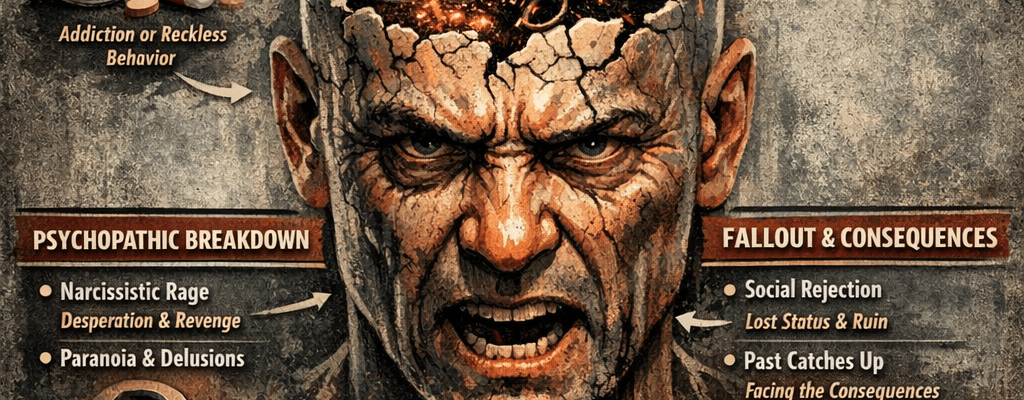
During the marriage, the abuser tries to control your happiness.
During the divorce, they try to control your freedom.
Afterward—when control fails—their internal system can destabilize.
Let’s look at this from a neuroscience perspective, calmly and clearly.
1️⃣ During the Marriage: Control = Regulation
For some abusers, control over a partner functions like emotional regulation.
When they:
- Monitor you
- Restrict your independence
- Undermine your happiness
- Create instability
…it gives them a false sense of power, which temporarily reduces their internal insecurity.
Neurologically:
- Their amygdala (threat center) is hyperactive.
- Their prefrontal cortex (reason, empathy, impulse control) is weaker under stress.
- Dominance behaviors temporarily release dopamine (reward chemistry).
Control becomes their coping mechanism.
2️⃣ Divorce: Loss of Control = Nervous System Shock
Divorce removes their external regulation source.
When they can no longer:
- Control your mood
- Control your finances
- Control your reputation
- Control your access to freedom
Their nervous system can go into overdrive.
Stress hormones spike:
- Cortisol increases.
- Adrenaline rises.
- Sleep decreases.
- Paranoia can intensify.
This is when you may see:
- Rage escalation
- Smear campaigns
- Legal aggression
- Desperation attempts to regain power
It’s not about love.
It’s about loss of control.
3️⃣ When There Is No One Left to Use
Here is where the “ticking time bomb” can implode.
If a person has built their identity around:
- Superiority
- Dominance
- Manipulation
- External validation
…and those are removed…
They are left alone with:
- Shame
- Insecurity
- Emptiness
- Dysregulated stress response
Without targets, projection collapses.
The chaos they once created externally becomes internal.
4️⃣ The Breakdown Phase (In Some Cases)
Not all abusers break down visibly, but when they do, it can look like:
- Self-destructive behavior
- Substance misuse
- Financial recklessness
- Extreme victim narratives
- Emotional volatility
- Isolation
The key neuroscience factor:
Chronic stress without external discharge = internal dysregulation.
The prefrontal cortex struggles to regulate.
The amygdala remains activated.
Impulse control weakens.
They can’t control themselves—never mind anyone else.
5️⃣ Important Reality Check
However—and this is important:
Not every abuser collapses.
Some:
- Quickly find a new partner to regulate through.
- Reinvent themselves socially.
- Maintain a calm public image.
- Continue patterns quietly.
The breakdown you’re describing happens most often when:
- Reputation is damaged.
- Legal accountability increases.
- Social circles withdraw.
- They lose financial power.
- No new supply is available.
6️⃣ What This Means for You
Their endgame is not your responsibility.
If they spiral:
- It is the consequence of their coping structure collapsing.
- It is not something you caused.
- It is not something you can fix.
Your nervous system may still feel hyper-alert because you were trained to monitor their instability.
But when control leaves their hands, the real destabilization is internal.
 Linda C J Turner | Trauma Therapist & Emotional Healing Specialist