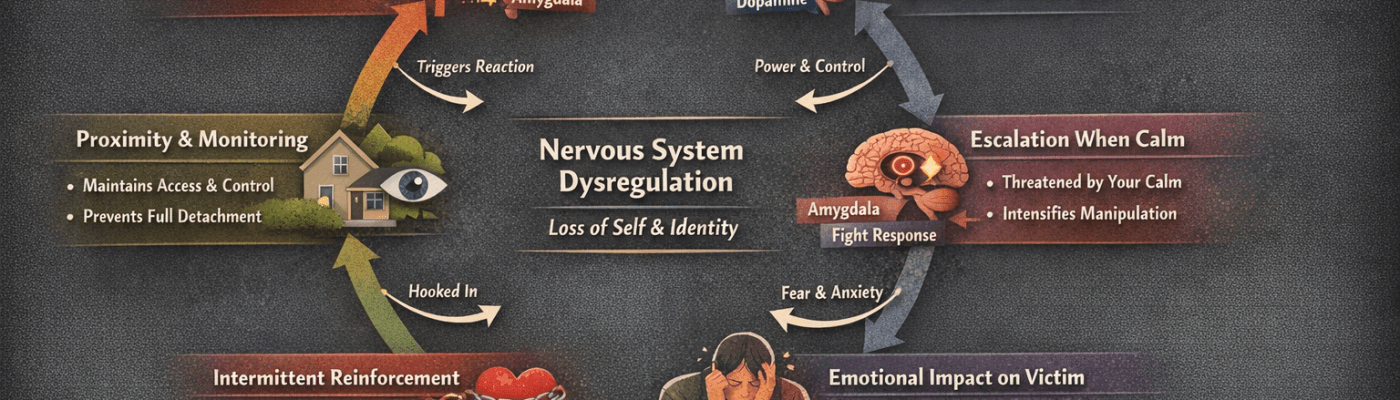
A lifetime of anticipatory harm, manipulation, and emotional abuse leaves deep scars, especially when it extends into thoughts about someone even after death. Neuroscience and psychology actually shed some light on this kind of behavior:
1. Persistent Malicious Intent
- Some people spend years preoccupied with control, harm, or vindication.
- Brain networks involved include amygdala hyperactivity (heightened threat/fear responses) and prefrontal cortex dysfunction (poor impulse regulation, lack of empathy).
- Over time, this can create a feedback loop: the more they plan harm, the more reinforced their negative thinking becomes.
2. Lack of Empathy & Self-Absorption
- Chronic focus on harming or manipulating others is often linked to low empathy circuits and narcissistic traits.
- They may experience others’ suffering not as something to prevent, but as something to exploit.
- This explains why such behaviors can persist for decades—it becomes the central narrative of their life.
3. Behavioral Neuroscience Insight
- Years of plotting or anticipating harm rewires the brain to be hyper-focused on control and threat rather than collaboration or connection.
- Even after death, some may structure estates, wills, or social influence to continue exerting control—a phenomenon sometimes called posthumous manipulation.
4. Emotional & Moral Consequences for the Observer
- Witnessing this over a lifetime can create chronic stress, hypervigilance, and trauma responses in the target.
- It’s normal to feel anger, grief, and resignation when seeing the patterns unfold.
- Neuroscience shows that observing repeated abuse activates the stress system (HPA axis), leaving long-term physiological and emotional effects.
5. Coping & Protective Insight
- Recognize that this behavior reflects the abuser’s pathology—not your worth or value.
- Observing without engaging (“sitting back”) is a self-protective strategy.
- Documentation, boundaries, and professional support (therapist, trauma-informed legal aid) are key tools to protect your wellbeing and mental clarity.
In short: the brain of someone who obsessively plots harm becomes trapped in a cycle of vindictiveness and control, and the most powerful antidote for those around them is emotional and cognitive separation—witnessing without being consumed.
 Linda C J Turner | Trauma Therapist & Emotional Healing Specialist