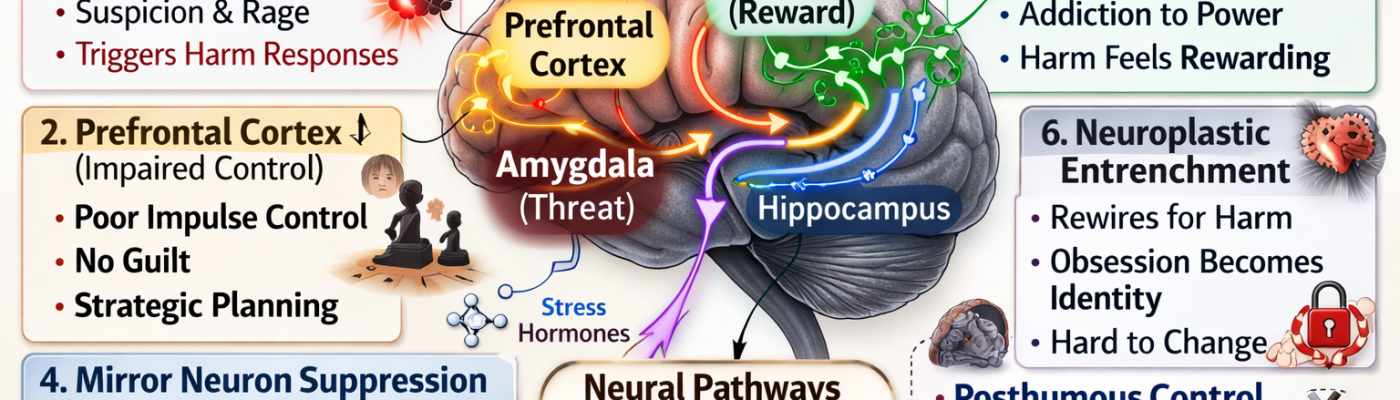
1. Hyperactive Threat Circuits
- Amygdala: The brain’s alarm system becomes constantly on high alert, interpreting others’ actions as threats or targets for manipulation.
- Result: Every interaction is filtered through a lens of suspicion, fear, or opportunity to control. Even minor slights trigger intense emotional responses.
2. Prefrontal Cortex Dysfunction
- Normally, the prefrontal cortex regulates impulses, considers consequences, and enables empathy.
- In someone obsessed with harming others, this region is underactive or hijacked, allowing harmful plans to override social norms or moral reasoning.
- Result: They can plan complex, long-term strategies to hurt others without guilt.
3. Reinforced Reward Pathways
- Dopamine circuits (striatum) reward perceived success, even if it’s harming someone else.
- Each act of manipulation or successful control triggers a pleasurable reinforcement, strengthening the brain’s habit loops.
- Result: They literally “train” their brain to seek harm as a source of reward.
4. Mirror Neuron Suppression
- Mirror neurons help us empathize and feel what others feel.
- In chronic manipulators, these neurons are less active, so the suffering of others doesn’t register as distress—it may even be gratifying.
- Result: They can obsess over harm without internal moral conflict.
5. Neuroplastic Entrenchment
- Over decades, repeated plotting physically shapes neural circuits.
- The more they ruminate on revenge or control, the stronger these pathways become, making it harder to shift focus to normal social behavior.
- Result: This obsession becomes a core part of their identity—hardwired.
6. Stress and Cortisol Loop
- Constant preoccupation with others’ lives or future harm activates the HPA axis (stress hormone system).
- Elevated cortisol reinforces vigilance and aggression, while damaging the hippocampus, which normally supports memory and emotional regulation.
- Result: They are biologically primed to stay reactive and controlling throughout life.
7. Death and Posthumous Influence
- The brain’s obsession can even extend into planning influence after death, e.g., wills, legacies, or social control.
- Neuroscience shows the same reward loops and moral bypass circuits can operate on abstract “future targets” as if they were immediate threats.
💡 Summary Insight:
A person who obsesses over harming others develops a brain wired for control, vigilance, and manipulation. Empathy circuits weaken, reward pathways reinforce harm, and stress systems keep them reactive. It’s not just psychological—it’s literally neurological, which explains why such behavior can persist relentlessly for decades.
 Linda C J Turner | Trauma Therapist & Emotional Healing Specialist