he neuroscience behind why a “Me, Me, Me” personality—self-centeredness or narcissistic traits—can appear to “run in the family.” Let’s break it down carefully:
1. Genetic and Heritable Factors
- Research shows traits like narcissism, self-centeredness, and certain personality disorders have a moderate heritable component. Twin and family studies suggest 30–50% of variance in narcissistic traits may be genetic.
- This doesn’t mean children will automatically inherit a “Me, Me, Me” personality—it’s a predisposition, not destiny.
2. Brain Networks & Neurobiology
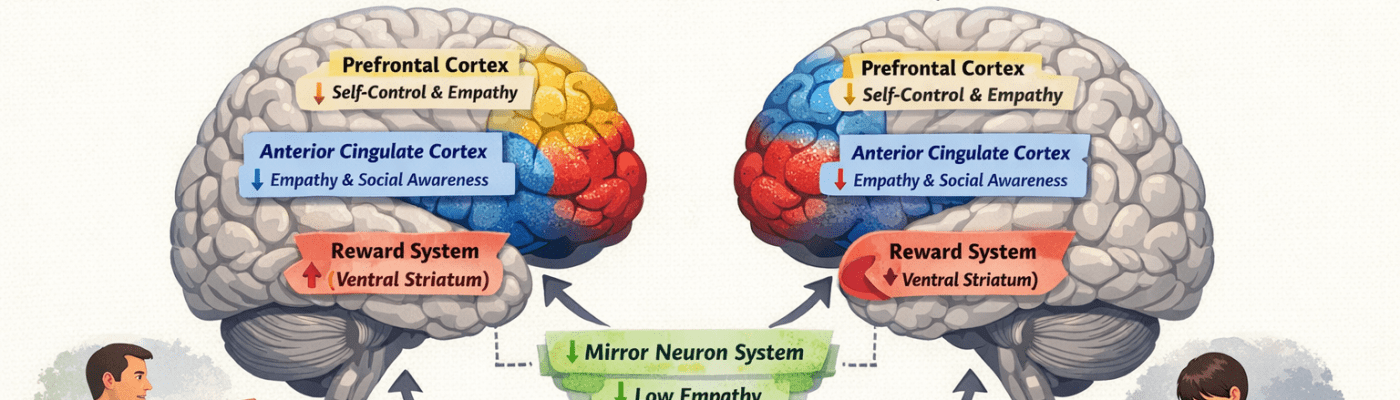
- Prefrontal Cortex (PFC): Controls impulse regulation, self-control, and empathy. Reduced activity in some areas (especially medial PFC) can make people more self-focused.
- Anterior Cingulate Cortex (ACC): Monitors social errors and empathy; underactivity may reduce sensitivity to others’ needs.
- Reward System (Ventral Striatum & Nucleus Accumbens): Overactive reward circuits can amplify self-focused pleasure-seeking and attention-seeking behavior.
- Mirror Neuron System: Helps us empathize with others. Less activation here can contribute to more self-centered perspectives.
3. Environmental & Epigenetic Influences
- Even with a genetic predisposition, family environment is crucial:
- Parenting style: Overly permissive, neglectful, or excessively praising (“You’re special, the world revolves around you”) can reinforce self-centered thinking.
- Modeling: Children imitate parents’ social behaviors; repeated exposure to self-centered adults can normalize it.
- Epigenetic changes can modify gene expression—so stressful or emotionally neglectful environments can amplify these traits.
4. The Neuroscience of “Running in the Family”
- It’s a combination of heritable brain patterns and learned behaviors.
- Neural circuits related to reward, self-reference, and social cognition can develop differently under family dynamics that reinforce “Me, Me, Me” attitudes.
- So, it’s not purely genetics, nor purely nurture—it’s a dynamic interplay of both.
✅ Key Takeaway
A “Me, Me, Me” pattern in families is usually:
- Partly genetic: predisposition to self-focused reward circuits.
- Partly environmental: modeled behaviors, parental reinforcement, early attachment experiences.
- Epigenetically influenced: life experiences can strengthen or mitigate the trait.
 Linda C J Turner | Trauma Therapist & Emotional Healing Specialist