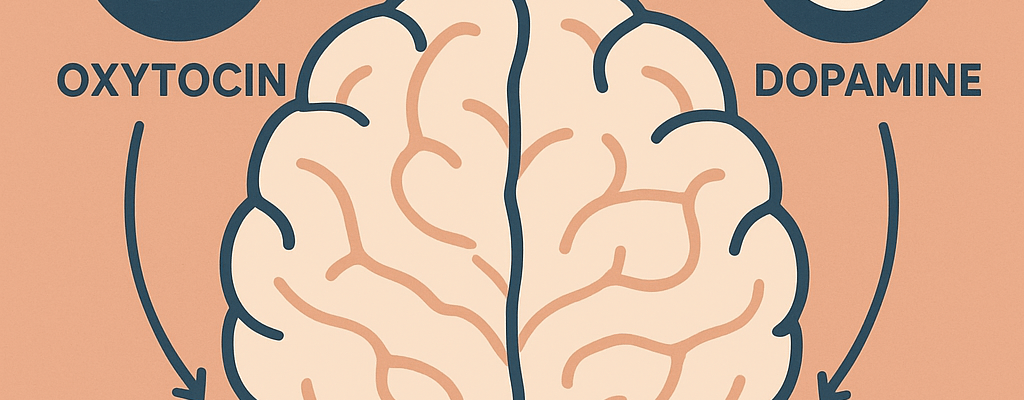
Trauma bonds form when attachment + threat + intermittent relief get wired together.
Some personalities reliably create that wiring.
1. The Hot–Cold / Inconsistent personality 🔥❄️
Traits
- Intense connection early
- Sudden withdrawal
- Mixed signals
- Unpredictable availability
Why it bonds
Your nervous system learns:
Connection is unstable — I must work for it.
Uncertainty spikes dopamine.
Withdrawal spikes cortisol.
Relief feels euphoric.
This is textbook intermittent reinforcement — the strongest conditioning pattern the brain knows.
Result
You don’t feel loved.
You feel activated.
2. The Emotionally unavailable but intriguing personality 🕳️
Traits
- Detached
- Hard to read
- Avoids vulnerability
- Minimises needs
Why it bonds
Your attachment system goes into repair mode:
If I can just reach them, I’ll be safe.
Especially powerful if you learned early that love had to be earned.
Result
You chase closeness while losing your own.
3. The Wounded / victim-presenting personality 🩹
Traits
- Talks about past trauma
- Frames themselves as misunderstood
- Evokes empathy
- Alternates between neediness and withdrawal
Why it bonds
Your caregiving system fuses with attachment:
If I leave, I’m abandoning them.
Love becomes responsibility.
Boundaries feel cruel.
Result
You stay longer than your wellbeing allows.
4. The Charismatic + controlling personality 🎭
Traits
- Charming in public
- Critical or dismissive in private
- Values image
- Undermines your perception
Why it bonds
You experience cognitive dissonance:
They’re so good sometimes — it must be me.
Your brain keeps trying to reconcile two realities.
Result
The loop strengthens instead of resolving.
5. The Idealise–Devalue personality 🌟⬇️
Traits
- Early pedestal
- Intense validation
- Sudden criticism or withdrawal
- Conditional approval
Why it bonds
Your identity gets tied to their approval.
Losing it feels like losing yourself.
Result
You chase the version of you they once reflected.
Why you felt it so strongly (this part matters)
Trauma bonds don’t mean you’re weak.
They form most easily in people who are:
- empathetic
- reflective
- loyal
- capable of deep attachment
- meaning-oriented
Your nervous system isn’t broken.
It’s highly responsive.
The problem wasn’t your capacity to bond —
it was bonding with someone who used instability as a relational mode.
The chemistry myth 🧪
What people call “chemistry” in trauma bonds is often:
- nervous system activation
- unpredictability
- emotional contrast
- attachment threat
Healthy attachment feels:
- calmer
- steadier
- less intoxicating
- more boring at first
That’s not lack of spark.
That’s safety.
The clearest diagnostic question
Ask yourself:
Did closeness feel calming — or relieving?
- Calming → healthy attachment
- Relieving → trauma bond
Relief means pain came first.
The quiet ending
When you step out of trauma-bond dynamics, you don’t miss them —
you miss the dopamine spikes.
And when your nervous system rewires, the “chemistry” fades without effort.
What remains is discernment.
 Linda C J Turner | Trauma Therapist & Emotional Healing Specialist