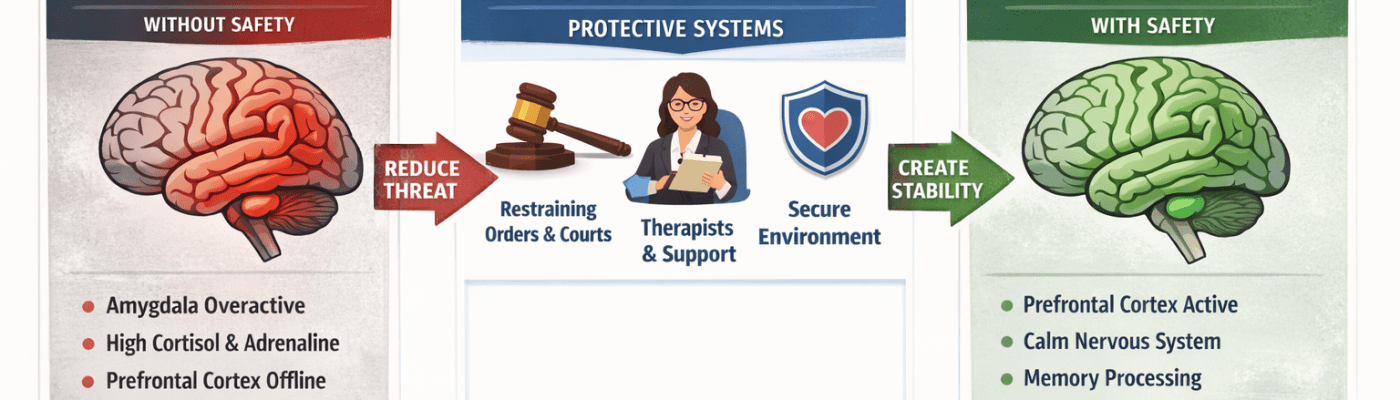
This is often subtle and gradual, not dramatic. Neuroscience + psychology line up here:
| Signal | What’s Happening Internally | Outcome |
|---|---|---|
| Sudden clarity | Prefrontal cortex takes control over amygdala-driven fear loops | Realisation: I don’t have to negotiate my worth anymore |
| Shift from hope to self-interest | Dopamine cravings from intermittent reinforcement fade | Attachment energy is redirected internally |
| Internal boundary activation | Body notices discomfort with previous compromise | “No” becomes automatic, firm, not reactive |
| Emotion regulation stabilises | Vagus nerve and PNS activation from safety cues | Anxiety decreases; decision-making is calmer |
| Self-respect spikes | Integrating values with lived experience | Recognition: I am enough on my own |
Key insight: This moment is felt, not thought. It’s often a quiet, bodily knowing — a release of tension, a sense of reclaiming ownership over space, attention, and energy.
2. How to Detach Without Triggering Escalation
Detachment is safest when it minimises nervous system threat cues to the abuser. Practical steps:
- Silent withdrawal first
- Reduce communication gradually
- Avoid confrontations that escalate emotion
- Boundary reinforcement
- Set limits on time, access, and emotional investment
- Use neutral language if interaction is necessary
- Consistency over drama
- No sudden disappearances or vengeful messages
- Your calmness signals detachment, not chaos
- External safety networks
- Trusted friends, colleagues, or authorities aware of patterns
- Document threats or violations without engaging
- Emotional separation before physical separation
- Practice internal affirmation: I am safe, I am enough
- Mentally rehearse neutrality and calmness
Result:
The abuser is deprived of control cues, and you reclaim your autonomy without feeding their panic response.
3. Why Peace After Abuse Feels Unfamiliar at First
After prolonged trauma bonds or manipulation, the nervous system expects constant alertness. Peace feels strange because:
- Hypervigilance baseline: Your nervous system is tuned to threat → calm feels “wrong”
- Trauma bonding chemistry: Dopamine + cortisol created highs and lows → absence of highs feels empty
- Identity recalibration: Many survivors adapt to abuser’s expectations → reclaiming self is disorienting
- Safety is unfamiliar: Predictable, safe environments feel almost “boring” → you may feel restless or anxious initially
Neuroscience translation:
- Amygdala quiets → PFC (rational brain) dominates → you notice gaps in stimulation
- Vagus activation signals relaxation, but the body is unused to sustained calm
Reframe:
Feeling unsettled in peace doesn’t mean danger. It means your body is learning to live in safety for the first time.
Summary Flow
- Internal moment of strength: quiet knowing, bodily release, boundary clarity
- Detachment safely: calm, consistent boundaries, supportive network, minimal engagement
- Peace adjustment: nervous system recalibrates, dopamine/cortisol loops normalize, calm feels unfamiliar at first
 Linda C J Turner | Trauma Therapist & Emotional Healing Specialist