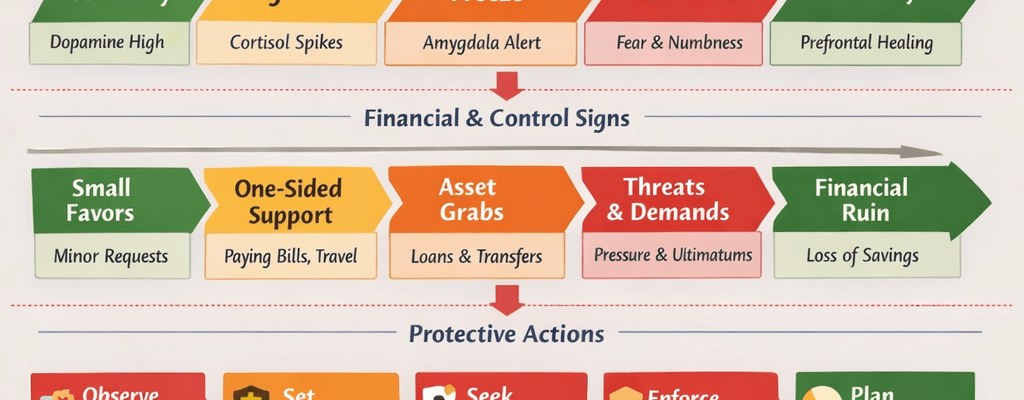
STEP 1: Subtle Dependence
- Small favors or expenses covered by survivor
- Abuser asks occasionally for help
- Nervous system: mild trust mixed with slight vigilance
- Red flag: evasiveness or resentment when asked to reciprocate
- Protective action: slow down contribution, observe behavior
↓
STEP 2: Regular Exploitation
- Survivor covers routine bills, groceries, or travel
- Abuser contributes minimally or sporadically
- Nervous system: increased anxiety, small cortisol spikes
- Red flag: complains about minor contributions while taking major ones
- Protective action: set clear financial boundaries, track contributions
↓
STEP 3: Secrecy & Manipulation
- Abuser hides spending, travels, or income sources
- Avoids transparency, refuses questions
- Nervous system: alert/freeze cycles, distrust rises
- Red flag: evasive answers, secret accounts, sudden requests for large sums
- Protective action: insist on disclosure, separate accounts, document all transactions
↓
STEP 4: Escalation & Pressure
- Abuser pressures survivor for asset transfers, loans, or property
- Threats or emotional manipulation may appear
- Nervous system: amygdala spikes, prefrontal shutdown, stress peaks
- Red flag: coercion, threats, manipulation disguised as “helping” or “trust”
- Protective action: legal counsel, police/advocate involvement, maintain strict boundaries
↓
STEP 5: Long-Term Harm
- Survivor may lose savings, property, or business control
- Emotional exhaustion, isolation, and distrust emerge
- Nervous system: chronic stress, anxiety, hypervigilance
- Outcome: financial depletion, emotional trauma, reduced autonomy
- Protective action: recovery planning, financial/legal restitution, therapy for rebuilding autonomy
Key Features of This Map
- Red flags are early warning signals — the earlier they are acted on, the faster nervous system safety can be restored.
- Nervous system signals are measurable: anxiety, gut tension, freeze responses — these are protective alarms.
- Protective interventions grow with escalation: from observation → boundaries → legal/financial action.
- This process is cumulative: the longer the pattern continues unchecked, the higher the financial and emotional cost.
🔑 Takeaways
- Financial and domestic exploitation is gradual but predictable.
- Nervous system cues are reliable indicators of risk.
- Interventions must escalate alongside the abuser’s tactics.
- Document, enforce boundaries, and use legal/financial safeguards proactively.
 Linda C J Turner | Trauma Therapist & Emotional Healing Specialist