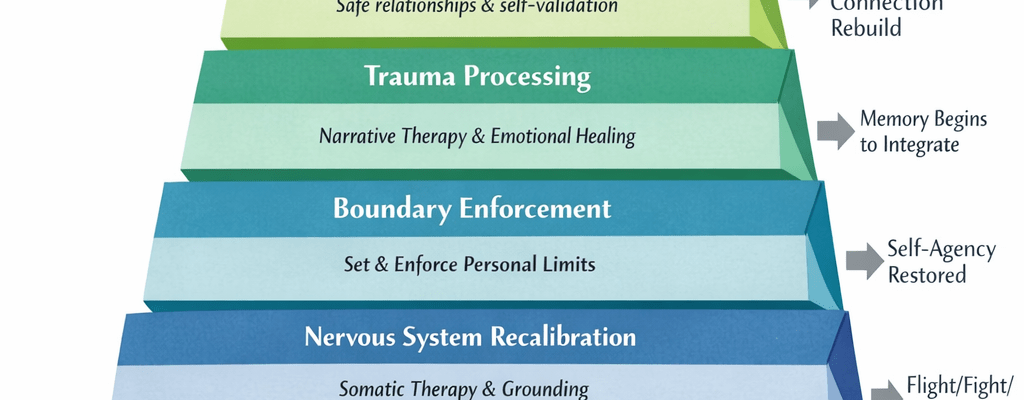
Safety is both internal and external, and it can look very different depending on context. Here’s a structured set of examples for survivors of abuse, framed in psychological and nervous-system terms:
1. Physical Safety
External environment is secure, predictable, and free from threat.
Examples:
- Living in a home where the abuser cannot enter or monitor you.
- Locked doors, controlled access to private spaces.
- Safe neighborhoods, well-lit paths, and reliable transportation.
- Trusted adults or authorities available if needed.
Nervous-system impact:
- Amygdala signals “no immediate threat.”
- Fight/flight/freeze response reduces.
- Heart rate and breathing stabilize.
2. Emotional Safety
You can experience feelings without judgment or manipulation.
Examples:
- Being able to cry, express anger, or share fears without dismissal or blame.
- Conversations where your feelings are validated (“I hear you, that makes sense”).
- Relationships where emotional autonomy is respected.
Nervous-system impact:
- Prefrontal cortex can regulate emotional responses.
- Oxytocin and vagal tone promote calm and attachment.
3. Psychological / Cognitive Safety
Your reality is respected; your thoughts and perceptions are not gaslit.
Examples:
- Being believed when describing abuse or trauma.
- Having space to reflect without someone constantly correcting or reframing your memory.
- Access to accurate information and transparency about finances, decisions, or plans.
Nervous-system impact:
- Cognitive clarity improves.
- Memory becomes integrated instead of fragmented.
- Decision-making circuits regain strength.
4. Social Safety
You can maintain connections with others without interference or manipulation.
Examples:
- Friends and family are welcomed without sabotage or triangulation.
- Social support is consistent and affirming.
- Freedom to choose your social interactions.
Nervous-system impact:
- Reduced hypervigilance in social contexts.
- Restores feelings of belonging and trust.
5. Financial Safety
Resources are controlled by you, not used against you.
Examples:
- Access to your own bank accounts and income.
- Independence in spending, saving, and decision-making.
- No coercion, manipulation, or blackmail around money.
Nervous-system impact:
- Reduced chronic stress and fear of deprivation.
- Prefrontal cortex can plan and make rational financial decisions.
6. Time and Energy Safety
You can manage your schedule and personal needs without pressure or sabotage.
Examples:
- Being able to sleep, rest, or work without interruptions or “crises” imposed by someone else.
- Having control over your routines and priorities.
- Ability to say “no” without consequences.
Nervous-system impact:
- Reduces cortisol and chronic fatigue.
- Supports recovery and cognitive function.
7. Boundaries Respected
Limits you set are honored consistently.
Examples:
- Saying no and being taken seriously.
- Having personal space, privacy, and autonomy respected.
- Others asking for consent before crossing into your physical, emotional, or digital space.
Nervous-system impact:
- Strengthens internal sense of safety.
- Reduces fight/flight/freeze responses.
- Supports rebuilding self-trust.
Key takeaway:
Safety is not just “no threat present.”
It’s a consistent pattern of autonomy, respect, and predictability in your environment and interactions.
 Linda C J Turner | Trauma Therapist & Emotional Healing Specialist