1. Legal Actions You Can Take
When an ex’s family member sends derogatory, threatening, or manipulative messages aimed at influencing a financial settlement or your reputation, the law provides several protections:
a. Document Everything
- Save every email, text, or social media message.
- Include timestamps, sender info, and screenshots.
- Do not delete anything, even if upsetting — this is evidence.
b. Civil Legal Options
- Harassment / Intimidation: Repeated threats or attempts to pressure you to settle may be considered harassment or coercion. A lawyer can help you request a restraining order or injunction.
- Coercion / Attempt to Undermine Legal Rights: Pressuring you to settle for less than your legal entitlement could be flagged to the court as interference, which may strengthen your legal position.
c. Criminal Considerations
- Threatening behavior (implying harm to you or your property) can be criminal.
- Persistent abusive communication may qualify as cyberstalking.
- Law enforcement can issue cease-and-desist orders or investigate criminal behavior if credible threats exist.
d. In Court
- Notify your lawyer immediately about the harassment.
- Courts consider attempts to intimidate or manipulate parties before a case.
- This behavior can support your position, as it demonstrates bad faith from the opposing side.
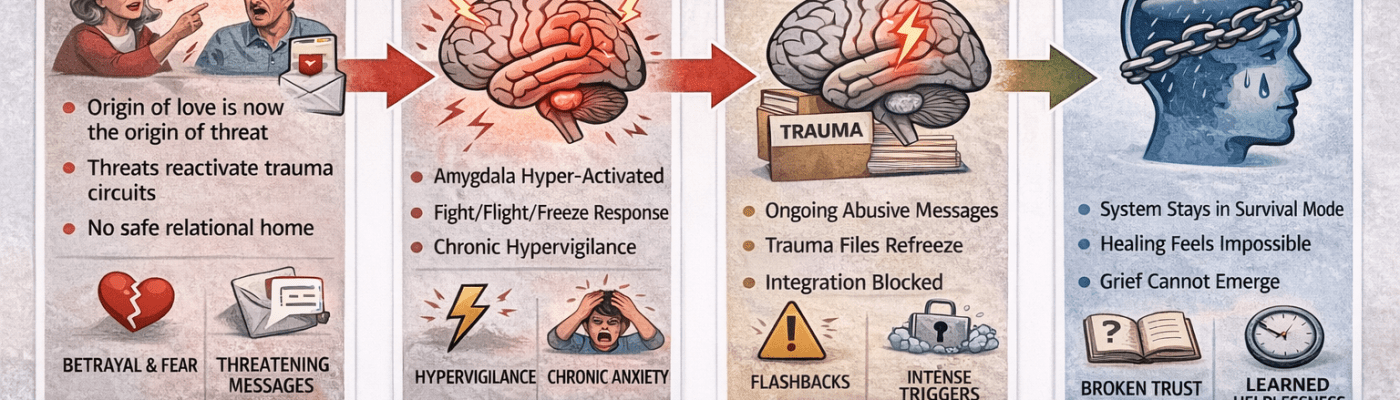
2. Psychological and Neuroscience Impact
Being targeted like this by a family member, especially during a legal dispute, deeply affects your nervous system and mental health:
a. Stress and Threat Response
- Your amygdala detects threat and triggers fight-or-flight, releasing cortisol and adrenaline.
- Chronic exposure can lead to anxiety, insomnia, hypervigilance, and emotional exhaustion.
b. Emotional Memory and Brain Changes
- Negative interactions with someone close to a partner are processed in the hippocampus, which stores emotional memories.
- Repeated stress strengthens these threat pathways, making it easier for you to feel triggered by similar situations in the future.
c. Social and Identity Impact
- Attacks on your social reputation target your prefrontal cortex and social reward systems, increasing feelings of shame, self-doubt, and social isolation.
- This undermines your self-esteem and healing, making recovery harder.
d. Healing and Resilience
- Legal boundaries (restraining orders, documented evidence) directly protect your nervous system, interrupting the harassment cycle.
- Support networks (friends, therapists, support groups) help restore social validation.
- Mind-body practices (breathwork, meditation, cold exposure, yoga) stimulate the vagus nerve, reducing stress and regulating the nervous system.
- Cognitive reframing — understanding these attacks reflect the sender’s behavior, not your worth — supports emotional recovery.
3. Practical Steps Right Now
- Do not respond to threats or insults — this can escalate or be used against you.
- Save all communications securely.
- Inform your lawyer immediately with all evidence.
- Document emotional impact (notes, therapist letters) — useful if the harassment affects your legal case.
- Block or limit contact where possible to reduce stress.
- Focus on healing — therapy, social support, and stress-reducing practices are key for nervous system recovery.
 Linda C J Turner | Trauma Therapist & Emotional Healing Specialist