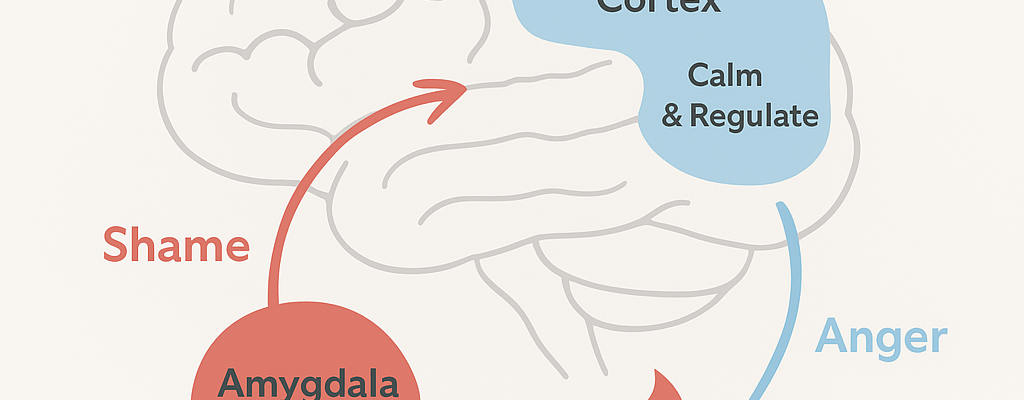
No-contact works not because it’s harsh, but because it gives the brain the conditions it needs to rewire. Neurologically, it interrupts addiction-like circuits, stabilizes the nervous system, and allows neuroplastic change to occur.
Here’s what’s actually happening in the brain.
1. No-Contact Stops the Reward–Withdrawal Loop
In trauma bonds and unstable long-term relationships, contact triggers:
- Dopamine spikes (anticipation, hope, relief)
- Followed by cortisol crashes (disappointment, anxiety, shame)
Every message, reply, or “check” resets the loop.
No-contact works by:
- Removing unpredictable rewards
- Allowing dopamine systems to down-regulate
- Ending intermittent reinforcement
This is the same principle used in addiction recovery:
The brain cannot heal from a stimulus it keeps receiving.
2. It Allows the Amygdala to Stand Down
When contact continues:
- The amygdala remains on alert
- The nervous system stays in fight/flight
- Hypervigilance persists
No-contact creates predictable safety:
- No new emotional shocks
- No sudden hope or rejection
- No threat monitoring
Over time:
- Amygdala activation decreases
- The vagus nerve engages
- The body exits survival mode
Calm is learned through absence of threat, not reassurance.
3. It Breaks Memory–Emotion Pairing
The hippocampus links:
- Memory
- Emotion
- Context
Contact reactivates emotional memory networks:
- A name
- A tone
- A familiar phrase
No-contact prevents re-encoding:
- Old memories fade without reinforcement
- Emotional charge weakens
- The brain stops refreshing the bond
This is why even “neutral” contact delays healing.
4. It Restores Prefrontal Control
During attachment distress:
- The prefrontal cortex (logic, boundaries) goes offline
- Limbic regions dominate
No-contact gives the prefrontal cortex time to:
- Reassert executive control
- Integrate reality accurately
- Make decisions without emotional flooding
This is why clarity often appears weeks later, not immediately.
5. It Allows Oxytocin to Reattach Safely
Oxytocin doesn’t disappear — it rebinds.
With continued contact:
- Oxytocin stays linked to the unsafe source
With no-contact:
- Oxytocin gradually shifts to:
- Self-soothing
- Safe friendships
- Pets
- Predictable routines
This is how attachment is redirected, not suppressed.
6. The Withdrawal Phase Is Neurological, Not Emotional
Early no-contact can feel worse before better because:
- Dopamine drops
- The brain protests loss of stimulation
- Cravings intensify
This is expected.
Symptoms may include:
- Urges to reach out
- Rumination
- Physical anxiety
- Grief waves
These are signs the brain is rewiring, not that you made a mistake.
7. Why “Just One Message” Resets the Clock
Even brief contact:
- Reactivates dopamine anticipation
- Reignites hope circuits
- Reinforces the old learning
Neurologically, this is not closure — it’s re-addiction.
Healing requires consistency, not intensity.
8. When No-Contact Starts Working
Signs the brain is updating:
- Reduced urgency to check or reach out
- Emotional neutrality replaces intensity
- Memory becomes factual, not charged
- Self-trust increases
This is neuroplastic change stabilizing.
The Key Truth
No-contact isn’t about punishment, control, or proving strength.
It’s about giving your nervous system:
- Time
- Predictability
- Safety
So it can learn a new rule:
“I can survive — and thrive — without this stimulus.”
Once the brain learns that, the bond loses power.
In summary:
No-contact works because it:
- Stops intermittent reinforcement
- Calms threat circuits
- Weakens emotional memory loops
- Restores executive control
- Redirects attachment safely
It’s not emotional cruelty.
It’s neurobiological kindness.
 Linda C J Turner | Trauma Therapist & Emotional Healing Specialist