How the mind adapts to survive — and how awareness begins the way out.
Over time, abuse doesn’t always look like violence. It begins to look like routine.
The raised voice becomes background noise. The silent treatment becomes “just how they are.” The apology flowers, the short-lived calm, the next explosion — all merge into a pattern the brain starts to accept as normal.
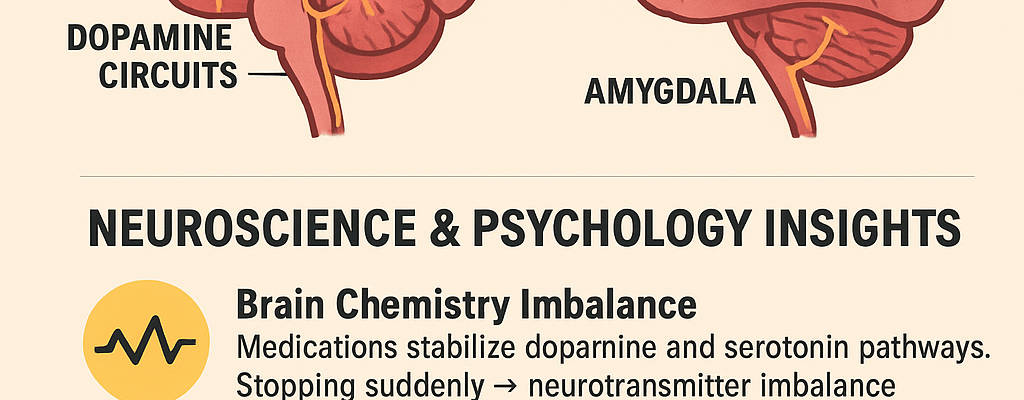
Psychologically, this is called trauma bonding — a powerful emotional attachment formed through alternating abuse and reward. The abuser uses fear, affection, guilt, and dependency to keep control. The victim’s brain releases dopamine and oxytocin during moments of “kindness” or reconciliation, creating confusion and false hope. These chemical surges can temporarily soothe the pain of abuse, tricking the mind into believing the relationship still has love and potential.
Neuroscience shows that prolonged exposure to fear reshapes the brain.
The amygdala — the brain’s alarm system — becomes hyperactive, constantly scanning for threat. The prefrontal cortex, which governs logic and decision-making, becomes suppressed by chronic stress hormones. In this state, victims often lose their sense of perspective. The question changes from “Is this healthy?” to “How do I stop them from getting angry again?” Survival replaces clarity.
Social and emotional isolation deepens the trap. When an abuser cuts a person off from friends, family, or finances, it removes mirrors — the people who could reflect back the truth. Without those external perspectives, the victim begins to internalize the abuser’s reality.
They start believing:
- “Maybe I’m overreacting.”
- “Maybe this is my fault.”
- “Maybe this is what love looks like.”
This is learned helplessness, a state first identified in psychology where repeated experiences of powerlessness teach the brain that escape isn’t possible — even when it is.
Breaking free begins with awareness — tiny flashes of recognition that something isn’t right. The moment a person starts to name the pattern, the brain begins to rewire.
Each act of clarity, each boundary set, each small reclaiming of independence strengthens the prefrontal cortex again — the part that says, “I deserve safety.”
Healing means learning to recognize what normal actually is — calm without fear, love without control, affection without apology.
It’s the slow, courageous process of unlearning chaos.
Because abuse thrives in silence and repetition, but it ends the moment truth enters the room.
 Linda C J Turner | Trauma Therapist & Emotional Healing Specialist
[…] is that it can make it harder to recognize the toxicity of the relationship. You may find yourself rationalizing the abuse, making excuses for your partner, and even blaming yourself for their actions. This normalization […]
LikeLike