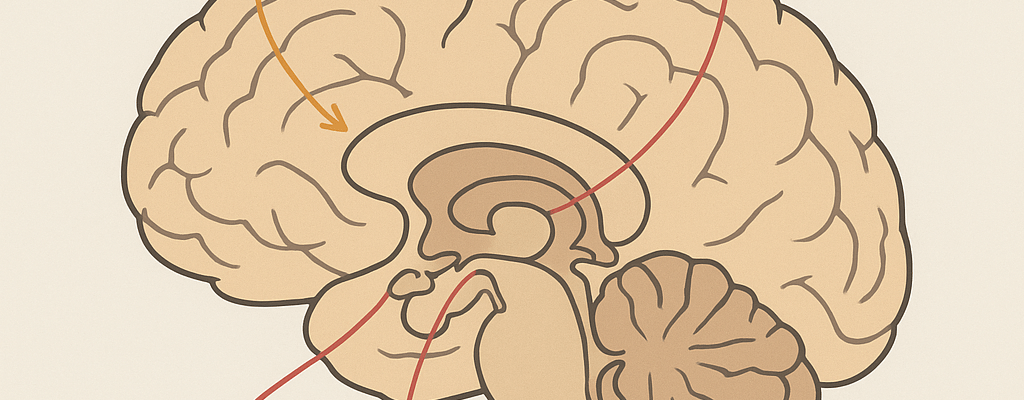
Let’s go much deeper into the neuroscience and psychology behind those three key systems — dopamine (reward/novelty), oxytocin & vasopressin (bonding/trust), and noradrenaline/adrenaline (arousal/memory) — and how together they create the illusion of “instant love” or emotional fusion that manipulators can exploit.
This is the scientific anatomy of romantic intoxication — the same circuitry that underlies addiction, attachment, and trauma bonding.
🧠 1. Dopamine: The Brain’s “Wanting” Chemical
Where it happens:
- Ventral tegmental area (VTA)
- Nucleus accumbens (reward center)
- Prefrontal cortex (motivation, decision-making)
What it does:
Dopamine doesn’t create pleasure directly — it creates anticipation and seeking.
Every new text, compliment, or sexual cue becomes a reward prediction signal, prompting a micro-surge of dopamine.
Neuroscientific insight:
Functional MRI studies (e.g., Helen Fisher et al., J. Comp. Neurol., 2005; Front. Psychol., 2016) show that viewing a beloved person’s face activates the same midbrain reward pathways as cocaine or gambling.
The brain literally tags the person as “valuable resource = survival advantage.”
The psychological effect:
You start craving not the person, but the feeling they give you. This is what psychologists call the dopamine loop — anticipation → reward → withdrawal → craving → repeat.
Manipulative partners intuitively exploit this by using intermittent reinforcement — affection, withdrawal, affection again — training your nervous system into addiction-like dependency.
💞 2. Oxytocin & Vasopressin: The Bonding and Trust Hormones
Where it happens:
- Hypothalamus (synthesized)
- Pituitary gland (released into bloodstream and brain)
- Amygdala, nucleus accumbens, and prefrontal cortex (binding sites)
What they do:
Oxytocin and vasopressin are neuropeptides that reinforce social bonding and attachment.
Oxytocin surges during:
- Sexual intercourse and orgasm
- Hugging, eye contact, skin-to-skin contact
- Emotional intimacy and empathy exchanges
Vasopressin is more linked to territorial loyalty and protective bonding — found heavily in pair-bonding mammals (e.g., prairie voles). In humans, it correlates with mate guarding, possessiveness, and commitment behaviors.
Neuroscientific insight:
When oxytocin binds to receptors in the amygdala and ventromedial prefrontal cortex, it dampens fear responses and enhances trust.
This is why victims of emotional or sexual manipulation often feel inexplicably safe and loyal, even after boundary violations — their brain’s fear filter is chemically suppressed.
Psychological translation:
It’s not “weakness” — it’s biochemistry.
Your body is tricked into treating the manipulator as an attachment figure.
That’s what creates the trauma bond — the same oxytocin that binds a baby to a caregiver can bind an adult to their abuser when paired with inconsistent reward.
⚡ 3. Noradrenaline & Adrenaline: The Arousal-Memory Glue
Where it happens:
- Locus coeruleus (primary source of noradrenaline)
- Amygdala (emotional salience)
- Hippocampus (memory encoding)
What they do:
Noradrenaline heightens alertness and focus; adrenaline drives physiological arousal — racing heart, flushed skin, energy surge.
In emotionally charged or high-stakes interactions (new attraction, risk, fear, sex), these chemicals intensify memory formation.
It’s why we remember “chemistry” moments so vividly — the nervous system tags them as important survival events.
Manipulative use:
If someone alternates charm with anxiety (flirtation → withdrawal → drama → reconciliation), your amygdala binds emotional arousal to that person.
The stronger the adrenaline spike, the deeper the imprint.
In psychology, this is called misattribution of arousal — your body’s fear/excitement gets misread as “love” or “passion.” (Dutton & Aron, 1974 – the famous suspension bridge study).
Neuroscience bonus:
This arousal loop increases cortisol — stress hormone — which can blur memory accuracy and increase dependency, because you start seeking the manipulator to calm the storm they created.
🔄 4. How These Systems Interlock: The Biochemical Bond
When dopamine, oxytocin, and adrenaline fire together, the brain essentially forms a superglue attachment:
- Dopamine motivates pursuit.
- Oxytocin provides safety and trust.
- Adrenaline seals the memory with emotion.
The result?
An intense emotional illusion that feels deeper than logic can undo.
This is why early “high chemistry” relationships — especially those involving sexual or emotional fast-tracking — can override intuition and rational red flags.
Your prefrontal cortex (logic, impulse control) goes offline under the influence of limbic dominance — the brain’s survival mode of attachment.
🧩 5. The Psychological Correlates
| System | Psychological Effect | Manipulative Tactic |
|---|---|---|
| Dopamine | Craving, seeking, hope | Intermittent reward, hot-cold texting |
| Oxytocin/Vasopressin | Trust, loyalty, safety | Love-bombing, physical closeness |
| Noradrenaline/Adrenaline | Excitement, anxiety, fixation | Chaos cycles, drama bonding |
In short: They’re engineering your chemistry.
It’s not always conscious — but in toxic or narcissistic personalities, it’s a learned, strategic pattern.
🧬 6. What Happens When It’s Withdrawn
When the manipulator pulls away, the absence of dopamine and oxytocin triggers symptoms similar to withdrawal from addictive substances:
- Intrusive thoughts
- Craving and rumination
- Physical agitation
- Depression or emotional crash
Neuroimaging confirms that social rejection activates the same brain regions as physical pain (Eisenberger et al., Science, 2003).
That’s why “ghosting” or sudden devaluation can feel like being electrocuted — your pain matrix (anterior cingulate cortex) literally lights up.
🌱 7. Reversing the Hijack — How to Heal the System
- Break the reward loop: No contact or minimal contact reduces dopamine triggers.
- Rebuild oxytocin safely: Through platonic touch, pets, community, and consistent routines.
- Regulate adrenaline: Grounding, breathwork, slow physical activity, trauma-informed therapy.
- Engage the prefrontal cortex: Journaling, cognitive therapy, structured decision-making — bring logic back online.
- Relearn safe attachment: Healing involves retraining your nervous system to associate calm with love, not chaos.
Over time, neuroplasticity allows the brain to rewire — new habits, new safety signals, new relational templates.
💡 Final Takeaway
What we call “chemistry” is often the perfect storm of neurochemistry — designed for bonding, but easily exploited by charmers and manipulators.
They don’t cast a spell — your brain does.
The antidote isn’t cynicism; it’s awareness.
Real love feels steady, not intoxicating.
If your nervous system feels addicted, confused, or on edge, that’s not love — that’s limbic hijacking.
When you learn to read your body’s signals and regulate your chemistry, you stop mistaking intensity for intimacy.
And that’s when love finally becomes what it was meant to be — safe, mutual, and real.
 Linda C J Turner | Trauma Therapist & Emotional Healing Specialist