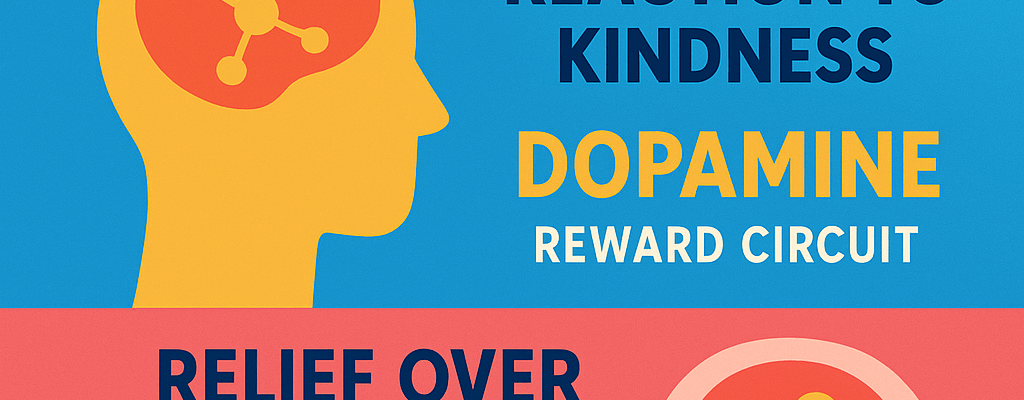
Your brain doesn’t evaluate people objectively — it evaluates them comparatively.
When you’ve had a painful or toxic experience before, your prefrontal cortex and amygdala create a mental “reference point” for safety and danger.
So when someone new shows slightly better behavior — a little kindness, a bit of respect — your brain lights up with relief:
“Ah, this feels safer. Better. Maybe this is love.”
That’s called contrast bias — you perceive the new person as amazing, not because they’re objectively good, but because your baseline expectation was lowered by the last one.
🧬 2. Neuroscience: The Reward System Reset
After repeated disappointment or emotional harm:
- Dopamine pathways (the brain’s reward circuits) become hypersensitive to small signs of care or validation.
- The ventral striatum (reward center) fires intensely when someone treats you slightly better than the last partner.
- Your brain releases oxytocin (bonding hormone) prematurely, creating false safety and attachment.
Essentially, your brain mistakes “less harm” for “genuine good.”
This is sometimes called “trauma-induced reward miscalibration.”
💔 3. Psychology: Trauma and Attachment Rewiring
When you’ve experienced emotional neglect, betrayal, or manipulation:
- Your attachment system (built around the need for safety and predictability) lowers its threshold for what feels “safe.”
- The nervous system begins to equate “not being hurt” with “being loved.”
- The body’s relief response (parasympathetic activation) can feel like affection — even if the person hasn’t truly earned your trust.
So you might feel strong attraction or comfort that’s actually nervous system relief, not deep compatibility.
🪞 4. Cognitive Bias: The Contrast Halo Effect
Psychologically, this creates a halo effect — we overestimate someone’s goodness based on one positive trait that stands out against a negative past.
Example:
“He actually listens sometimes — unlike my ex who never did.”
The brain then fills in the blanks: “So he must be emotionally mature and trustworthy.”
But that’s an assumption — a projection created by relief, not reality.
⚖️ 5. How to Ground Yourself in Reality
Here’s how to engage your prefrontal cortex (rational reasoning) instead of your limbic system (emotional memory):
- Notice the comparison: “Do I like them, or do I just like that they’re not like the last one?”
- Slow attachment: Give time for your dopamine to stabilize before forming judgments.
- Check for consistency: Early niceness means little; long-term congruence means everything.
- Ask: does my nervous system feel calm — or just relieved? Relief fades; calm endures.
🧘♀️ 6. Neural Summary
| Brain Area | Function | Effect |
|---|---|---|
| Amygdala | Emotional memory of past pain | Heightens vigilance & contrast perception |
| Ventral Striatum | Reward & dopamine processing | Overreacts to small kindnesses |
| Prefrontal Cortex | Rational evaluation | Suppressed when emotional relief dominates |
| Oxytocin System | Bonding | Creates false sense of safety too early |
🧩 In short:
You don’t fall for them — you fall for the contrast between them and your past pain.
Your brain confuses relief with connection.
 Linda C J Turner | Trauma Therapist & Emotional Healing Specialist