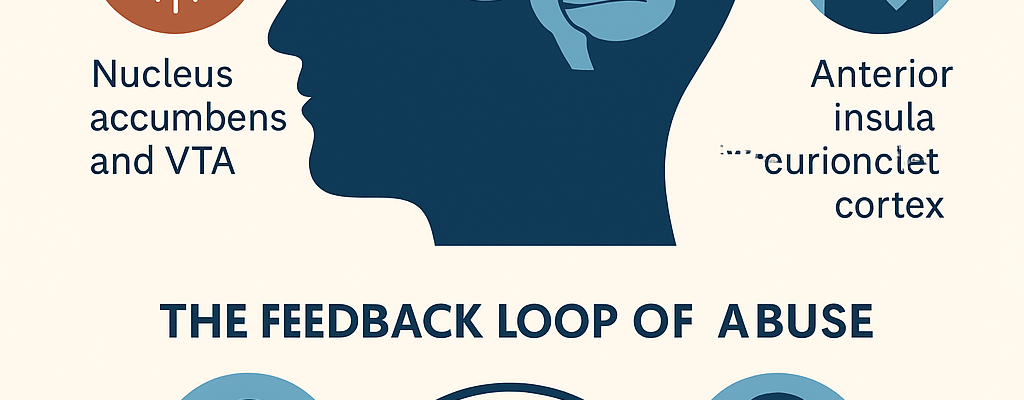
Some individuals derive satisfaction from inflicting emotional or psychological pain. This behavior, often called emotional or psychological sadism, is more than just cruelty—it’s rooted in specific patterns of brain activity and psychological traits. Understanding the neuroscience can help victims recognize the danger and reclaim their power.
1. Reward Pathways and Pleasure from Pain
Research shows that in some abusers, witnessing others’ distress activates the brain’s reward system, particularly the nucleus accumbens and ventral tegmental area (VTA). These areas are normally associated with pleasure, motivation, and reinforcement. When someone causes fear, humiliation, or sadness, these circuits can release dopamine, the “feel-good” neurotransmitter, creating a perverse sense of satisfaction.
2. Empathy Deficits
Abusers who enjoy seeing others suffer often show reduced activity in the anterior insula and anterior cingulate cortex—areas linked to empathy and emotional resonance. This neurological pattern makes it difficult for them to experience genuine concern for another’s pain. Instead of responding with care, they may interpret your distress as a form of control or power.
3. Control and Dominance
Psychologically, these individuals may have a hyperactive amygdala, the brain’s fear and threat detector. They often perceive vulnerability in others as an opportunity to assert dominance, which reinforces their sense of control and superiority. Neurologically, this reinforces a feedback loop: your distress → their reward pathways activate → increased desire to dominate.
4. Reinforced Behavior
Over time, this cycle becomes self-perpetuating. Each time the abuser witnesses emotional breakdowns or fear responses, their brain reinforces the behavior through reward-based learning, making it increasingly habitual. This is why some abusers escalate their cruelty—they are neurologically reinforced to seek out emotional pain in others.
5. Recognizing the Pattern
Understanding the neuroscience doesn’t excuse the behavior—but it explains why these patterns are persistent and dangerous. Victims should be aware that:
- The abuser’s pleasure is not a reflection of the victim’s worth.
- Attempts to reason or appeal to empathy often fail.
- Boundaries, distancing, and legal protection are crucial for safety.
- © 2025 Linda Carol Turner. Content protected by copyright.
Reproduction or redistribution in any form requires prior written permission from the author.
When quoting or referencing, please cite: Linda Carol, Psychology & Neuroscience Insights.
 Linda C J Turner | Trauma Therapist & Emotional Healing Specialist