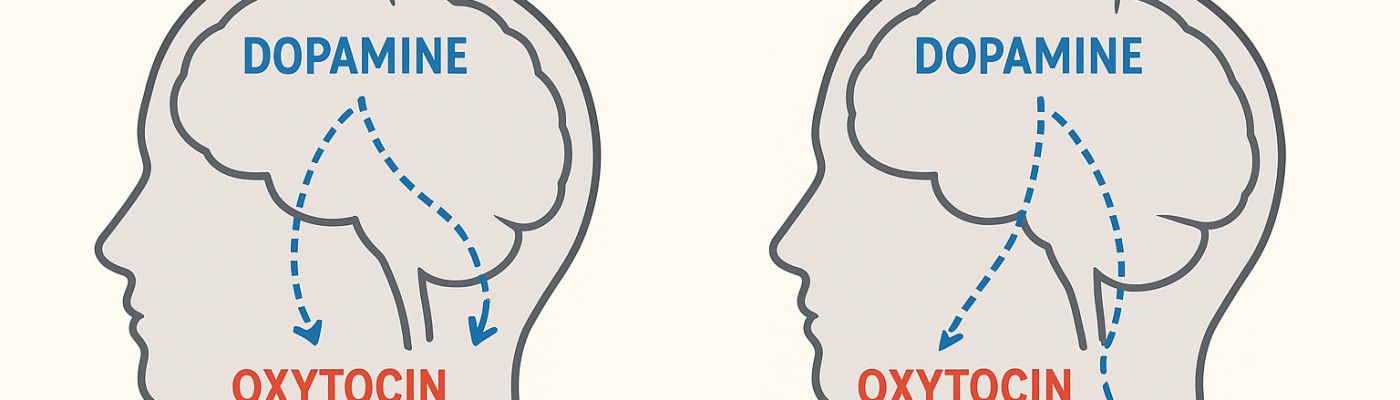
Let’s unpack this from a psychology and neuroscience perspective. The idea that “you will know when it feels right” and that you shouldn’t have to beg for breadcrumbs isn’t just a cliché—it reflects how our brains respond to healthy vs. unhealthy relational dynamics.
1. The Brain on Healthy Connection
When a relationship feels “right,” several brain systems are aligned:
a. Reward System (Dopamine Pathways)
- In a healthy, reciprocal relationship, your dopamine system is activated naturally by positive social interactions: warmth, attention, affection, shared laughter.
- This creates anticipatory pleasure, but without stress or anxiety. You feel drawn to your partner because it’s intrinsically rewarding, not because you’re anxious or uncertain.
b. Oxytocin and Trust
- Oxytocin (“bonding hormone”) is released during mutual touch, eye contact, and meaningful communication.
- When you don’t have to beg for attention, oxytocin reinforces feelings of safety and closeness, strengthening emotional bonds.
c. Prefrontal Cortex Regulation
- Healthy relationships engage your prefrontal cortex, which helps regulate emotions, reduce fear, and maintain perspective.
- You can approach the relationship rationally and emotionally without obsessive thoughts or panic over minor slights.
2. The Brain on “Breadcrumbs” and Insecurity
When you’re chasing attention or affection, the brain reacts differently:
a. Stress Response (Amygdala Activation)
- Inconsistent attention or “breadcrumbing” triggers the amygdala, the brain’s fear center.
- You experience stress, anxiety, and hypervigilance, often mistaking scarcity for love.
b. Dopamine Imbalance
- In unpredictable or intermittent reinforcement (sometimes giving attention, sometimes withholding), the dopamine system becomes dysregulated.
- This is the same mechanism as gambling addiction: the brain craves the unpredictable reward, making you chase crumbs rather than feel fulfilled.
c. Emotional Exhaustion (HPA Axis)
- Chronic uncertainty activates the HPA axis, flooding the body with cortisol.
- Over time, this leads to anxiety, sleep disruption, and difficulty trusting your own emotional responses.
3. Psychological Perspective
- Attachment Theory: If you constantly chase breadcrumbs, it may reflect anxious attachment patterns. Healthy secure attachment, on the other hand, allows you to feel safe and valued without begging.
- Self-Worth and Reciprocity: Healthy relationships are reciprocal. Needing to beg for attention signals a mismatch between your need for connection and the other person’s ability or willingness to give it.
✅ Key Takeaways
- “It feels right” = minimal stress, natural joy, mutual effort.
- Breadcrumbs = intermittent reinforcement, stress, and dopamine dysregulation.
- You don’t have to convince your brain to feel rewarded—a healthy relationship naturally engages reward and bonding circuits.
- Chasing breadcrumbs is literally physiologically addictive, but emotionally exhausting.
 Linda C J Turner | Trauma Therapist & Emotional Healing Specialist