One of the most powerful tools of manipulation is repetition. Over and over, you hear the same phrases, criticisms, or warnings, until your brain begins to absorb them as truth. At first, they might sound like advice, even concern. But in reality, they are acts of control designed to erode confidence, isolate you from support, and maintain power over your choices.
Common Manipulative Phrases (Real-Life Examples)
- “Don’t you think you should do it this way and that way?”
- “Remember when you got it wrong before?”
- “Remember when you knocked the guy off the bike—you shouldn’t be driving?”
- “Remember when that friend told you what to do? They’re not really a friend.”
- “Remember when you stayed with that friend after our argument? They’re not a friend.”
- “Why did you discuss the abuse outside the marriage? It’s no one else’s business—it’s private!”
- “Everything that happens between us is private.”
- “Don’t tell anyone about our financial situation.”
- “Don’t tell anyone you pay for so many things.”
These statements are delivered as if they are protective. But their purpose is not protection—it’s to silence, isolate, and control.
The Psychology of Repetition and Control
- The Illusory Truth Effect
When we hear something repeatedly, our brains begin to accept it as true—even if we know better. This is called the illusory truth effect. A manipulator leverages this by hammering the same warnings, shames, and criticisms until they feel like unquestionable “facts.” - Gaslighting by Example
Notice how the abuser digs up past mistakes—“remember when you knocked the guy off the bike?”—as a way to define your identity around error and guilt. This is gaslighting: warping your memory so that you doubt your own competence and judgment. - Isolation Through Distrust
By telling you certain friends “aren’t really friends,” the manipulator systematically erodes your support network. This creates dependence: if you believe only they understand, then you stop seeking outside validation and protection. - Shame and Secrecy
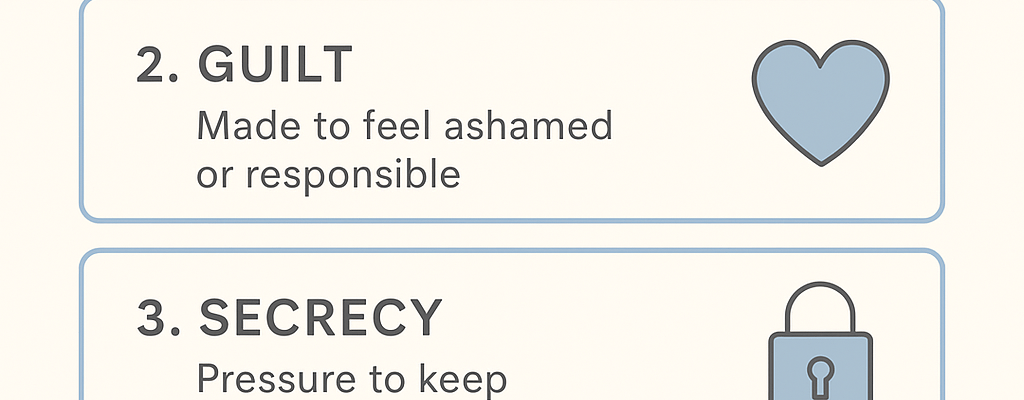
“Don’t tell anyone about the abuse. Don’t tell anyone about money.” This is classic control. By instilling shame around disclosure, manipulators ensure silence. Psychologically, secrecy fosters isolation, and isolation makes control easier.
The Neuroscience of Brainwashing
- Amygdala Hijacking:
Repeated reminders of mistakes trigger fear and shame, keeping the amygdala (fear center) on high alert. This makes rational thinking harder, because your prefrontal cortex (responsible for judgment and perspective) is overridden by survival mode. - Dopamine Miswiring:
Instead of receiving dopamine from self-trust or independent decision-making, your brain starts to tie reward to the manipulator’s “approval.” Over time, you may feel anxious until you receive reassurance—even if that reassurance comes with criticism. - Neural Pathway Reinforcement:
Neuroscience shows that “neurons that fire together wire together.” Every repeated phrase strengthens the connection between choice and fear/doubt. This is why it feels like you’re always second-guessing yourself: your brain was trained to do so.
Why It Feels Like Brainwashing
Because it is. Brainwashing doesn’t always involve dramatic cult rituals—it can happen in the privacy of a marriage, in the everyday drip of phrases designed to reshape your reality. The endless repetition, framed as “for your own good,” convinces you that you are incapable, unsafe, or disloyal unless you follow their rules.
Breaking Free
- Name It – Simply calling this behavior what it is—manipulation and control—begins to weaken its hold.
- Reality Check – Ask yourself: “Whose voice is this? Mine, or theirs?” Distinguishing between internalized control and your own perspective helps rewire thought patterns.
- Rebuild Self-Trust – Start with small decisions. Each independent choice you make strengthens the prefrontal cortex, restoring confidence in your own judgment.
- Break Secrecy – Telling safe, trusted people what happened breaks the cycle of isolation. Each disclosure interrupts the shame loop.
Final Thought:
What was presented as “advice” was never advice. What was repeated as “truth” was never truth. It was a carefully constructed cycle of control. The good news is that the brain can unlearn as well as learn. Each act of self-trust, each conversation where you speak openly, each time you reject secrecy—you are rewiring your brain away from fear and toward freedom.
 Linda C J Turner | Trauma Therapist & Emotional Healing Specialist