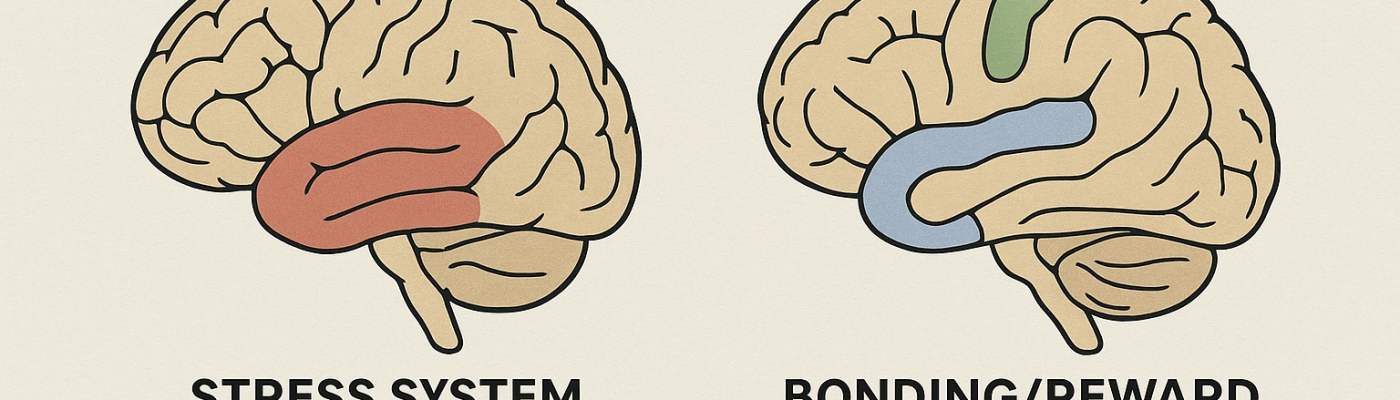
When someone has lived under the control of an abuser—whether the abuse is emotional, physical, sexual, or financial—the idea of sex often becomes the last thing they want to think about. Many survivors describe not only a loss of desire, but also a deep aversion to sex, even in safe relationships later on. This isn’t weakness, and it isn’t “brokenness.” It is the natural way the brain and body protect themselves after trauma.
The Brain’s Alarm System: Survival Over Pleasure
Sexual desire comes from the brain’s reward and bonding systems—mainly dopamine (motivation/pleasure), oxytocin (trust/closeness), and serotonin (safety/balance).
But abuse activates an entirely different system: the threat detection network.
- The amygdala, the brain’s alarm center, becomes hyperactive. It scans constantly for danger.
- The HPA axis (hypothalamus–pituitary–adrenal system) pumps out stress hormones like cortisol and adrenaline.
- In this state, the body is wired for survival, not intimacy.
When the nervous system is in fight, flight, freeze, or fawn, it automatically shuts down sexual desire. It’s like a safety switch: the body says “sex is not safe, focus on survival.”
Why Sex Feels Unsafe After Abuse
- Broken Trust and Oxytocin Disruption
Oxytocin—the “bonding hormone”—is meant to make us feel close and safe with others. Abuse creates the opposite: betrayal, fear, and mistrust. Instead of feeling warm connection, the brain learns to associate closeness with danger. - Conditioned Associations
If abuse involved sexual coercion or control, the body may associate sex with powerlessness, pain, or humiliation. Even if sex wasn’t part of the abuse, the abuser’s control can make any form of intimacy feel like another invasion. - Dopamine Hijack
In healthy relationships, dopamine motivates desire and pleasure. But in abusive environments, dopamine gets tied to unpredictability—moments of “love bombing” followed by cruelty. This creates a rollercoaster of craving and dread, leaving no stable ground for real desire. - Body Memory and Trauma Responses
The body “remembers” trauma. Even when the mind wants to move on, the nervous system can respond with numbness, panic, or shutdown during intimacy. This isn’t a choice—it’s a trauma reflex wired into the nervous system.
Psychological Impact: Desire Silenced
Beyond the brain chemistry, there’s the emotional truth:
- Abuse often erodes self-worth, leaving survivors feeling unlovable or undeserving of pleasure.
- Sex may feel like another obligation, a form of control, or something owed—rather than a space of freedom and connection.
- The financial and emotional exhaustion of surviving abuse leaves little energy for desire. The nervous system prioritises food, sleep, and safety before pleasure.
Healing: Reclaiming Desire on Your Own Terms
The good news: the brain and body are plastic—they can heal. With trauma-informed therapy, patience, and safe relationships, desire can return in new, healthier ways.
Healing often involves:
- Regulating the nervous system (breathwork, somatic therapy, EMDR, yoga, safe touch).
- Rebuilding trust slowly, with yourself and with others.
- Separating sex from abuse, creating new associations of safety, consent, and choice.
- Compassion for yourself—understanding that loss of desire is not a flaw but a survival wisdom.
Final Thought
When you’re at the hands of an abuser, your brain and body are doing exactly what they should: protecting you. Desire cannot flourish in fear. To want sex, we must feel safe, respected, and free. That’s why abuse and sex simply don’t mix.
With time, healing, and safety, many survivors find that their desire can be reclaimed—not as something owed or demanded, but as something freely chosen, rooted in true connection.
 Linda C J Turner | Trauma Therapist & Emotional Healing Specialist