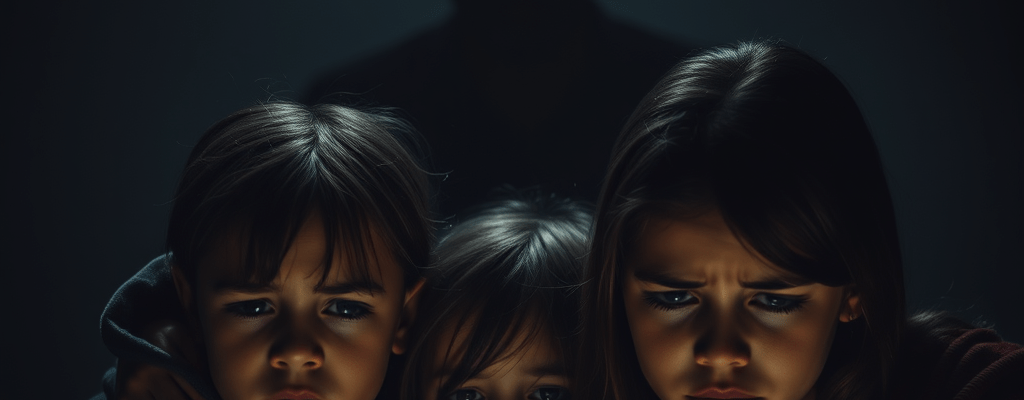
✋ Would it be ‘normal’ if it was your child?
When someone speaks up about a deeply disturbing discovery — like illicit images of minors, sexual exploitation, or abuse — the family’s reaction can feel more damaging than the truth itself.
You might hear:
- “It’s not that bad.”
- “Everyone watches weird stuff online.”
- “You’ll destroy the family if you report it.”
- “You’ve always been dramatic.”
But let’s pause for a moment.
Let’s put this question squarely where it belongs:
Would you call it normal if it was your daughter in that photo?
Would you defend them if your son, niece, or baby cousin was being shared around online — without consent, without protection, without their childhood intact?
Because when it becomes your child, suddenly:
- It’s not “just curiosity.”
- It’s not “just pictures.”
- It’s not “just a misunderstanding.”
It’s trauma.
It’s violence.
It’s life-altering damage.
🧠 Why Do Families Protect the Abuser Instead of the Innocent?
From a psychological perspective, this often stems from:
1. Protecting the Illusion
Many families need to believe they’re good, normal, loving — so acknowledging the truth about one member shatters that illusion.
2. Fear of Consequences
They’re afraid of scandal, arrests, legal costs, shame. So instead of protecting a child, they protect the “family image.”
3. Misguided Loyalty
“Blood is thicker than water” gets twisted into blind loyalty. But protecting someone who harms children isn’t loyalty — it’s complicity.
4. Grooming Within Families
Yes — even families get groomed. Abusers are often charming, helpful, or generous on the surface. When they’re exposed, families can’t reconcile the ‘public persona’ with the secret reality — so they choose denial.
🔥 To the One Who Sees It Clearly
If you’re the person who:
- Found evidence
- Feels something is wrong
- Is being gaslit, silenced, or isolated for speaking up
Let this sink in:
🛑 You are not overreacting.
🛑 You are not the problem.
🛑 You are protecting the people who can’t protect themselves.
Even if your whole family tells you to “let it go,” you are right to act.
💬 “Would it still be ‘normal’ if it was your child?”
When Families Excuse the Inexcusable… Ask Them This:
“Would it still be ‘normal’ if it was your child?”
📣 It’s easy to dismiss abuse until the victim is someone you love.
But every child is someone’s child.
Every child deserves safety.
Every image represents a real, exploited human being.
Stop making excuses.
Start standing up.
🛡️ If you suspect something, report it. Tell a therapist. Get legal advice.
If your family won’t protect the innocent — you still can.
 Linda C J Turner | Trauma Therapist & Emotional Healing Specialist