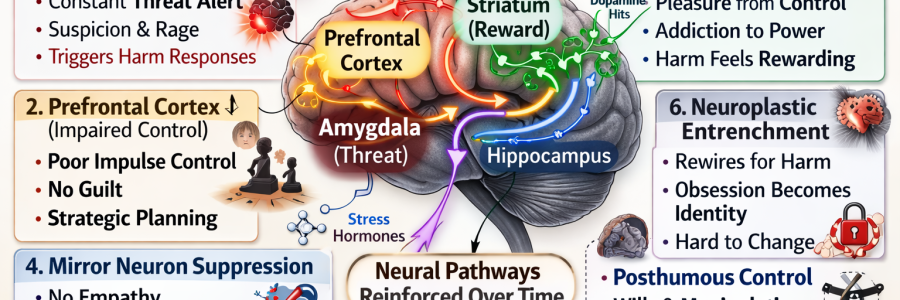
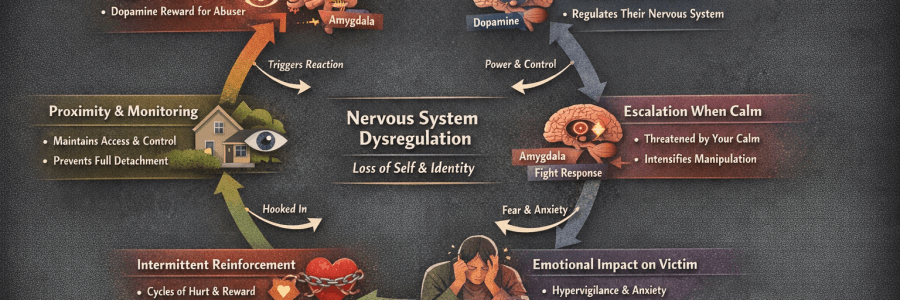
🔴 Core High-Risk Psychological Indicators

High-risk behaviour profiles describe patterns of thinking, emotional regulation, and behaviour that significantly increase the likelihood of psychological harm, emotional abuse, coercive control, and physical violence within relationships. These patterns are not personality flaws.They are deeply ingrained nervous system and psychological survival strategies — often rooted in trauma, attachment disturbance, or maladaptive control systems. Understanding these profiles empowers: Early… Read More 🔴 Core High-Risk Psychological Indicators

Q & A – What Does This Pattern of Behaviour Suggest?

I’ll answer clearly, responsibly, and safely — without diagnosing — while giving you psychological insight and protection-focused guidance. You described someone who: Leaves pieces of toilet paper everywhere Creates signs and symbols on doors before leaving Loses their temper quickly Is physically and mentally abusive This combination of behaviours points to severe emotional dysregulation, control patterns, and possible obsessive… Read More Q & A – What Does This Pattern of Behaviour Suggest?

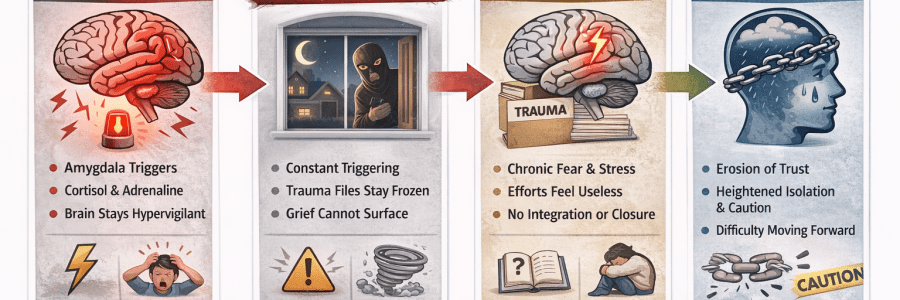
How Trauma Affects Our Senses

Trauma places the nervous system into chronic survival mode, which changes how sensory information is processed, filtered, and interpreted. Instead of:Is this safe?The brain constantly scans:Is this dangerous? This shifts perception across all sensory systems. 👁 Vision — Hypervigilance & Tunnel Vision Common trauma effects: Light sensitivity Visual overload Tunnel vision Blurred vision Eye strain Visual… Read More How Trauma Affects Our Senses

What Physical Illnesses Can Trauma Cause?

Trauma dysregulates the nervous system, immune system, endocrine (hormonal) system, and inflammatory pathways, which can lead to real, diagnosable physical illness. This is not “in your head.”This is body-based biology. 🔥 Chronic Stress & Nervous System Dysregulation Long-term trauma keeps the body stuck in fight / flight / freeze mode. This leads to: Constant cortisol release Chronic inflammation Immune… Read More What Physical Illnesses Can Trauma Cause?

🧠 How Trauma Affects Dating & Attachment

Dating after emotional trauma can feel confusing, overwhelming, and emotionally risky.When you’ve experienced emotional abuse, manipulation, neglect, or long-term stress, your nervous system learns to prioritise safety over connection. This guide is designed to help you: Understand trauma responses in dating Recognise emotionally safe vs unsafe patterns Build healthy boundaries Choose partners who are emotionally available… Read More 🧠 How Trauma Affects Dating & Attachment

Healing Changes the Body: What Neuroscience & Psychology Say About Recovery Results

Tomorrow I receive the results of my routine hospital tests after returning to private medical care. And naturally, a question arises: Will my physical health now reflect the emotional healing I’ve been doing? From a neuroscience and psychology perspective, the answer is:👉 Very possibly — yes. 🧠 Trauma Lives in the Body — So Does Healing… Read More Healing Changes the Body: What Neuroscience & Psychology Say About Recovery Results

When Healing Shows: How Trauma Recovery Transforms Mind, Brain & Body

Two years ago, under extreme psychological stress and PTSD from an abusive marriage, my eyesight measured just 70% without glasses.Eighteen months after leaving that environment, my vision is now 90% without glasses. The optician also said something unexpected:“You look lighter. Brighter.” And that moment says everything about trauma, healing, and the incredible power of the human… Read More When Healing Shows: How Trauma Recovery Transforms Mind, Brain & Body

Dating Safely After Emotional Abuse

1. Heal Before You Attach Not because you’re broken — but because trauma distorts perception, attachment, and intuition. Healing helps you: recognise red flags early trust calm instead of chaos avoid trauma bonding feel emotionally safe in stillness You don’t attract healthier partners — you recognise them. 2. Go Slow (This Is Non-Negotiable) Healthy connection develops gradually. 🚩… Read More Dating Safely After Emotional Abuse

Healthy vs Unhealthy Attachment Styles

✅ Secure Attachment (Healthy) Core belief: “I am worthy of love, and others can be trusted.” How it looks: Comfortable with closeness and independence Communicates needs calmly Handles conflict without drama Feels safe in emotional intimacy Respects boundaries Doesn’t fear abandonment or engulfment Feels like: Calm Safe Stable Supportive Peaceful This is the goal after healing. ⚠️ Unhealthy… Read More Healthy vs Unhealthy Attachment Styles