Behind the Mask: Why Abusers Misread Social Support and How Communities Respond

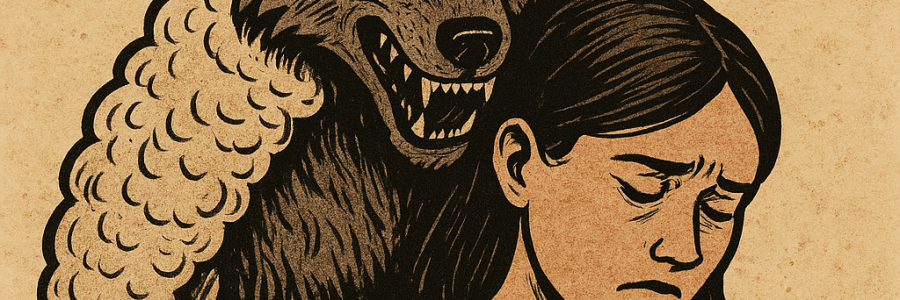
Abusers often live under the illusion that they are admired, untouchable, or in control. They misread silence as acceptance, compliance as respect, and avoidance as fear-based loyalty. But the reality is far more nuanced. In almost every social environment — from small towns and cliques to workplaces and extended family networks — people notice patterns… Read More Behind the Mask: Why Abusers Misread Social Support and How Communities Respond
Self-Assessment: Do I Stay — or Do I Leave?

This questionnaire is not about making a decision today.It’s about clarity.Answer each question with Yes / Sometimes / No. Safety First Do I feel emotionally safe in this relationship? Am I ever afraid of their reactions — anger, withdrawal, punishment, retaliation? Has my sense of safety decreased over time? Do I feel more at peace when they… Read More Self-Assessment: Do I Stay — or Do I Leave?

Self-Assessment: When You’re Not Sure If It’s Them — or You

This questionnaire is for moments of doubt.Answer each question with Yes / Sometimes / No.Notice patterns, not perfection. How You Feel Inside Do I often feel confused after conversations, unsure what just happened? Do I replay interactions in my head trying to work out what I did wrong? Do I feel anxious, tense, or on edge… Read More Self-Assessment: When You’re Not Sure If It’s Them — or You

Self-Assessment: Am I in a Healthy or Abusive Relationship?

Read each statement and answer honestly with Yes / Sometimes / No.There are no right or wrong answers — only information. Emotional Safety Do I feel emotionally safe expressing my thoughts, feelings, or needs? When I’m upset, am I listened to rather than dismissed, mocked, or blamed? Do disagreements stay respectful, without intimidation or cruelty? Do… Read More Self-Assessment: Am I in a Healthy or Abusive Relationship?

Cycle of predatory behaviour

Key Warning Signs Multiple relationships with women who have financial resources or assets Pattern of short-lived relationships, often ending when the partner stops contributing Claims of professional status or credentials without verifiable evidence Attempts to separate you from friends or family Minimizes or discourages outside advice, oversight, or accountability Little or no independent assets, property, or stable income Lives… Read More Cycle of predatory behaviour

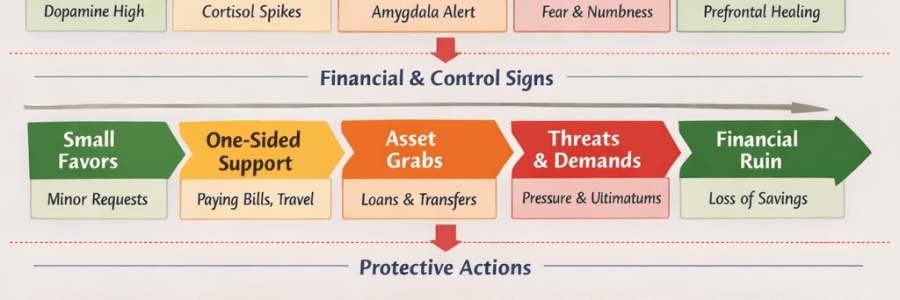
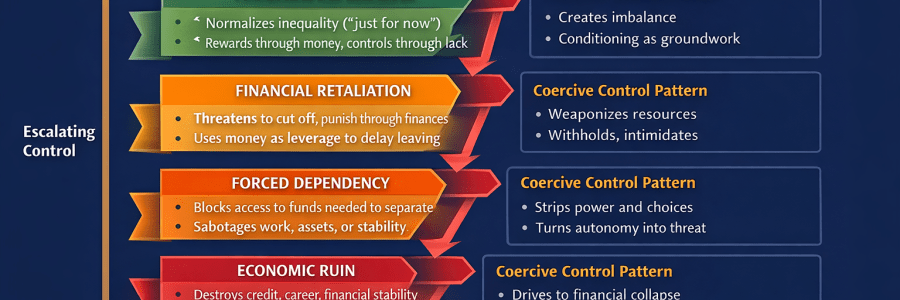
Financial Exploitation Escalation 

STEP 1: Subtle Dependence Small favors or expenses covered by survivor Abuser asks occasionally for help Nervous system: mild trust mixed with slight vigilance Red flag: evasiveness or resentment when asked to reciprocate Protective action: slow down contribution, observe behavior ↓ STEP 2: Regular Exploitation Survivor covers routine bills, groceries, or travel Abuser contributes minimally… Read More Financial Exploitation Escalation 

The Tactic: Exploitation of Resources Without Reciprocity

Some people use charm, intimacy, or emotional manipulation to gain financial, domestic, or logistical support from their partner while contributing little or nothing in return. Common behaviours: Asking for large gifts early in the relationship Expecting partner to pay for holidays, bills, or rent Using partner’s home or resources for convenience without reciprocation Claiming emergencies or special… Read More The Tactic: Exploitation of Resources Without Reciprocity

Why Some Men Seek Vulnerable Women to Exploit

Certain men intentionally target women who: Have high trust due to past trauma or caregiving roles Are isolated socially or emotionally Show empathy or caretaking tendencies May have financial or emotional resources Motivation Financial gain: Gifts, assets, or income Power/control: Using trust as leverage Emotional regulation: Feeling calm or dominant by exploiting vulnerability 🧠 Neurological reinforcement: Their brain associates your compliance + trust… Read More Why Some Men Seek Vulnerable Women to Exploit

Trusting or Being Intimate Too Soon

When you allow trust or intimacy to build faster than the other person proves reliability, your nervous system is essentially “rewiring” based on incomplete data. Consequences: Nervous system may misinterpret safety cues Old trauma loops are reactivated if boundaries are violated Emotional investment can increase vulnerability to manipulation The system has learned: “Connection + danger = chaos.” Rushing rewards can trigger old survival… Read More Trusting or Being Intimate Too Soon

1️⃣ Visual “Road to Safety in New Relationships”

Think of this as a stepwise journey, showing how trust, boundaries, and emotional reward rebuild over time: 2️⃣ Specific Exercises to Test Trust Safely Exercise Purpose How to Apply Safely Low-Stakes Requests Test reliability Ask for small favors or follow-throughs; observe consistency Boundary Enforcement Drill Test respect for limits Say “I need space” or “I’m not… Read More 1️⃣ Visual “Road to Safety in New Relationships”