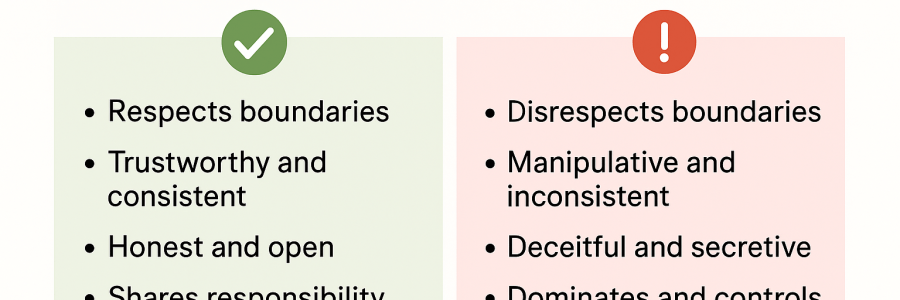
Before You Try “One Last Time” — Please Look Again

If you’re considering one last try, it doesn’t mean you’re weak or naïve.It usually means you are hopeful, invested, and wanting to believe that things could finally be different. That hope deserves respect — and protection. So before you decide, pause. Not to panic. Just to look again. A Quiet Question to Ask Yourself Is what you’re… Read More Before You Try “One Last Time” — Please Look Again
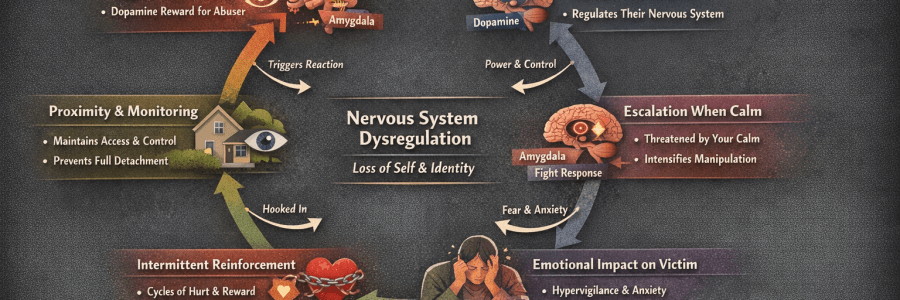
“A Fresh Start” Does Not Stop an Abuser — It Just Resets the Stage

When an abuser suggests “making a fresh start” — moving house, changing country, starting again — it is often presented as hope, healing, or renewal. But a fresh location does not erase abusive behaviour. Abuse is not caused by the place.It is caused by the person. Why “Fresh Starts” Are So Appealing To outsiders — and often to survivors… Read More “A Fresh Start” Does Not Stop an Abuser — It Just Resets the Stage

Safe Disengagement When ASPD-Type Dynamics Are Present

When antisocial traits are involved, disengagement is not relational — it is operational.You are not leaving a mutual bond; you are exiting a system where you were an asset. 🧭 Core Shift (This Is Non-Negotiable) You are not dealing with misunderstanding — you are dealing with entitlement. There is no insight coming.There is no repair coming.There is no shared… Read More Safe Disengagement When ASPD-Type Dynamics Are Present

What Safe Disengagement Actually Looks Like

Safe disengagement means leaving or detaching in a way that does not provoke escalation. It is quiet, strategic, and protective — not dramatic or confrontational. 🧭 First: Shift the Goal The goal is safety, not clarity.You do not need: Their insight Their apology Their agreement Their understanding Seeking those often increases danger. 🔇 1. Reduce Emotional Access (Before Physical… Read More What Safe Disengagement Actually Looks Like

ASPD vs Narcissistic Abuse — What’s the Difference?

Core Difference (In Plain Terms) ASPD = Disregard for othersNarcissistic abuse = Use of others to regulate self-esteem They can overlap — but the motivation, emotional structure, and risk profile are different. 1. Internal World ASPD Limited or absent remorse Minimal emotional attachment Low anxiety about harming others Relationships are instrumental (useful or not useful) People with ASPD don’t need admiration to… Read More ASPD vs Narcissistic Abuse — What’s the Difference?

What is ASPD (Antisocial Personality Disorder)?

Antisocial Personality Disorder (ASPD) is a clinical diagnosis used to describe a persistent pattern of disregard for the rights, safety, and boundaries of others. It’s not about being “difficult” or having a bad temper. It’s about how someone relates to people, rules, and responsibility over time. Common features include: Repeated lying, manipulation, or deceit Lack of remorse after harming others… Read More What is ASPD (Antisocial Personality Disorder)?

Strangulation is not about the situation.It is about the person who chooses to use it.

The Short Answer Future partners can absolutely be in danger It is not “just that relationship” Strangulation is a marker of a high-risk abuser, not a one-off loss of control Why Strangulation Is Different Strangulation isn’t an impulsive shove or shouted argument. It is: A deliberate act A control behavior A willingness to bring someone to the edge… Read More Strangulation is not about the situation.It is about the person who chooses to use it.

Watch for Familiar Family Patterns of Financial Control

Before you agree to sell, transfer, divide, or “protect” assets, take a hard look at family history — not just the current situation. Patterns repeat. 🚩 Ask This First: Is there a history in this family of taking control of other people’s: Property or housing Inheritances Businesses or savings Divorce settlements Decision-making “on their behalf” If the… Read More Watch for Familiar Family Patterns of Financial Control

How Other People’s Agendas Can Distort Separation and Divorce Decisions

During separation and divorce, one of the most important — and most difficult — boundaries to hold is this: Do not allow siblings, children, extended family, or friends to sway your decisions simply because they are close to you. Not everyone involved has your best interests at heart — even when they believe they do.… Read More How Other People’s Agendas Can Distort Separation and Divorce Decisions

Keeping it in the family

When bullying, abuse, and harassment “run in the family,” you’re not dealing with isolated bad behaviour — you’re dealing with a relational system that has normalised cruelty as a way of bonding, regulating power, and enforcing loyalty. This is recognised in psychology, trauma work, and increasingly in law. What it actually means when abuse runs in a family It… Read More Keeping it in the family