Persistent Malicious Intent

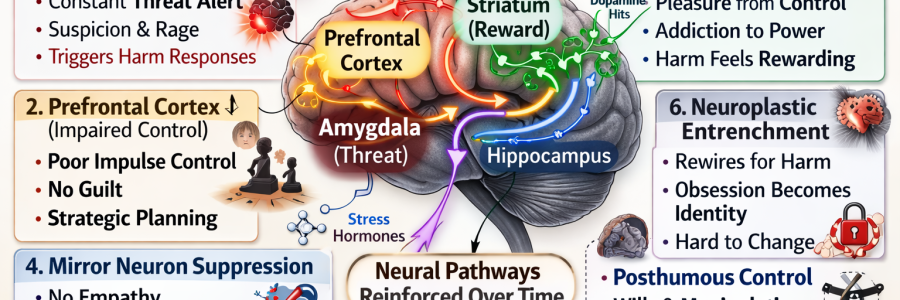
A lifetime of anticipatory harm, manipulation, and emotional abuse leaves deep scars, especially when it extends into thoughts about someone even after death. Neuroscience and psychology actually shed some light on this kind of behavior: 1. Persistent Malicious Intent Some people spend years preoccupied with control, harm, or vindication. Brain networks involved include amygdala hyperactivity (heightened threat/fear… Read More Persistent Malicious Intent

Aftermath & Long-Term Impact

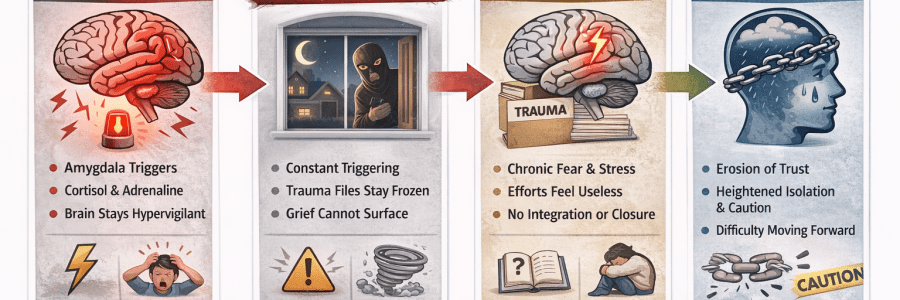
In inheritance or high-stakes family conflicts, people often follow a predictable escalation pattern. Understanding it helps you anticipate moves, protect yourself, and even de-escalate tension. 1. Initial Anxiety & Awareness Trigger: Someone hears or suspects that a portion of the inheritance might be at risk. Behavior: Subtle tension, over-checking legal documents, whispering to allies, testing boundaries. Psychology: Loss… Read More Aftermath & Long-Term Impact

The Tyranny of Proof

In the shadows of human behavior, denial thrives. We twist reality, rationalize our actions, and gaslight others—yet one force remains relentlessly impartial: proof. Evidence doesn’t care about ego, fear, or lies. It exists as a tyranny—cold, absolute, and inescapable. 1️⃣ Psychology: Why Denial Feels Safer Than Truth Denial is a defense mechanism. It protects the mind from shame, guilt,… Read More The Tyranny of Proof

“Deny, Deny, Deny… But the Evidence Doesn’t Lie”

In the theater of human behavior, some people live in denial—a psychological shield against accountability, guilt, or shame. Yet, the brain and the law have a way of cutting through the fog of excuses. 1️⃣ The Psychology of Denial Denial is a classic defense mechanism. Sigmund Freud described it as the mind’s attempt to protect itself from uncomfortable truths.… Read More “Deny, Deny, Deny… But the Evidence Doesn’t Lie”

Brain Structure & Neurobiology

Prefrontal Cortex (PFC) Controls planning, impulse regulation, goal-setting, and self-discipline. Underactivity or delayed development can lead to poor self-care, lack of ambition, and impulsive behaviors, like greed or selfishness. Anterior Cingulate Cortex (ACC) Involved in empathy, error detection, and social awareness. Weak or underactive ACC may result in low empathy, poor moral judgment, and abusive or mean behavior. Amygdala… Read More Brain Structure & Neurobiology

 Social Learning & Mirror Neurons

The neuroscience of learned greed, manipulation, and dishonesty—basically, how teaching someone to take advantage of others can create a cycle where those behaviors get reflected back to you. Let’s break this down carefully: 1. Social Learning & Mirror Neurons Mirror neurons fire when we observe others’ actions and intentions. When someone models greed or dishonesty, others—especially children or mentees—can internalize… Read More  Social Learning & Mirror Neurons

Genetic and Heritable Factors

he neuroscience behind why a “Me, Me, Me” personality—self-centeredness or narcissistic traits—can appear to “run in the family.” Let’s break it down carefully: 1. Genetic and Heritable Factors Research shows traits like narcissism, self-centeredness, and certain personality disorders have a moderate heritable component. Twin and family studies suggest 30–50% of variance in narcissistic traits may be genetic. This doesn’t mean children will automatically… Read More Genetic and Heritable Factors

🧠 Psychological Profiles of Family Manipulators

Family manipulators don’t look dangerous.They look helpful.They sound concerned.They present as responsible. But psychologically, their patterns are precise. Here are the most common profiles and behavioural traits: 1️⃣ The Strategic Controller (Machiavellian Profile) Highly calculated.Emotionally detached.Outcome-driven. Traits:• Plans several steps ahead• Collects information quietly• Controls access, narratives, and decisions• Uses people as instruments• Values power over connection Motto: “The ends… Read More 🧠 Psychological Profiles of Family Manipulators

How to Recognise Divide-and-Conquer Tactics Early

(When a relative “steps in to help” but quietly takes control) 🚩 Early Red Flags of Divide & Conquer Manipulation 1. One-way communication They position themselves as the only messenger. “Let me handle it.”“I’ll pass things on.”“It’s better if messages go through me.” This allows:→ Filtering→ Distortion→ Control of narrative 2. Selective information sharing Different people receive different versions of… Read More How to Recognise Divide-and-Conquer Tactics Early

🧠 Manipulation Pattern Matrix — Emotional, Financial, Relational, Physical

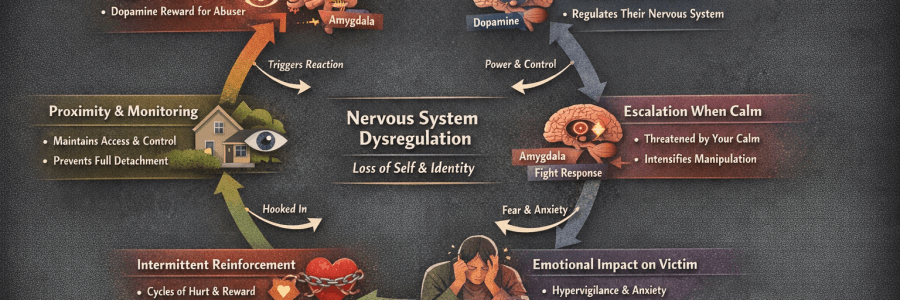
Manipulation Pattern Matrix — an advanced, trauma-informed, neuroscience-backed framework that maps every manipulation tactic across emotional, financial, relational, and physical control. This is your ultimate detection and response tool for abusive or controlling behaviors. Tactic / Phrase Emotional Control Financial Control Relational Control Physical Control Nervous System Signal / Body Cue “If you loved me, you would…” ✅ Love-bombing / guilt ✅ Pressure… Read More 🧠 Manipulation Pattern Matrix — Emotional, Financial, Relational, Physical