When Someone Says One Thing Publicly and Does Another Privately: The Neuroscience Behind the Double Life

It’s astonishing how some people can present one story to their family — “I’m going to sell the house,” “I’m doing the right thing,” “Everything is fine” — while living a completely different reality behind closed doors.Nothing ever changes. The promises shift, the words get softer, but the behaviour stays the same. And when someone performs one role for… Read More When Someone Says One Thing Publicly and Does Another Privately: The Neuroscience Behind the Double Life

The Sunk Cost Trap

The sunk cost trap is a psychological pattern where you keep investing time, money, or emotion into something because you’ve already invested, even when all signs show it’s not good for you anymore. It’s one of the biggest reasons people stay in bad relationships, toxic friendships, or financially exploitative situations. 🔍 Simple Definition “I’ve already put so much in… I can’t… Read More The Sunk Cost Trap

Freedom After Decades of Abuse: The Neuroscience of Choice and Self-Determination

IntroductionSurvivors of long-term abuse often experience a profound psychological weight. Decades of emotional, physical, or relational trauma can shape not only beliefs and behaviors but also neural architecture. Emerging from such a context into a space of autonomy—symbolized here by “having no ring on your finger”—can trigger complex emotional, cognitive, and neurobiological responses. Psychological Perspective… Read More Freedom After Decades of Abuse: The Neuroscience of Choice and Self-Determination

Healthy Reciprocity: Building Safety and Reward in Relationships

Reciprocity is the backbone of trust, emotional safety, and attachment. It works because your brain and nervous system are wired to seek predictable, rewarding interactions. 1. The Neurochemistry of Reciprocity When someone consistently responds to your needs — emotionally, physically, or socially — your brain releases key neurochemicals: Neurochemical Role Effect on Relationships Oxytocin Bonding hormone Promotes… Read More Healthy Reciprocity: Building Safety and Reward in Relationships

Neurochemistry of Secure Couples

1. Key Brain Regions Region Role in Secure Attachment Activation Effects Amygdala Threat detection, fear response Downregulated → reduced anxiety, fear of abandonment Prefrontal Cortex Decision-making, emotional regulation Active → logical problem-solving, calm response to conflict Anterior Cingulate Cortex Social pain, empathy Regulated → enhances empathy, attunement Insula Interoception, emotional awareness Active → reads own… Read More Neurochemistry of Secure Couples

Reframing the Revelation: Transforming Truth into Growth and Freedom

When a hidden truth or secret is revealed, the natural reaction is often shock, anger, or grief. But reframing the experience can transform it from trauma into empowerment, insight, and personal growth. 1. The Gift of Awareness 2. An Opportunity for Growth 3. A Chance to Reclaim Your Life 4. Additional Deep Reframes Truth as a… Read More Reframing the Revelation: Transforming Truth into Growth and Freedom

Sexual Compatibility vs. Emotional Compatibility Matrix

Axes 📊 The 4 Quadrants 🟥 Quadrant 1 — LOW Emotional / LOW Sexual Compatibility “The Draining Relationship” Characteristics Psychology Long-term outcome:❌ Not sustainable. This is where people feel trapped, invisible, or chronically unhappy. 🟧 Quadrant 2 — LOW Emotional / HIGH Sexual Compatibility “The Chemistry Trap” Characteristics Psychology Long-term outcome:⚠️ High drama, low stability.Great… Read More Sexual Compatibility vs. Emotional Compatibility Matrix

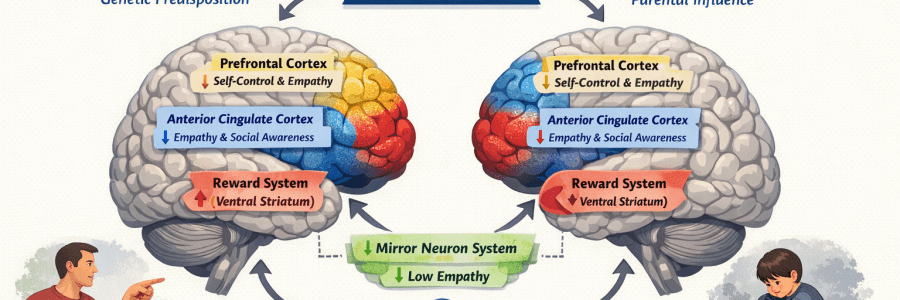
Neuroscience Behind Reduced Mirror-Neuron Activity (Expanded)

Reduced mirror-neuron activation doesn’t mean someone is “bad” — it means their brain processes emotional signals differently.Below is a fuller breakdown of how this happens and why. 1. Avoidant Attachment Styles People with avoidant attachment learned early that emotional closeness felt unsafe or overwhelming. Brain mechanisms: Behavioural effects: Avoidance is a protective reflex, not a conscious decision.… Read More Neuroscience Behind Reduced Mirror-Neuron Activity (Expanded)