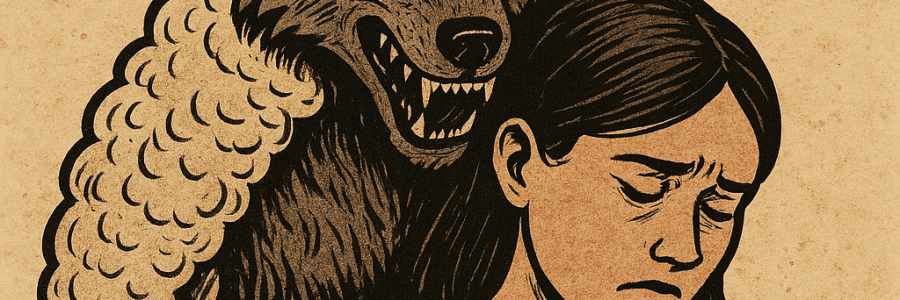
Hidden Motives (More Common in Red Flag Cases)

Some family members might genuinely want to help during a difficult time, especially if they’ve been distant in the past.

Illness often reminds people of their loved ones’ mortality, prompting sudden involvement. Hidden Motives (More Common in Red Flag Cases):
Financial Gain: They see your illness as an opportunity to secure a portion of your assets or inheritance.
Control: They may try to influence decisions about your finances, property, or estate planning.
Manipulation: They could aim to isolate you, gain your trust, or pressure you into making decisions that benefit them.… Read More Hidden Motives (More Common in Red Flag Cases)

A misuse of power

It’s one thing to say you love someone, but love without actions to back it up is hollow. Writing someone out of a will, attempting to take everything from them, or trying to break their spirit are not actions born out of care or affection. These actions reflect something else entirely—perhaps bitterness, resentment, or a desire for control. When someone behaves in this way, their declaration of love feels not just empty but hypocritical.… Read More A misuse of power

When Love Turns to Deception: Navigating Betrayal in Long-Term Relationships

When someone publicly proclaims their love and commitment, it sets expectations for respect and mutual care. This outward display can serve as a facade, concealing behavior behind closed doors that is manipulative, damaging, and deeply self-serving. This stark contrast between public actions and private betrayal often leaves the victim feeling gaslit, invalidated, and isolated.

The psychological toll of such a situation is immense. You may question your own perceptions or wonder how someone you trusted for so long could act against you in such a calculated way. It’s a betrayal not only by the partner but by any complicit individuals, such as family members or friends, who enable or support their actions.… Read More When Love Turns to Deception: Navigating Betrayal in Long-Term Relationships

Reflection on my relationship

Looking back over the years, it becomes painfully clear how much I endured, how much was taken for granted, and how deeply the lack of support and interest shaped the fabric of my life. It’s not easy to see these moments in retrospect; it’s like peeling back layers of wounds that never fully healed. But each memory is a thread, weaving a tapestry of resilience amidst neglect.

Two house moves—completely on my own. Packing up the remnants of a shared life, organizing each end by myself, lifting heavy boxes, deciding where everything should go in a new space that was supposed to symbolize a fresh start. And yet, there I was, alone, while my other half disappeared fishing or playing tennis, as if this monumental effort of rebuilding didn’t warrant their presence. It wasn’t just physical labor; it was the emotional weight of unpacking in a strange house, arranging belongings to create some semblance of home, and facing the emptiness of doing it all alone.… Read More Reflection on my relationship

Having Your Day In Court

Having your day in court is a powerful and courageous step, not just for yourself, but for others who have endured similar abuse. It’s an opportunity to speak your truth, to shed light on the years of silent suffering, and to challenge the patterns of behavior that allowed such mistreatment to continue. In a world where abuse often thrives in secrecy and silence, raising your voice in a public forum can be a deeply validating and transformative act.

What matters most is that you are being heard. By breaking the silence, you are reclaiming your narrative and refusing to let the abuse define you any longer. This act of bravery sends a message—not just to the person who inflicted the harm, but to anyone else watching, including those who may be enduring similar situations. You become a voice for the voiceless, a beacon for those who feel trapped and powerless. Your testimony serves as a reminder that no one deserves to be silenced or dismissed.… Read More Having Your Day In Court

Not missing anything

When you step away from a toxic partner and begin to truly reflect, it often becomes clear how much you were carrying on your own all along. That realization—that life without them isn’t just manageable, but actually easier—can be both liberating and bittersweet. You start to see that the emotional, physical, and mental labor you invested in the relationship went mostly one way, leaving you feeling unappreciated, unsupported, and alone even when they were physically present.

It’s a hard truth: when someone doesn’t contribute to the relationship—whether emotionally, financially, or practically—what you’re left with isn’t a partnership but a burden. A healthy relationship brings companionship, shared effort, and mutual support, not loneliness while living under the same roof. If your evenings were spent without meaningful conversation or connection, your hobbies and interests pursued in isolation, and the responsibilities of maintaining the home fell solely on your shoulders, then what role were they really playing? Their absence now simply underscores how little they actually added to your life.… Read More Not missing anything

No Family Values

It’s a powerful reflection to wonder how someone would feel if their own child were treated in the same way they’ve treated their partner. Many people who behave selfishly or abusively fail to consider the impact of their actions, let alone how it would feel if the roles were reversed or if someone they loved endured such treatment. If they stopped to truly imagine their own daughter being exploited, neglected, or mistreated for decades, it might force them to confront the pain and harm they’ve caused.

As for what their parents might think—this is another compelling point. For many, the values instilled by family—respect, fairness, love, and accountability—are core principles. If their behavior contradicts those values, they might feel shame or guilt if they allowed themselves to truly reflect. The thought of parents looking on with disappointment or disgust after three decades of this kind of treatment should be a sobering reality check for anyone with a conscience.… Read More No Family Values

Exploited

Lack of Responsibility: A partner who chooses not to work without a legitimate reason (such as health issues) and instead relies on you to provide for the household is shirking their responsibility. A healthy relationship is built on shared effort and mutual support, not one-sided labor.

Manipulation: Persuading or pressuring you to cash in your pension—a resource meant to secure your future—demonstrates a willingness to exploit your sacrifices for their gain. This type of behavior often involves emotional or psychological tactics that make you feel obligated to comply, even when it’s against your best interests.

Selfishness: Using funds intended for retirement without regard for how it affects your future shows a lack of care for your financial stability and security. It highlights a focus on immediate gratification or personal benefit, rather than long-term planning or mutual well-being.

Control: Taking advantage of your financial contributions while refusing to contribute their own can also be a subtle form of control. It creates a dynamic where you’re overburdened and dependent, limiting your ability to make independent choices.… Read More Exploited

Disregard for others

The kind of man who leaves a home in disrepair, neglects essential needs like heating, and prioritizes personal indulgence over family responsibilities reflects selfishness, a lack of accountability, and emotional immaturity. Such actions often point to deeper issues of entitlement, disregard for others, and possibly even manipulative tendencies.

When someone siphons money meant for the household to fund their personal desires, it’s a betrayal of trust and partnership. This behavior can leave the other partner feeling abandoned and burdened by responsibilities that should be shared. Over time, living in such an environment can normalize neglect and diminish self-worth, as the affected partner might internalize the neglect as their burden to bear or even blame themselves for the situation.… Read More Disregard for others