Post-traumatic growth

After leaving an abusive long-term marriage, many people go through something psychologists call post-traumatic growth. Research in Psychology and Neuroscience shows that although trauma is deeply painful, the brain and mind can actually develop new strengths and capacities during recovery. This does not mean the trauma was positive — but it means the brain is capable of transforming adversity into growth. 1. The… Read More Post-traumatic growth

Loss of Control Triggers a Psychological Crisis

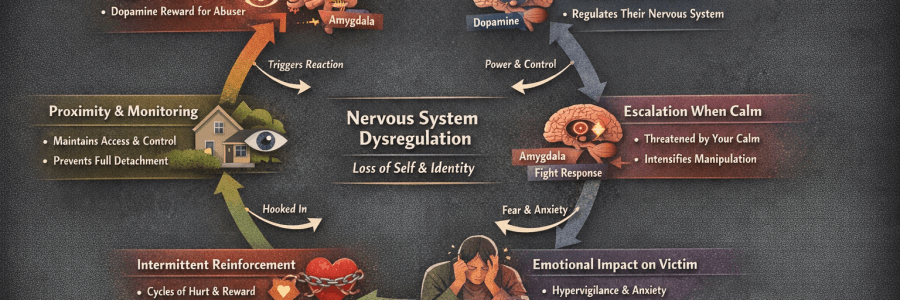
When an abusive or highly controlling long-term marriage ends, the psychological processes in the abusive partner’s brain can look very different from those in the person who experienced the abuse. Research in Psychology and Neuroscience shows several patterns that often occur. Not every abusive person reacts the same way, but there are some common dynamics. 1. Loss of Control Triggers… Read More Loss of Control Triggers a Psychological Crisis

Identity and Life Narrative Are Entangled

When a long-term marriage has been abusive, the emotional and neurological processes are more complex than in a normal breakup. In many cases, the person who experienced the abuse doesn’t immediately move on, even when the relationship was harmful. Research in Neuroscience and Psychology explains several reasons why this happens. 1. The Brain Has Built Deep Neural Bonds A long-term relationship… Read More Identity and Life Narrative Are Entangled

Mixed signals

Sometimes when someone pulls away, it doesn’t necessarily mean the feelings were false. In Psychology and Neuroscience, there is a pattern often linked to attachment systems in the brain. A person can feel strong emotions but become overwhelmed when those feelings start to require vulnerability or commitment. Here are three subtle signs that someone may have real feelings but becomes scared… Read More Mixed signals

The Brain’s Fantasy Mechanism

In the early stages of romance, the brain can create something psychologists sometimes call the “illusion of early love.” It feels incredibly real and powerful, but a lot of it is actually driven by temporary neurochemistry rather than deep emotional knowledge of the other person. Here’s what Neuroscience and Psychology show happens. 1. The Dopamine “Love High” When we meet someone… Read More The Brain’s Fantasy Mechanism

Soul Connection

Here’s the fascinating neuroscience behind why we sometimes feel instantly connected to certain people — often described as a “soul connection” — and how it ties into the broader network of human influence: 🧠✨ 1. Mirror Neurons and Emotional Resonance Our brains contain mirror neurons, which fire when we observe someone else’s emotions or actions. 2.… Read More Soul Connection

Kindness Has a Ripple Effect

Here’s something remarkable: research in social networks and psychology shows that our emotions and behaviors can ripple through people we’ve never met, sometimes over several degrees of separation. It’s called the “social contagion effect.” 🌍💫 1. Happiness Spreads A famous study by Christakis and Fowler tracked thousands of people over decades. They found: Even people you’ve never met can feel… Read More Kindness Has a Ripple Effect

Heart Rhythm Synchronization

There is some fascinating research in neuroscience and physiology showing that our bodies can actually synchronize with the people around us, especially when we feel emotionally connected. It doesn’t mean we share thoughts literally, but our brains, hearts, and nervous systems can align in subtle ways. 🧠❤️ 1. Heart Rhythm Synchronization Studies measuring heart activity (using ECG… Read More Heart Rhythm Synchronization

A living network of human connection.

Humans are deeply interconnected through our brains, emotions, and social networks. Here are some of the main ways research explains this. 🧠 1. The “Six Degrees of Separation” In sociology, researchers discovered that almost any two people on Earth are connected by about six social steps. Example: Modern social media research suggests the number may even… Read More A living network of human connection.